
A natural, eco-friendly treatment using casein and tannic acid strengthens hair by 21% while keeping it elastic.
September 2025 in “Journal of Polymer Science” Functionalized bacterial cellulose can improve medical tissue engineering.
November 2025 in “Advanced Science” A new nanozyme using EGCG and L-arginine boosts hair growth by safely increasing beneficial oxidative stress.
3 citations
,
July 2025 in “Gels” Engineered protein hydrogels improve medical treatments by mimicking natural body structures.
6 citations
,
March 2023 in “Materials” The GNP crosslinked scaffold with antibacterial coating is effective for rapid wound healing and infection prevention.
 February 2025 in “International Journal of Cosmetic Science”
 Protein carbonylation is a sensitive marker for oxidative damage in hair, especially from light exposure.
 January 2023 in “Fashion and textiles”
 Cationic and nonionic surfactants provide better color intensity and resistance for semi-permanent hair dye than anionic surfactants.
February 2022 in “Fibers” Scientists created a non-toxic, sugar-based hair product that can style hair without damage.
6 citations
,
June 2024 in “Gels” 5% hydroxyapatite in scaffolds improves bone tissue formation and mechanical properties.
February 2026 in “Toxicology Letters” MK-0773 is a moderate inhibitor of the SRD5A2 enzyme.
November 2024 in “Journal of Functional Foods” AP collagen peptides improve hair elasticity and gloss.
7 citations
,
August 2024 in “Marine Drugs” Ultrasound can safely produce beneficial carrageenan from red algae.
1 citations
,
March 2023 in “Journal of Natural Fibers” A gentler, less damaging method for curling hair using tyrosine works well initially but fades after washing.

Polydopamine is promising for personalized medicine and biomedical technology due to its strong adhesion and biocompatibility.
 February 2025 in “International Journal of Cosmetic Science”
 A new amino acid derivative, ATS, improves hair texture and moisture, making it easier to straighten curly hair.
49 citations
,
January 2023 in “Gels” Hydrogels are crucial for 3D bioprinting in tissue engineering.
8 citations
,
November 2023 in “Frontiers in Bioengineering and Biotechnology” Combining metals and herbs in microneedles can improve wound healing.
14 citations
,
September 2025 in “Gels” Sodium alginate-based hydrogels are promising for medical use due to their versatility and biocompatibility.
8 citations
,
May 2025 in “Biomimetics” Cellulose nanofibers are promising for wound dressings due to their healing and drug delivery benefits.
81 citations
,
March 2022 in “Frontiers in Bioengineering and Biotechnology” Bioengineered scaffolds help heal skin wounds, but perfect treatments are still needed.
November 2025 in “Journal of Natural Fibers” Human hair waste can be valuable in engineering and materials due to its unique properties.
30 citations
,
September 2024 in “Pharmaceuticals” Silk fibroin nanofibers may help heal diabetic wounds, but more research is needed.
 December 2024 in “Advanced Composites and Hybrid Materials”
 Electrospun 3D nanofibrous materials show promise for bone regeneration in orthopaedics.
 2 citations
,
December 2019 in “Textile Research Journal”
2 citations
,
December 2019 in “Textile Research Journal” L-cysteine and ultrasound successfully improved rabbit hair fibers for industrial use.
 20 citations
,
July 1988 in “Clinics in dermatology”
20 citations
,
July 1988 in “Clinics in dermatology” Thioglycolate lotions are the most popular method for permanent waving and hair straightening.
 1 citations
,
June 2025 in “Frontiers in Bioengineering and Biotechnology”
1 citations
,
June 2025 in “Frontiers in Bioengineering and Biotechnology” Glycopeptide hydrogels are promising for tissue repair, drug delivery, and healing due to their multifunctional properties.
 November 2017 in “Asian journal of pharmaceutical and clinical research”
 Three compounds from Dadap leaves may help treat hair loss.
 18 citations
,
February 2015 in “Acta Crystallographica Section D: Structural Biology”
18 citations
,
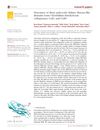
February 2015 in “Acta Crystallographica Section D: Structural Biology” The study concludes that certain domains in Clostridium histolyticum enzymes are structurally unique, bind calcium to become more stable, and play distinct roles in breaking down collagen, with potential applications in medicine and drug delivery.
 14 citations
,
November 2014 in “European journal of medicinal chemistry”
14 citations
,
November 2014 in “European journal of medicinal chemistry” Researchers found new potential treatments for conditions related to the androgen receptor, like male hormonal contraception, by testing thousands of compounds.
 March 2026 in “Tissue Engineering and Regenerative Medicine”
 Dopamine-modified adhesives are improving for sticking tissues underwater.