Isotretinoin reduced inflammation in tufted hair folliculitis, but hair tufting remained.
 31 citations
,
September 2015 in “BJUI”
31 citations
,
September 2015 in “BJUI” Men with benign prostatic hyperplasia are more likely to have metabolic syndrome than those without it.
16 citations
,
August 1989 in “Human Reproduction” Hirsutism in females is caused by high male hormones or sensitive hair follicles.
 20 citations
,
January 2007 in “Fertility and Sterility”
20 citations
,
January 2007 in “Fertility and Sterility” A woman developed male traits from accidental contact with her husband's testosterone gel.
 September 2016 in “Journal of The American Academy of Dermatology”
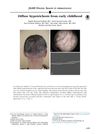
 The girl has a genetic hair condition causing thin hair since childhood.
April 2026 in “BMJ Case Reports” Leydig cell tumors can cause high testosterone in women and are treated by removing the ovaries.
 7 citations
,
June 2019 in “Australasian Journal of Dermatology”
7 citations
,
June 2019 in “Australasian Journal of Dermatology” Elderly men with a scalp condition healed in about 26 days using specific creams and dressings, with no return of the condition in 6 months.
 41 citations
,
June 2003 in “Journal of The American Academy of Dermatology”
41 citations
,
June 2003 in “Journal of The American Academy of Dermatology” Long-term minoxidil use can cause pseudoacromegaly, but stopping it improves symptoms.
 11 citations
,
August 2019 in “The Journal of Sexual Medicine”
11 citations
,
August 2019 in “The Journal of Sexual Medicine” Women with nonclassic congenital adrenal hyperplasia experience more sexual dysfunction and distress.
March 2026 in “The Journal of Sexual Medicine” Hormone therapy can improve sexual health and quality of life for women 70 and older.
 15 citations
,
April 2022 in “Ginekologia Polska”
15 citations
,
April 2022 in “Ginekologia Polska” Higher thyroid hormone levels may be linked to certain types of polycystic ovary syndrome.
 February 2020 in “Open Access Macedonian Journal of Medical Sciences”
 The patient with severe hirsutism improved after being diagnosed with non-classic congenital adrenal hyperplasia and treated with corticosteroids.

Targeting androgen receptors in the skin is the most effective treatment for hyperandrogenism-related skin issues.
2 citations
,
July 2018 in “Chinese Journal of Dermatology” Sebaceous nevus changes with age, and dermoscopy and RCM are effective for diagnosis.
3 citations
,
August 2022 in “International Journal of Molecular Sciences” TSC2-/meth cells can cause skin lesions, hair growth, and lung issues, and may be treated with chromatin remodeling agents.
 42 citations
,
October 2004 in “Experimental and Clinical Endocrinology & Diabetes”
42 citations
,
October 2004 in “Experimental and Clinical Endocrinology & Diabetes” The main cause of excessive hair growth in Turkish women is Polycystic ovary syndrome, but in about one fifth of cases, the reason for high male hormone levels is unknown.
 56 citations
,
October 1983 in “Archives of Dermatology”
56 citations
,
October 1983 in “Archives of Dermatology” Some women with acne have higher levels of free testosterone, which might suggest using hormonal treatments for acne.
 12 citations
,
June 1999 in “Dermatologic Surgery”
12 citations
,
June 1999 in “Dermatologic Surgery” Hair restoration surgery can effectively increase pubic hair density, with patient satisfaction and natural results largely depending on the chosen hair pattern and graft design.
34 citations
,
May 1987 in “European Journal of Pediatrics” Buserelin safely and effectively suppresses early puberty, potentially improving final height.
 15 citations
,
May 2013 in “American Journal of Medical Genetics - Part A”
15 citations
,
May 2013 in “American Journal of Medical Genetics - Part A” People with X-linked hypohidrotic ectodermal dysplasia have no sweat ducts and less, thinner hair.
1 citations
,
April 2024 in “Piel” Telogen effluvium causes sudden hair loss, often due to stress or changes, and is treated by addressing the cause and offering support.
 1 citations
,
August 2024 in “Transgenic Research”
1 citations
,
August 2024 in “Transgenic Research” Activated β-catenin affects hair growth and skin thickness, and changes are reversible.
10 citations
,
January 2015 in “PubMed” April 2016 in “Journal of Investigative Dermatology” Mutations in the TSPEAR gene cause a new form of ectodermal dysplasia affecting hair and tooth development.
 January 2019 in “Springer eBooks”
 Acne can appear or persist in adulthood due to hormonal changes, external factors, or substance use, and requires appropriate treatment.
29 citations
,
May 1975 in “Clinical Endocrinology” Combination therapy significantly reduces testosterone and moderately reduces hair growth in women with hirsutism.
Hyperandrogenism is diagnosed using clinical signs, lab tests, and imaging.
5 citations
,
January 1989 Testosterone and dihydrotestosterone slow hair cell growth, while estradiol has no effect.
 April 2026 in “Zenodo (CERN European Organization for Nuclear Research)”
 DHT increases scalp heat, causing hair loss.
42 citations
,
September 1985 in “British Journal of Dermatology” Trichothiodystrophy causes abnormal protein deposits and distortion in hair follicles.