RNase L hinders hair follicle regeneration by altering immune signals.
 February 2025 in “Journal of Clinical Investigation”
 RNase L hinders hair growth by altering immune signals.
4 citations
,
March 2024 in “Cells” MiR-23b and miR-133 affect sheep hair growth by targeting specific genes.
 7 citations
,
February 2023 in “Inflammation and Regeneration”
7 citations
,
February 2023 in “Inflammation and Regeneration” The protein interleukin-1 alpha helps regenerate hair follicles and increase stem cell growth in mice.
30 citations
,
August 1993 in “PubMed” IL-1 alpha stops hair follicle growth and hair production.
 April 2021 in “Journal of Investigative Dermatology”
 IL-15 helps protect hair follicles from immune attacks and encourages hair growth.
 11 citations
,
November 2015 in “Experimental Dermatology”
11 citations
,
November 2015 in “Experimental Dermatology” The conclusion is that the IL-6/STAT3 activation affects p63 expression in healing wounds, which may help in hair follicle regeneration.
19 citations
,
May 2018 in “Molecular Medicine Reports” miR‑339‑5p can slow down hair follicle stem cell differentiation by targeting DLX5.
IL-18 signaling helps mature Tregs move into the thymus.
90 citations
,
February 2001 in “The journal of investigative dermatology/Journal of investigative dermatology” Interleukin-1 increases keratin K6 production in skin cells.
July 2024 in “Journal of Investigative Dermatology” IL-13 protein is much higher in the skin of atopic dermatitis patients than in healthy skin.
IL-18 signaling helps mature Tregs move into the thymus.
 7 citations
,
September 2020 in “Frontiers in Cell and Developmental Biology”
7 citations
,
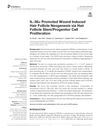
September 2020 in “Frontiers in Cell and Developmental Biology” IL-36α helps grow new hair follicles and speeds up wound healing.
32 citations
,
December 2019 in “The Journal of clinical investigation/The journal of clinical investigation” A protein called IL-36γ causes skin side effects from certain cancer treatments when combined with a common skin bacteria.

TLR3 signaling enhances the immunosuppressive properties of human periodontal ligament stem cells.
 January 2022 in “Dermatology Review”
 Higher IL-31 levels are linked to worse itching in chronic kidney disease patients.
 April 2023 in “The journal of investigative dermatology/Journal of investigative dermatology”
 Removing certain immune cells in mice causes their hair to enter the growth phase earlier than usual.
10 citations
,
November 2023 in “Science Immunology” Super-enhancers control CD25 expression in specific cell types, affecting immune function.
December 2015 in “OPAL (Open@LaTrobe) (La Trobe University)” QLT0267 stops hair follicle cell growth and movement.
53 citations
,
April 2016 in “Stem cell research & therapy” LL-37 helps stem cells grow and move, aiding tissue regeneration and hair growth.
5 citations
,
May 2024 in “Developmental Cell” Lower GATA3 levels in mice help hair regrow by changing certain immune cells.
IL-36α helps in growing new hair follicles when healing wounds, potentially aiding in hair growth.
12 citations
,
May 2021 in “The journal of investigative dermatology/Journal of investigative dermatology” Laminin 332 is essential for normal skin cell behavior and structure.
 April 2018 in “Journal of Investigative Dermatology”
 Cutaneous lupus patients have higher levels of certain immune cells in their blood and skin.
3 citations
,
April 2010 in “The FASEB Journal” Estrogen and MLL enzymes work together to regulate genes important for hair growth and leukemia.
April 2018 in “Journal of Investigative Dermatology” Id2 gene helps keep hair follicle stem cells inactive.
January 2006 in “Durham e-Theses (Durham University)” Id proteins, especially Id2 and Id3, are crucial for hair follicle development and stem cell regulation.
 November 2022 in “The journal of investigative dermatology/Journal of investigative dermatology”
 IL-15 promotes hair growth and protects hair follicles.
18 citations
,
February 2023 in “eLife” ILC1-like cells can independently cause alopecia areata.
November 2022 in “Journal of Investigative Dermatology” ILC1-like cells can cause alopecia areata by themselves.