 1 citations
,
September 2019 in “Practica medicală”
1 citations
,
September 2019 in “Practica medicală” Hair loss is linked to heart disease and metabolic syndrome, and while current treatments vary in effectiveness, more research is needed for better solutions.
 1 citations
,
January 2018 in “Acta dermato-venereologica”
1 citations
,
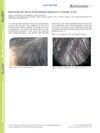
January 2018 in “Acta dermato-venereologica” A teenager's hair with alternating white and dark bands, known as Pili annulati, is a genetic condition that is usually harmless and often considered attractive.
 1 citations
,
July 2016 in “Prescriber”
1 citations
,
July 2016 in “Prescriber” Minoxidil and spironolactone slow hair loss in women.
 1 citations
,
October 2013 in “Our Dermatology Online”
1 citations
,
October 2013 in “Our Dermatology Online” 5α reductase type 2 enzyme mutation and oxidative stress may increase androgenetic alopecia risk in Egyptians.
 1 citations
,
August 2011 in “Dermatology Reports”
1 citations
,
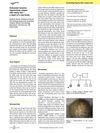
August 2011 in “Dermatology Reports” Two siblings were found to have a genetic condition causing progressive hair loss and woolly hair, which may often be misdiagnosed.
 1 citations
,
June 2011 in “Journal of Genetics”
1 citations
,
June 2011 in “Journal of Genetics” Some human genetic markers work for genetic studies in pig-tailed and stump-tailed macaques, which can help in their conservation.
 1 citations
,
January 2010
1 citations
,
January 2010 Mesotherapy is more effective than topical spray for female hair loss treatment.
 1 citations
,
November 1995 in “Postgraduate medical journal”
1 citations
,
November 1995 in “Postgraduate medical journal” A Saudi individual initially identified as a girl had a genetic disorder affecting gender development.
 1 citations
,
May 1965 in “Medical Clinics of North America”
1 citations
,
May 1965 in “Medical Clinics of North America” Hair growth dysfunction involves various conditions with limited treatment options.

Current treatments for androgenetic alopecia have limitations, and personalized approaches and new methods are needed for better results.
 June 2026 in “Journal of Sulaimani Medical College”
 Adipose-derived stem cell exosomes are more effective and satisfying for treating hair loss than minoxidil.
 May 2026 in “Southeast Asian Journal of Case Report and Review”
 Individualized homeopathic treatment may help improve vitiligo.
 April 2026 in “International Journal of Homoeopathic Sciences”
 Homeopathic treatment improved baldness in a young man.

Loose anagen hair syndrome in children may improve with age, but treatment results vary.
 January 2026 in “MEDS Clinical Medicine”
 Plum-blossom needle therapy shows promise for treating hair loss but needs more research.
 January 2026 in “International Journal of Science and Research Methodology”
 Bhangra may help treat premature greying of hair by boosting melanin and improving scalp health.
 December 2025 in “Journal of Skin and Stem Cell”
 Patients with androgenetic alopecia often have abnormal lipid levels, so they should be screened and advised on lifestyle changes to prevent heart issues.
 October 2025 in “SAR Journal of Medical Biochemistry”
 Moringa oleifera seeds may be a safer alternative to standard antihelminthic drugs.
 January 2025 in “International Journal of Herbal Medicine”
 Unani medicine effectively reduced premature greying of hair in a 27-year-old man.
 December 2024 in “Asian Journal of Pharmaceutical and Clinical Research”
 Combining synthetic and herbal treatments may help with hair loss, but more research is needed.
 August 2024 in “Journal of Contemporary Medical Practice”
 Professor Ma Shuanquan treats hair loss by using Chinese medicine to improve liver, spleen, and kidney health.
PCOS patients, especially obese ones, often lack vitamin D and may need supplements and lifestyle changes.
 July 2024 in “Egyptian Journal of Medical Human Genetics”
 These gene variations are not linked to alopecia areata in Egyptians.
 July 2024 in “Journal of Rare Diseases”
 Woodhouse-Sakati syndrome shows varied symptoms and genetic differences within families.
 June 2024 in “Journal of Islamic International Medical College”
 Low zinc is linked to all alopecia types, and low copper is linked to male pattern alopecia.
 June 2024 in “Research Square (Research Square)”
 Young women in West Bengal, India, with PCOS often have estrogen resistance, leptin receptor issues, folate deficiency, T2DM, and acanthosis, commonly linked to obesity.
 April 2024 in “Research Square (Research Square)”
 A 27-year-old with APS-1 showed improvement in symptoms after treatment.
 January 2024 in “Oxford medical case reports”
 Standard treatment for congenital erythropoietic porphyria was ineffective over five years.
 January 2024 in “Regenerative Biomaterials”
 Dissolvable microneedles with Ginsenoside Rg3 can help treat hair loss by improving drug delivery and stimulating hair growth.
 November 2023 in “Frontiers in pharmacology”
 Drug repositioning offers hope for new, affordable treatments for a genetic skin disorder called ARCI.