 January 2026 in “The Pharma Innovation”
 A kitten with mange was cured using selamectin, shampoo, supplements, and ointment.
 January 2026 in “Buletin Veteriner Udayana”
 The dog was successfully treated for tapeworm infection and improved with supportive therapy.
 December 2025 in “International Journal of Research in Dermatology”
 Isotretinoin effectively treats severe acne but has serious side effects and requires careful monitoring.
 December 2025 in “The American Journal of Medical Sciences and Pharmaceutical Research”
 Combining barber scalp care with medical treatment improves scalp health and well-being in early-stage alopecia.
 October 2025 in “Dermatology Practical & Conceptual”
 ChatGPT 4.0 and Gemini 1.5 Flash are effective for educating patients about androgenetic alopecia, while Deepseek R1 is less reliable.
 October 2025 in “Buletin Veteriner Udayana”
 Early diagnosis and treatment of Notoedres cati in cats is crucial for recovery and preventing reinfestation.
 September 2025 in “Research in Agriculture Livestock and Fisheries”
 Cattle in Mymensingh, Bangladesh, face high parasitic disease rates, needing better deworming and management.
 August 2025 in “Aesthetic Cosmetology and Medicine”
 Blue light can damage hair and scalp, leading to hair loss.
 April 2025 in “PharmacoEconomics - Open”
 Patients with Alopecia Areata are willing to trade life duration for better quality of life.
 January 2025 in “Epsilon Archive for Student Projects (University of Southampton)”
 Mange and orf are present in some goat herds in Zambia, but more research is needed.
 April 2024 in “International journal of women's health”
 Adult female acne is a complex condition that can worsen with menopause, requiring holistic treatment and tailored skincare at different life stages.
 March 2024 in “Tropical Journal of Natural Product Research”
 Many people in Fez-Meknes use potentially toxic plants for various health and cosmetic purposes, but more research is needed to ensure their safety.
 December 2023 in “Dermatology and therapy”
 Japanese patients and physicians often disagree on the severity of Alopecia Areata and treatment satisfaction, needing better communication and treatments.
 November 2023 in “Klìtinna ta organna transplantologìâ”
 MSC-derived exosomes can help treat COVID-19, hair loss, skin aging, and arthritis.
 September 2023 in “International Journal of Applied Pharmaceutics”
 The formulated gel is a promising treatment for alopecia areata.
 August 2023 in “Journal of animal research”
 Ivermectin effectively treats mange in rabbits.

Various treatments exist for hair loss, but no definitive solution.
 May 2023 in “Current Medicinal Chemistry”
 Microneedle patches improve drug delivery for skin treatments and cosmetic enhancements.
 March 2023 in “Journal of Veterinary Medicine and Animal Health”
 The fly larvae infestation caused severe skin damage and health issues in Kenyan dogs.
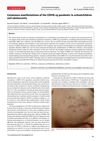 January 2023 in “Acta dermatovenerologica Alpina, Pannonica et Adriatica (Tiskana izd.)”
 The article concludes that schoolchildren and adolescents experienced various skin issues during the COVID-19 pandemic, including acne from masks and other skin reactions from the virus and vaccines.
 February 2020 in “Drug Analytical Research”
 Magistral pharmacies had issues with production quality and dosage accuracy.
 November 2019 in “Harper's Textbook of Pediatric Dermatology”
 Understanding normal hair growth and loss in children is key to diagnosing and treating hair disorders.
 January 2019 in “Springer eBooks”
 Platelet-rich plasma therapy may have benefits and is generally safe, but more research is needed to confirm its effectiveness and safety.
 January 2019 in “ARC journal of pharmaceutical sciences”
 Acne can be managed with various treatments and requires psychological support due to its emotional impact.
 October 2018 in “Springer eBooks”
 The document concludes that various hair disorders have different treatments, including medication, surgery, and addressing underlying causes.
 January 2018 in “Journal of cosmetology & trichology”
 The Automatic Biofibre® Hair Implant is a fast and effective hair restoration method that provides immediate cosmetic benefits and good results in over 90% of cases, but requires proper care to avoid complications.

The document provides 70 multiple choice questions to improve haematology skills.

The document tests knowledge and decision-making in hematology through multiple-choice questions.
 April 2014 in “Journal of evolution of medical and dental sciences”
 Women over forty can maintain skin and hair health with lifestyle and dietary changes.
 July 2012 in “Springer eBooks”
 The document concludes that proper diagnosis and treatment of nonscarring alopecias can improve quality of life and hair regrowth is possible as the hair follicle remains intact.