 1 citations
,
January 2019 in “Journal of Embryology & Stem Cell Research”
1 citations
,
January 2019 in “Journal of Embryology & Stem Cell Research” MSCs help rejuvenate skin by promoting cell growth and reducing inflammation.
 1 citations
,
May 2017 in “Journal of The American Academy of Dermatology”
1 citations
,
May 2017 in “Journal of The American Academy of Dermatology” The moisturizer with phytol improved skin texture and reduced fine wrinkles better than the moisturizer without it.
 May 2026 in “Journal of Health and Allied Sciences NU”
 Optimized culture conditions improve human epidermal stem cell growth for skin regeneration.
 May 2026 in “Nature Communications”
 H3K9me3 is crucial for proper skin development and structure.
November 2025 in “Journal of Investigative Dermatology” N,N-Dimethylglycine sodium salt may improve skin health and treat hair loss.
 September 2025 in “Institutional Repositories DataBase (IRDB)”
 Lactic acid bacteria fermentation can turn waste into valuable skincare ingredients.
 July 2024 in “Journal of Investigative Dermatology”
 Losing both ERBB2 and ERBB3 receptors in mice causes significant skin problems and inflammation.
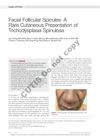
Trichodysplasia spinulosa can occur after a heart transplant due to immunosuppressive drugs.
GPC1 is important for blood vessel growth in hair follicles and could help treat hair loss.
Glypican-1 is important for hair follicle blood vessel growth and could be a target for treating hair loss.
 September 2019 in “Journal of Investigative Dermatology”
 Scientists used stem cells to create a model of the skin disease Epidermolysis Bullosa simplex, which helped them understand its molecular mechanisms and could aid in finding treatments.
April 2019 in “The journal of investigative dermatology/Journal of investigative dermatology” A specific mutation in the TRPV3 gene causes hair follicle cells to develop improperly, leading to hair loss.
September 2017 in “Journal of Investigative Dermatology” Activating Nrf2 helps wounds heal faster by increasing hair follicle stem cells.
September 2016 in “Journal of dermatological science” FGF18 helps hair follicles resist radiation by stopping hair growth cycles.
 December 2015 in “Vascular Pharmacology”
 Different cells affect hair follicle blood vessels, endothelial cells react differently to inflammation and oxidized fats, and prasugrel better protects heart vessels during a procedure than clopidogrel.
Vitamin D is made by the skin, helps control various body functions, and affects skin health and immunity.
January 2012 in “Human health handbooks” The skin produces and uses vitamin D for bone health, cell growth, and immune function.
 January 2007 in “The Year book of dermatology”
 Researchers successfully isolated and identified key stem cells in human hair follicles, which could help develop new skin and hair treatments.
December 2004 in “Reproduction Fertility and Development” Porcine hair follicles are useful for studying keratinocyte function, with galectin-1 as a potential stem cell marker.
RXR and RAR proteins in skin may help with cell growth, hair growth, and gland function.
14 citations
,
January 2006 in “Journal of Investigative Dermatology” Transferrin receptor expression increases iron in mouse skin cells without causing damage.
 April 2023 in “Journal of Investigative Dermatology”
 Scientists created a 3D skin model that shows typical signs of aging, which can help in aging research.
Keratinocytes grew and migrated into hair follicle areas but disappeared after 15-20 days.
2 citations
,
October 2012 in “Experimental Dermatology” Deleting the Sox21 gene changes hair lipid composition and increases cholesterol sulfate levels.
 69 citations
,
August 1999 in “Developmental biology”
69 citations
,
August 1999 in “Developmental biology” The nude gene causes skin cell overgrowth and improper development, leading to hair and urinary issues.
 29 citations
,
January 2016 in “Annals of dermatology/Annals of Dermatology”
29 citations
,
January 2016 in “Annals of dermatology/Annals of Dermatology” Arachidonic acid helps hair grow by increasing growth factors and improving follicle health.
 29 citations
,
March 2015 in “Journal of Investigative Dermatology”
29 citations
,
March 2015 in “Journal of Investigative Dermatology” Cyclosporine A promotes hair growth and prolongs the active growth phase in human hair follicles, but may work differently than in rodents.
 22 citations
,
June 2012 in “Journal of Investigative Dermatology”
22 citations
,
June 2012 in “Journal of Investigative Dermatology” Adiponectin may stimulate hair growth and could be a potential treatment for promoting hair growth.
 16 citations
,
November 2009 in “Experimental dermatology”
16 citations
,
November 2009 in “Experimental dermatology” Ionizing radiation damages human hair follicles by stopping cell growth, causing cell death, disrupting color, and increasing stress and damage markers.
 10 citations
,
August 2022 in “International Journal of Molecular Sciences”
10 citations
,
August 2022 in “International Journal of Molecular Sciences” Leptin-deficient mice, used as a model for Type 2 Diabetes, have delayed wound healing due to impaired contraction and other dysfunctional cellular responses.