 August 2024 in “Journal of Clinical Medicine”
 Systemic treatments like hydroxychloroquine and cyclosporine A help with Lichen Planopilaris and Frontal Fibrosing Alopecia, but ongoing treatment is needed.
 January 2026 in “The Eurasian Journal of Life Sciences”
 Pectin nanofibers show promise for medical use due to their unique properties.
 6 citations
,
February 2023 in “Biomaterials Research”
6 citations
,
February 2023 in “Biomaterials Research” Special gels help heal diabetic foot sores and reduce the risk of amputation or death.
20 citations
,
December 2010 in “Journal of Morphology” Lizard claws have hair-like keratins similar to those in mammals.
 September 2024 in “Egyptian Journal of Dermatology and Venerology”
 Combining TRA and latanoprost is most effective for treating localized alopecia areata.
 July 2024 in “Periodontology 2000”
 Autologous platelet concentrates show promise in esthetic treatments but need more standardized research.
January 2025 in “Dermatologic Therapy” Combining fractional CO2 laser with type III collagen improves acne scar treatment.
August 2022 in “International Journal of Molecular Sciences” DNA methylation controls lncRNA2919, which negatively affects hair growth.
The new gel effectively treats psoriasis with minimal side effects.
July 2026 in “Biochemical and Biophysical Research Communications” 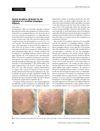 22 citations
,
September 2004 in “Journal of The European Academy of Dermatology and Venereology”
22 citations
,
September 2004 in “Journal of The European Academy of Dermatology and Venereology” Bimatoprost can cause longer, thicker, darker eyelashes and eyebrows.
 11 citations
,
April 2021 in “Advanced synthesis & catalysis”
11 citations
,
April 2021 in “Advanced synthesis & catalysis” PXX is an effective and affordable photocatalyst for creating new chemical bonds in organic synthesis.
October 2025 in “Phytochemistry Letters”  2 citations
,
January 2018 in “Recent clinical techniques, results, and research in wounds”
2 citations
,
January 2018 in “Recent clinical techniques, results, and research in wounds” Low-Level Laser Therapy helps heal wounds and regenerate tissue when used correctly.
 August 2005 in “Microscopy and Microanalysis”
 Polymethylene wax in hair relaxers makes hair smooth and shiny with less damage.
 11 citations
,
December 2016 in “Journal of Molecular Neuroscience”
11 citations
,
December 2016 in “Journal of Molecular Neuroscience”  1 citations
,
January 2026 in “Frontiers in Bioengineering and Biotechnology”
1 citations
,
January 2026 in “Frontiers in Bioengineering and Biotechnology” Ionizable lipid nanoparticles are the best for delivering gene-editing therapies.
53 citations
,
June 1983 in “Journal of Investigative Dermatology” The enzyme is crucial for skin cell development and can be activated without proteolytic activation.
February 2026 in “Journal of Cosmetic Dermatology” Polynucleotide injections improved eye wrinkles with few side effects.
 5 citations
,
March 2005 in “Journal of The American Academy of Dermatology”
5 citations
,
March 2005 in “Journal of The American Academy of Dermatology”  16 citations
,
January 2017 in “Physical chemistry chemical physics/PCCP. Physical chemistry chemical physics”
16 citations
,
January 2017 in “Physical chemistry chemical physics/PCCP. Physical chemistry chemical physics” The 3D structure of a key hair protein was modeled, revealing specific helical structures and stabilization features.
November 2025 in “PLoS ONE” Nucleic acids trigger chemokine production in skin cells, affecting skin inflammation.
6 citations
,
January 2025 in “Journal of Materials Chemistry B” Liposome-composite hydrogel microspheres are promising for safe, controlled drug delivery.
2 citations
,
May 2023 in “Indian Journal of Dermatology Venereology and Leprology” A new genetic mutation in the CAST gene may link PLACK syndrome to alopecia areata.
January 2026 in “International Journal of Biological Macromolecules” The hydrogel improves hair growth treatment by enhancing drug delivery and promoting follicle repair.
January 2005 in “Medical Entomology and Zoology” The reinforced collagen sponge helps grow normal hair in mice.
 256 citations
,
October 2013 in “Nature Communications”
256 citations
,
October 2013 in “Nature Communications” Bioengineered lacrimal glands can restore tear production and protect eyes.
September 2025 in “Frontiers in Pharmacology” The gel shows strong potential for effectively treating pressure ulcers.
9 citations
,
January 2021 in “BioMed research international” Human hair-derived particles can effectively carry and release the cancer drug Paclitaxel in a pH-sensitive manner, potentially targeting cancer cells while sparing healthy ones.
 4 citations
,
July 2024 in “Cureus”
4 citations
,
July 2024 in “Cureus” The treatment improved neck wrinkles and skin laxity.