4 citations
,
March 2024 in “Journal of the American Academy of Dermatology” Clinical signs don't match inflammation levels in lichen planopilaris and frontal fibrosing alopecia.
1 citations
,
January 2025 in “Dermatology Practical & Conceptual” Trichoscopy helps distinguish Lichen Planopilaris from Frontal Fibrosing Alopecia by identifying unique hair loss patterns.
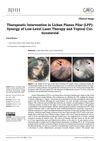 January 2024 in “Brazilian Journal of Hair Health”
 Combining low-level laser therapy with topical corticosteroids effectively improved Lichen Planopilaris symptoms.
 4 citations
,
January 2021 in “Postępy Dermatologii i Alergologii”
4 citations
,
January 2021 in “Postępy Dermatologii i Alergologii” Hydroxychloroquine can help treat certain types of hair loss.

Clinical signs don't match inflammation levels in lichen planopilaris and frontal fibrosing alopecia.
 January 1989 in “Clinical and Experimental Dermatology”
 The symposium concluded that hair growth involves complex processes, including the hair follicle life cycle, the role of the dermal papilla, hair strength, pigmentation, and the impact of diseases and treatments like minoxidil on hair and skin.
 April 2017 in “Journal of Investigative Dermatology”
 Researchers improved a method to study individual cells in newborn mouse skin and found a way to assess the severity of a skin condition in humans.
 1 citations
,
December 2018 in “Journal of Pakistan Association of Dermatology”
1 citations
,
December 2018 in “Journal of Pakistan Association of Dermatology” Dermoscopy is useful for diagnosing different types of hair loss.
19 citations
,
July 2022 in “PNAS Nexus” Similar treatments might work for different types of scarring hair loss.
 January 2025 in “Diagnostics”
 3D high-frequency ultrasound can help diagnose skin and hair conditions without invasive biopsies.
 March 2026 in “Dermatology Reports”
 FFA has higher long-term remission rates than LPP.
1 citations
,
December 2015 in “TURKDERM” Lichen planopilaris can be accurately diagnosed and effectively treated.
 April 2016 in “Journal of The American Academy of Dermatology”
 People with lichen planopilaris often have seborrheic dermatitis, which can delay the diagnosis of lichen planopilaris.
 April 2018 in “The journal of investigative dermatology/Journal of investigative dermatology”
 Mitochondrial dysfunction may contribute to chronic inflammation and immune system issues in Lichen planopilaris.
 117 citations
,
March 2013 in “Journal of the European Academy of Dermatology and Venereology”
117 citations
,
March 2013 in “Journal of the European Academy of Dermatology and Venereology” No effective treatment for frontal fibrosing alopecia was found, but oral 5-alpha-reductase inhibitors had the best response; for lichen planopilaris, topical corticosteroids were commonly used but had a high relapse rate.
 13 citations
,
August 2020 in “Mayo Clinic proceedings”
13 citations
,
August 2020 in “Mayo Clinic proceedings” Women with lichen planopilaris often have thyroid disease, depression, anxiety, and may respond to treatment with slowed disease progression.
 2 citations
,
January 2023 in “Curēus”
2 citations
,
January 2023 in “Curēus” Low-dose naltrexone may help reduce redness in certain scalp conditions.
 2 citations
,
October 2020 in “International Journal of Dermatology”
2 citations
,
October 2020 in “International Journal of Dermatology” Lichen planopilaris in men often involves scalp redness and itching, with some also having hair loss, mucosal lichen planus, or thyroid disease, and treatment improved symptoms in nearly half of the cases.
 September 2023 in “Bulletin of the Medical Institute of Continuing Education”
 Early and accurate treatment of Lichen Planopilaris is crucial to prevent permanent hair loss in men.

Antimalarial agents are effective for LPP, and intralesional steroids are effective for FFA.
 July 2018 in “Elsevier eBooks”
 Lichen Planopilaris is a hair loss condition best treated early with various medications, including hydroxychloroquine, to prevent permanent baldness.
 April 2012 in “Informa Healthcare eBooks”
 Lichen planopilaris is a rare, chronic condition causing hair loss, mainly in middle-aged women, and early treatment is important to prevent permanent baldness.
 47 citations
,
June 2014 in “Journal of Dermatological Treatment”
47 citations
,
June 2014 in “Journal of Dermatological Treatment” Most treatments for lichen planopilaris were found to be generally unsatisfactory.
 80 citations
,
April 2018 in “Trends in Molecular Medicine”
80 citations
,
April 2018 in “Trends in Molecular Medicine” Lichen Planopilaris and Frontal Fibrosing Alopecia may help us understand hair follicle stem cell disorders and suggest new treatments.
March 2004 in “Journal of the American Academy of Dermatology” Middle-aged women with cicatricial alopecia/lichen planopilaris responded well to treatments like ketoconazole shampoo and steroids.
 13 citations
,
April 2022 in “Anais brasileiros de dermatologia/Anais Brasileiros de Dermatologia”
13 citations
,
April 2022 in “Anais brasileiros de dermatologia/Anais Brasileiros de Dermatologia” The document concludes that more research is needed to find effective treatments for Lichen planopilaris and Frontal fibrosing alopecia.
 August 2024 in “Journal of Clinical Medicine”
 Systemic treatments like hydroxychloroquine and cyclosporine A help with Lichen Planopilaris and Frontal Fibrosing Alopecia, but ongoing treatment is needed.
9 citations
,
September 2018 in “JAAD Case Reports” Lichen planopilaris can be triggered by prolonged scalp traction and can be treated with corticosteroids.
4 citations
,
April 2024 in “Clinical Cosmetic and Investigational Dermatology” Trichoscopy helps distinguish between scalp Discoid Lupus Erythematosus and Lichen Planopilaris for accurate diagnosis and treatment.
1 citations
,
April 2025 in “Acta Dermato Venereologica” Methotrexate is best for lichen planopilaris, and retinoids are best for frontal fibrosing alopecia, but side effects are common.