 March 2026 in “Voprosy dermatologii i venerologii/Dermatologiâ ža̋ne veneralogiâ ma̋selelerì”
 Dermatophytes, like Trichophyton rubrum, can cause allergies and chronic inflammation.
 March 2026 in “Voprosy dermatologii i venerologii/Dermatologiâ ža̋ne veneralogiâ ma̋selelerì”
 Expand access to prevention and address barriers for sex workers in Kostanay.
 March 2026 in “Advanced medical journal”
 The technique is practical and safe but needs more research for long-term benefits.

Elderly skin care needs personalized treatment, early intervention, and integrated psychiatric care.
 February 2026 in “Editora Pasteur eBooks”
 A comprehensive, personalized approach is needed for treating female pattern hair loss and obesity, involving multiple medical disciplines and lifestyle changes.
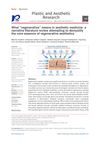 February 2026 in “Plastic and Aesthetic Research”
 Regenerative aesthetic medicine aims to restore tissue function, but needs more consistent evidence and standardized practices.
 February 2026 in “Diabetes Metabolic Syndrome and Obesity”
 Higher basal metabolic rate increases the risk of non-alcoholic fatty liver disease, especially in Chinese people, and may require tailored management.
 January 2026 in “Frontiers in Medicine”
 Acupuncture reduces anxiety and depression in women with PCOS.
 January 2026 in “Nano-Micro Letters”
 4D scaffolds made with melt electrowriting can change shape for use in medicine.
 January 2026 in “Journal of Case Reports and Scientific Images”
 Personalized homeopathy led to significant hair regrowth and improved scalp health in alopecia areata.
 January 2026 in “Clinical Cosmetic and Investigational Dermatology”
 Polynucleotides show promise for improving skin conditions safely but need more research.
 January 2026 in “Archive ouverte UNIGE (University of Geneva)”
 Skin-sparing techniques in gynecomastia surgery lead to good chest results and high patient satisfaction with less scarring.
Autologous platelet concentrates help heal and regenerate dental tissues.
 December 2025 in “Uludağ Üniversitesi Tıp Fakültesi Dergisi”
 Social media significantly influences medical professionals' interest in cosmetic procedures.
 November 2025 in “IECCMEXICO”
 Regenerative therapies are improving aesthetic surgery by enhancing tissue quality and healing.
 November 2025 in “Medical alphabet”
 Physiotherapy methods can effectively stimulate hair growth in telogen alopecia.
 September 2025 in “Cureus”
 Personalized anti-aging treatments improve youthfulness and quality of life.
 September 2025 in “Drug Design Development and Therapy”
 Combining platelet-rich products, biomaterials, and bioactive substances may improve skin treatment, but more research is needed.
Yul Brynner's unique physical presence and gestures defined his star image.
 July 2025 in “International Journal Of Literature And Languages”
 Cultural and national factors shape gender roles in advertising, highlighting the need for inclusive, gender-sensitive language.
Microneedling may improve neck scars, but more research is needed.
 January 2025 in “Bright Sky Publications eBooks”
 Aesthetic medicine is rapidly advancing with new technologies for safer, personalized, and less invasive treatments.
 January 2025 in “Plastic Surgery and Reconstructive Medicine”
 Plasmatherapy improves immune status in vitiligo patients, especially those with segmental vitiligo.
 January 2025 in “International Journal of Veterinary Science”
 Hibiscus leaf ointment helps hair growth and reduces UV skin damage in rats.
 December 2024 in “THE SCIENTIFIC TEMPER”
 Women in Raichur slums need better health awareness and medical help.
 December 2024 in “International Journal of Maxillofacial Imaging”
 Facial cosmetic surgeries can enhance appearance and address aging.
 November 2024 in “Image Analysis & Stereology”
 The method improves hair image segmentation accuracy while reducing annotation costs.
 November 2024 in “International Journal of Research and Review”
 Nanotechnology improves cosmetics by enhancing ingredient delivery and effectiveness.
 November 2024 in “PubMed”
 Carboxytherapy effectively and safely improves skin aging signs.
 October 2024 in “International Journal of Research in Orthopaedics”
 Intense exercise may increase the risk of ankylosing spondylitis in genetically predisposed adolescents.