11 citations
,
June 2025 in “Polymers” Polysaccharide-based niosomes improve drug delivery and show promise in cancer therapy but face challenges in scalability and stability.
2 citations
,
January 2016 in “Journal of in silico & in vitro pharmacology” Combining Minoxidil and Rosemary oil in liposomes improves Minoxidil's effectiveness and remains stable for 60 days.
 1 citations
,
January 2022 in “Journal of Pharmaceutical Sciences”
1 citations
,
January 2022 in “Journal of Pharmaceutical Sciences” The new skin cream with FOL-005 safely promotes hair growth and is stable and user-friendly.
 96 citations
,
September 2021 in “International Journal of Molecular Sciences”
96 citations
,
September 2021 in “International Journal of Molecular Sciences” Chitosan, a natural substance, can be used to create tiny particles that effectively deliver various types of drugs, but more work is needed to improve stability and control of drug release.
17 citations
,
January 2025 in “Journal of Nanobiotechnology” Bacterial extracellular vesicles could revolutionize regenerative medicine but need safety improvements.
13 citations
,
November 2022 in “Future Journal of Pharmaceutical Sciences” Liposome-based cosmeceuticals improve treatment effectiveness for skin and hair conditions.
 10 citations
,
September 2021 in “International Journal of Nanomedicine”
10 citations
,
September 2021 in “International Journal of Nanomedicine” Tiny particles called extracellular vesicles show promise for treating skin conditions and promoting hair growth.
 1 citations
,
July 2022 in “Journal of Drug Delivery Science and Technology”
1 citations
,
July 2022 in “Journal of Drug Delivery Science and Technology” Niosomes and ethosomes can effectively carry the drug spironolactone, potentially improving treatment for hair loss and reducing side effects.
 May 2026 in “Medical Sciences”
 Vesicle-based therapies from stem cells and plants improve burn healing and could be safe, scalable alternatives to cell transplants.
February 2026 in “Molecular and Cellular Probes” Stem cell and plant exosomes may help heal and regenerate skin.
October 2025 in “Preprints.org” Adipose mesenchymal stem cells are best for skincare because they reduce inflammation and are safe and effective.
 May 2025 in “International Journal of Applied Pharmaceutics”
 Nanocarriers could improve hair loss treatments by delivering drugs directly to hair follicles.
April 2025 in “Cosmetics” RCDP NCs are promising anti-aging cosmetic ingredients that improve skin health by reducing oxidative stress and enhancing cell function.
January 2025 in “Cosmetics” Exosomes could improve skin care, but more research is needed to confirm their safety and effectiveness.
 November 2024 in “International Journal of Molecular Sciences”
 Nanoparticles may improve caffeine delivery for hair growth, offering a potential alternative to minoxidil for hair loss treatment.
April 2024 in “Biomolecules” Exosomal miRNAs from stem cells can help improve skin health and delay aging.
 March 2024 in “International journal of pharmaceutics. X”
 Spanlastic-laden nanogel could be a better way to deliver hair growth medication through the skin for treating hair loss.
 March 2024 in “International journal of nanomedicine”
 Polymeric nanohydrogels show potential for skin drug delivery but have concerns like toxicity and regulatory hurdles.
 December 2023 in “Azerbaijan Pharmaceutical and Pharmacotherapy J”
 The minoxidil gel could be a better treatment for hair loss than traditional forms.
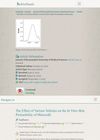 October 2022 in “Journal of Kermanshah University of Medical Sciences”
 Different substances can affect how well the skin absorbs minoxidil, a hair loss drug. Caprylic acid helps the skin absorb it the best, followed by propylene glycol and water.
91 citations
,
August 2024 in “Acta Pharmaceutica Sinica B” Microneedles can improve skin disease treatment by delivering drugs directly through the skin.
90 citations
,
October 2023 in “Advanced Drug Delivery Reviews” Controlling inflammation can help heal diabetic foot ulcers.
 51 citations
,
April 2020 in “Cells”
51 citations
,
April 2020 in “Cells” Special cell particles from macrophages can help hair grow.
44 citations
,
November 2022 in “Frontiers in Immunology” TLR-targeted therapies show promise in cancer treatment by helping destroy tumors.
36 citations
,
January 2016 in “The journal of investigative dermatology/Journal of investigative dermatology” The document concludes that understanding genetic mutations in the PI3K-AKT-mTOR pathway can lead to better diagnosis and treatment for certain genetic skin disorders.
24 citations
,
July 2023 in “Journal of Functional Biomaterials” Bubble-based systems show promise for precise, targeted drug delivery and diagnosis, especially in cancer treatment.
24 citations
,
January 2023 in “International Journal of Nanomedicine” Biomembrane-based hydrogels can effectively promote chronic wound healing.
 18 citations
,
October 2021 in “Frontiers in Physiology”
18 citations
,
October 2021 in “Frontiers in Physiology” Lipocalin-Type Prostaglandin D2 Synthase (L-PGDS) is a protein that plays many roles in the body, including sleep regulation, pain management, food intake, and protection against harmful substances. It also affects fat metabolism, glucose intolerance, cell maturation, and is involved in various diseases like diabetes, cancer, and arthritis. It can influence sex organ development and embryonic cell differentiation, and its levels can be used as a diagnostic marker for certain conditions.
16 citations
,
March 2023 in “Gels” Paeonol-loaded gels may help reduce inflammation and skin damage in atopic dermatitis.
9 citations
,
May 2025 in “Stem Cell Research & Therapy” Extracellular vesicles can both worsen and help treat age-related diseases and are useful for early diagnosis.