 May 2025 in “Life Studies”
 Lung cancer patients on immunotherapy and chemotherapy often experience severe fatigue, drowsiness, and appetite loss.
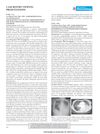 May 2025 in “The Journal of Rheumatology”
 Early recognition and a team approach are crucial for managing diffuse alveolar hemorrhage in antiphospholipid syndrome.
 July 2023 in “Dermatology practical & conceptual”
 Some lung cancer patients treated with EGFR inhibitors may develop a hair loss condition similar to folliculitis decalvans.
 January 2022 in “Juniper Online Journal of Case Studies”
 A patient regrew hair after a lung transplant using standard post-transplant medication.
January 2019 in “Lung India” A 68-year-old woman with lupus and blood disorders improved after increased steroids and immunoglobulin treatment.
January 2013 in “Kidney international” A man with kidney tumors and lung cysts was diagnosed with Birt–Hogg–Dubé syndrome and treated successfully, with genetic testing confirming the diagnosis.
October 2012 in “International journal of radiation oncology, biology, physics” Soy isoflavones can protect lung tissue from damage during radiation therapy for lung cancer.
November 2010 in “Oncology Times” More research is needed on better diagnostics, survivorship, and the impact of genetic mutations in lung cancer.
February 2007 in “Oncology Times” Lung cancer biology differs between women and men, with women responding better to certain treatments.
45 citations
,
January 2021 in “Drug Delivery” MM-CEP/NLCs could effectively treat lung inflammation.
14 citations
,
September 1998 in “Journal of Pediatric Gastroenterology and Nutrition” Pulmonary symptoms in Crohn's disease can occur and should be diagnosed with bronchoscopy for effective treatment.
 3 citations
,
March 2015 in “Biomolecules & Therapeutics”
3 citations
,
March 2015 in “Biomolecules & Therapeutics” Phospholipids from pig lungs can significantly promote hair growth.
 165 citations
,
September 2001 in “Genes & development”
165 citations
,
September 2001 in “Genes & development” CDP is crucial for lung and hair follicle cell development.
45 citations
,
January 2022 in “Lab on a Chip” The platform effectively grows lung cancer cell spheroids for drug testing.
35 citations
,
July 1977 in “PubMed” SLE affects lungs and kidneys similarly due to immune complexes.
 25 citations
,
September 2013 in “Journal of thoracic oncology”
25 citations
,
September 2013 in “Journal of thoracic oncology” Soy isoflavones can protect lung tissue from radiation damage.
15 citations
,
March 2022 in “Frontiers in Bioengineering and Biotechnology” Fucoidan may help treat lung cancer by altering gene expression in cancer cells.
 14 citations
,
January 2001 in “Current Treatment Options in Oncology”
14 citations
,
January 2001 in “Current Treatment Options in Oncology” Treat limited stage small cell lung cancer with chemotherapy and radiation, and consider preventive brain radiation for better survival chances.
13 citations
,
August 2015 in “Oncology Reports” Stem cells slowed lung tumor growth but increased colon tumor growth in mice.
 6 citations
,
May 1986 in “Cancer Chemotherapy and Pharmacology”
6 citations
,
May 1986 in “Cancer Chemotherapy and Pharmacology” The drug TGU was ineffective against small cell lung cancer and caused significant bone marrow suppression.
5 citations
,
September 2024 in “International Journal of Molecular Sciences” 3D bioprinted lung cancer models in a mouse-like structure offer a better way to study radiation effects without using live animals.
4 citations
,
October 2024 in “International Journal of Molecular Sciences” GCN reduces lung inflammation and damage from air pollution in mice.
3 citations
,
October 2024 in “All Life” New treatments targeting genetic mutations in lung cancer are needed for better outcomes.
2 citations
,
January 2023 in “Respiratory Medicine Case Reports” Minoxidil can cause lung disease that looks like hypersensitivity pneumonitis.
 1 citations
,
September 2024 in “Frontiers in Pharmacology”
1 citations
,
September 2024 in “Frontiers in Pharmacology” Aumolertinib effectively controls lung cancer and improves quality of life.
 1 citations
,
October 2022 in “Дерматовенерология Косметология”
1 citations
,
October 2022 in “Дерматовенерология Косметология” EGFR inhibitors for lung cancer can cause severe skin issues.
1 citations
,
August 2020 in “bioRxiv (Cold Spring Harbor Laboratory)” Extracellular vesicles from amniotic fluid stem cells can improve underdeveloped fetal lungs.
 January 2026 in “Nanoscale Advances”
 The nanocomposite effectively targets lung cancer cells without harming normal cells.
 April 2024 in “Journal of pharmacy & pharmacognosy research”
 A compound from Calophyllum inophyllum L. leaf may help treat non-small cell lung cancer.
 June 2021 in “Research Square (Research Square)”
 Adverse events in lung cancer treatments increase fear, anxiety, and depression, with newer therapies causing fewer side effects.