July 2026 in “Cosmoderma” Trichoscopy can identify specific hair patterns in tinea capitis before and after treatment.
 January 2025 in “Revista del Centro Dermatológico Pascua”
 Early diagnosis and treatment can help manage fibrosing alopecia in older women.
 9 citations
,
June 2014 in “British Journal of Dermatology”
9 citations
,
June 2014 in “British Journal of Dermatology” The study found that balding scalps have more thin hairs and larger oil glands, which might contribute to skin conditions related to hair loss.
 39 citations
,
October 2010 in “Journal of The American Academy of Dermatology”
39 citations
,
October 2010 in “Journal of The American Academy of Dermatology” Some patients with mycosis fungoides or Sézary syndrome experience hair loss, which may be similar to alopecia areata or linked to skin lesions, possibly due to abnormal T cells, and bexarotene can help treat it.
January 2015 in “Pathology” A 64-year-old man had a rare skin cancer near his ear, unresponsive to antibiotics, with specific skin and hair follicle changes.
June 1967 in “Journal of Cellular Physiology” The 3D hair follicle model improves understanding of hair growth and drug testing.
 September 2021 in “CRC Press eBooks”
 Fibrosing alopecia in a pattern distribution is a type of hair loss that may often be overlooked, especially in men.
 12 citations
,
July 2016 in “British journal of dermatology/British journal of dermatology, Supplement”
12 citations
,
July 2016 in “British journal of dermatology/British journal of dermatology, Supplement” Different hair fiber development might explain why hair loss severity varies in patients with a specific genetic mutation, and treatments that thicken hair could help.
June 2023 in “Dermatopathology” A woman had a unique skin growth with hair follicle, oil glands, fat cells, spindle cells, and nerve fibers.
 1 citations
,
March 2023 in “PloS one”
1 citations
,
March 2023 in “PloS one” Different amounts of daylight affect cashmere growth in goats by changing the activity of certain genes and molecules.
 January 2024 in “Archives of pathology & laboratory medicine”
 New findings may help diagnose and understand scarring alopecia better.
2 citations
,
January 2010 in “PubMed” Current treatments for postmenopausal frontal fibrosing alopecia stop hair loss but don't regrow hair.
 16 citations
,
December 2019 in “Animals”
16 citations
,
December 2019 in “Animals” Overexpressing Tβ4 in goats' hair follicles increases cashmere production and hair follicle growth.
 9 citations
,
November 2008 in “Journal of Cosmetic Dermatology”
9 citations
,
November 2008 in “Journal of Cosmetic Dermatology” Artificial hair implantation is generally safe and can restore hair when other treatments fail, but some patients may experience side effects.
 13 citations
,
March 2012 in “The Journal of Dermatology”
13 citations
,
March 2012 in “The Journal of Dermatology” Hair transplant surgery can rebuild muscle and nerve connections, allowing transplanted hairs to stand up like normal hairs.
1 citations
,
January 2019 in “PubMed” cgVEGF164 boosts hair follicle growth in mice.
 166 citations
,
April 2012 in “Journal of The American Academy of Dermatology”
166 citations
,
April 2012 in “Journal of The American Academy of Dermatology” Mostly postmenopausal Caucasian women get Frontal Fibrosing Alopecia, which often includes eyebrow loss and has limited treatment success.
 April 2017 in “Journal of Investigative Dermatology”
 A virus protein can activate a pathway that may lead to abnormal hair follicle development.
 October 2021 in “Research Square (Research Square)”
 Melatonin affects certain genes and pathways involved in cashmere goat hair growth.
1 citations
,
April 2021 in “Clinical, Cosmetic and Investigational Dermatology” Conflicting findings in androgenic alopecia are likely due to biopsy location, hair diameter diversity, and hair follicle miniaturization.
January 2008 in “Medical Entomology and Zoology”  2 citations
,
November 2007 in “Journal of Investigative Dermatology”
2 citations
,
November 2007 in “Journal of Investigative Dermatology” Fluocinolone acetonide slows down hair follicle stem cells but speeds up skin cell growth in mice.
 September 2016 in “Journal of The American Academy of Dermatology”
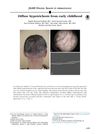
 The girl has a genetic hair condition causing thin hair since childhood.
 2 citations
,
May 2021 in “Scientific Reports”
2 citations
,
May 2021 in “Scientific Reports” Stress is likely causing hair loss in Formosan macaques.
1 citations
,
May 2024 in “Skin Appendage Disorders” Hair regrowth was achieved using 5-Fluorouracil and Bleomycin for scalp atrophy caused by corticosteroids.
109 citations
,
April 1997 in “Archives of Dermatological Research” Mast cell and nerve fiber interactions in mouse skin change with the hair cycle.
 January 2026 in “Frontiers in Medicine”
 FFA and FAPD might be related or stages of the same disease.
48 citations
,
February 2010 in “Molecular biology reports” KAP7.1 and KAP8.2 genes are crucial for cashmere quality in goats.
 236 citations
,
January 1951 in “Physiological zoology”
236 citations
,
January 1951 in “Physiological zoology” Hair growth and pigmentation in mice involve specific stages crucial for research.