6 citations
,
April 2001 in “The Anatomical Record” A new method using hair pores can help align skin grafts better, improving results.
29 citations
,
February 2010 in “British Journal of Dermatology” Snail1 may contribute to fibrosis in frontal fibrosing alopecia in postmenopausal women.
2 citations
,
January 2023 in “Biomedicines” The treatment combining laser and fetal fibroblasts effectively reduces scarring.
 1 citations
,
December 2017 in “Anais Brasileiros de Dermatologia”
1 citations
,
December 2017 in “Anais Brasileiros de Dermatologia” Frontal fibrosing alopecia can mimic traction alopecia but has distinct features like facial papules and eyebrow thinning.
 7 citations
,
December 2020 in “ACS biomaterials science & engineering”
7 citations
,
December 2020 in “ACS biomaterials science & engineering” Human hair keratins can form stable nanofiber networks that might help in tissue regeneration.
39 citations
,
June 2012 in “Journal of Structural Biology” Disulfide bonds are crucial for hair structure during keratinization.
 35 citations
,
November 2020 in “Experimental Dermatology”
35 citations
,
November 2020 in “Experimental Dermatology” Different types of skin cells are organized in a special way in large wounds to help with healing and hair growth.
Hair dysplasias involve various hair disorders causing fragility, breakage, and poor hair adhesion.

Hair follicle stem cells are crucial for touch sensation and proper nerve structure in mice.
1 citations
,
August 2024 in “Journal of Morphology” Mammary glands evolved from hair organs in Monodelphis domestica.
 5 citations
,
January 2021 in “Wiadomości Lekarskie”
5 citations
,
January 2021 in “Wiadomości Lekarskie” The method effectively creates acellular dermal matrix from pig skin while preserving structure.
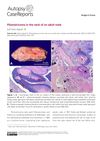 January 2022 in “Autopsy and Case Reports”
 A man had a non-cancerous neck tumor related to hair follicles removed with no return of the tumor.
 April 2026 in “International Journal of Molecular Sciences”
 Targeting non-Smad pathways in TGF-β signaling may improve keloid treatment.
33 citations
,
March 2015 in “Experimental Dermatology” LHX2 and SOX9 identify unique hair follicle cell groups, crucial for hair maintenance.
October 2024 in “International Journal of Comprehensive Veterinary Research.” Neonate rabbits have consistent skin layers and no sweat glands.
 408 citations
,
January 2017 in “Science”
408 citations
,
January 2017 in “Science” Some wound-healing cells can turn into fat cells around new hair growth in mice.
 45 citations
,
October 2008 in “Cytokine & Growth Factor Reviews”
45 citations
,
October 2008 in “Cytokine & Growth Factor Reviews” Activins and follistatins, part of the TGFβ family, are crucial for hair follicle development and skin health, affecting growth, repair, and the hair cycle.
July 2025 in “Journal of Investigative Dermatology” Collagen scaffolds in cell therapy can transform skin to be more resilient and pressure-responsive.
Benign tumors from hair follicles can look like other skin cancers but have distinct features under dermoscopy.
46 citations
,
January 1991 in “Tissue and Cell” The male silkmoth's antenna develops olfactory structures over 21 days, with full hair formation by day 15.
April 2019 in “Journal of Investigative Dermatology” Frontal Fibrosing Alopecia involves disrupted cholesterol pathways, fibrosis, and increased mast cells.
January 2025 in “International Journal of Genomics” Three genes, BMP4, POSTN, and WNT5A, may help treat keloids.
2 citations
,
June 1989 in “Archives of Dermatology” A black pore on a man's cheek was a hair follicle tumor and was removed.
20 citations
,
November 2014 in “Developmental Dynamics” Palate formation and skin healing share similar biological processes.
November 2025 in “Cancer Cell International” Cancer-associated fibroblasts promote tumor growth in skin cancer.
6 citations
,
March 2024 in “Experimental Dermatology” Fibrosis causes loss of important fat cells, affecting tissue function.
 February 2023 in “Mağallaẗ Tikrīt li-l-ʻulūm al-ṣirfaẗ/Tikrit journal of pure science”
 Horse skin has a layered epidermis, a dermis with hair follicles, sweat and sebaceous glands, and is supplied by small arteries.
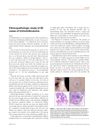 19 citations
,
September 2016 in “Journal of the European Academy of Dermatology and Venereology”
19 citations
,
September 2016 in “Journal of the European Academy of Dermatology and Venereology” Trichofolliculoma is a unique benign tumor mainly affecting middle-aged adults' faces, often misdiagnosed without histopathology.

Type II spiral ganglion neurites avoid high concentrations of laminin and fibronectin.