 June 2026 in “International Journal of Dermatology Venereology and Leprosy Sciences”
 Alopecia areata patients may have higher blood pressure and blood sugar, indicating a future risk of metabolic issues.
 May 2026 in “Jurnal Sehat Indonesia (JUSINDO)”
 Low vitamin D levels may worsen or cause alopecia areata.
 May 2026 in “International Journal of Homoeopathic Sciences”
 Individualized Homeopathic Medicine shows promise for treating alopecia with lasting hair regrowth.
 March 2026 in “Journal of Pakistan Association of Dermatologists”
 Tofacitinib helps hair regrowth in alopecia areata but relapse is common after stopping treatment.
 March 2026 in “IP Indian Journal of Clinical and Experimental Dermatology”
 Wrinkles, dry skin, and hair changes are common in elderly skin, while infections and eczema are also prevalent.
 February 2026 in “Bioimpacts”
 3D bioprinted hydrogels could improve diabetic wound healing but face challenges like limited blood supply and scalability.
 December 2025 in “Frontiers in Nutrition”
 Collagen supplements may improve skin, joints, and recovery, especially with added nutrients.
 December 2025 in “Clinical Cosmetic and Investigational Dermatology”
 Early diagnosis and multidisciplinary care, including orthopedic surgery, can prevent long-term disability in IFAP syndrome.

GV-350 improves hair growth and quality of life in iron-deficient women without side effects.
 November 2025 in “Dermatology and Therapy”
 The drinkable supplement increased hair growth and was safe for women with hair loss.
 November 2025 in “International Journal of Recent Innovations in Medicine and Clinical Research”
 Understanding different types of hair loss helps in accurate diagnosis and treatment.

Baricitinib effectively regrows hair in severe alopecia areata cases.

Cellular flows and tissue mechanics guide feather follicle formation in birds.
 September 2025 in “Journal of Dhaka Medical College”
 Lower vitamin D levels are linked to more severe alopecia areata.
 August 2025 in “Journal of the Pakistan Medical Association”
 Skin issues might be linked to infertility.
 May 2025 in “Journal of research in pharmaceutical science.”
 The herbal hair serum with hibiscus, flaxseed, and aloe vera improves hair smoothness and shine without harmful effects.
 January 2025 in “bioRxiv (Cold Spring Harbor Laboratory)”
 Rhamnose may help hair growth and pigmentation, making it a potential treatment for hair loss.

The polyherbal hair mask is a safe and effective alternative for improving hair health.
 January 2025 in “International Journal of Dermatology Venereology and Leprosy Sciences”
 Obesity worsens skin health and losing weight can improve skin conditions.
 January 2025 in “Universidad de Córdoba Insitutional Repository (Universidad de Córdoba)”
 An imbalanced scalp microbiome may worsen alopecia areata severity and inflammation, but treatment can partially restore balance.
 September 2024 in “African Journal of Biomedical Research”
 Alopecia areata patients have lower vitamin D and slightly lower copper levels, so these should be checked.
 August 2024 in “JAMA Dermatology”
 Continuous baricitinib is needed to keep hair regrowth in severe alopecia areata.
 August 2024 in “OSMANGAZİ JOURNAL OF MEDICINE”
 The visfatin GT genotype may increase the risk of Alopecia Areata.
 July 2024 in “Egyptian Journal of Medical Human Genetics”
 These gene variations are not linked to alopecia areata in Egyptians.
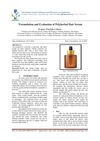 June 2024 in “International Journal of Pharmaceutical Research and Applications”
 Polyherbal hair serum can hydrate the scalp and promote hair growth safely.
 May 2024 in “International Journal For Multidisciplinary Research”
 The herbal hair cream helps protect and improve hair health.
 April 2024 in “International journal of clinical trials”
 SesZen-Bio™ improves hair density, thickness, and overall hair health.
 February 2024 in “Digital Library of Theses and Dissertations (Universidade de São Paulo)”
 Argan, avocado, and coconut oils are absorbed into hair, improving hydration and protection.
 January 2024 in “Biological trace element research”
 Isotretinoin affects trace element levels and requires monitoring of liver and kidney functions.

Elastin-like recombinamers show promise for better wound healing and skin regeneration.