2 citations
,
May 2022 in “Journal of Industrial and Engineering Chemistry” Minoxidil-loaded nanoparticles effectively promote hair regrowth and are safe for use.
December 2022 in “Clinical and experimental dermatology and therapies” Adding the topical gel improved hair growth more than using minoxidil or finasteride alone.
 January 2025 in “Institutional Repositories DataBase (IRDB)”
 Maslinic acid from olive extracts promotes hair growth like minoxidil.
 17 citations
,
March 1985 in “Journal of The American Academy of Dermatology”
17 citations
,
March 1985 in “Journal of The American Academy of Dermatology” Minoxidil can lower blood pressure in some people.
 9 citations
,
September 2011 in “Cutaneous and Ocular Toxicology”
9 citations
,
September 2011 in “Cutaneous and Ocular Toxicology” Using 2% minoxidil for baldness treatment might cause vision distortion due to fluid build-up under the retina.
 24 citations
,
May 1982 in “Biochemical Pharmacology”
24 citations
,
May 1982 in “Biochemical Pharmacology” These drugs cause hair growth without affecting testosterone or adrenal hormones.
January 2025 in “Global Journal of Medical Therapeutics” Minoxidil can cause allergic skin reactions, especially in those with underlying health issues.
14 citations
,
January 2018 in “Indian Journal of Dermatology, Venereology and Leprology” Adding low-level light therapy to minoxidil improves hair growth and patient satisfaction.
 33 citations
,
October 2016 in “European Journal of Pharmaceutical Sciences”
33 citations
,
October 2016 in “European Journal of Pharmaceutical Sciences” Effervescent formulations may improve minoxidil delivery, increasing effectiveness and reducing applications needed.
 July 2023 in “Journal of Drug Delivery Science and Technology”
 Finasteride niosomes were developed and found to be effective in treating hair loss, with better results than commercial minoxidil, and could be a promising topical treatment for hair loss.
 June 2026 in “JAAD reviews.”
 Low-dose oral minoxidil may help with various hair loss types, but more research is needed.
December 2025 in “Journal of Drug Delivery Science and Technology” Combining minoxidil with ginsenoside Rg3 and glycyrrhizic acid offers a more effective treatment for androgenic alopecia.
 May 2025 in “Current Drug Safety”
 Topical minoxidil can rarely cause swelling due to fluid retention.
 8 citations
,
July 2007 in “International Journal of Dermatology”
8 citations
,
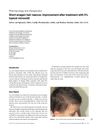
July 2007 in “International Journal of Dermatology” Using 5% topical minoxidil improved and normalized the hair growth in a girl with short anagen hair naevus.

Cetosomal minoxidil is safer and as effective as alcohol-based minoxidil for male hair loss treatment.
 May 2015 in “Journal of The American Academy of Dermatology”
 Oral minoxidil improved male baldness, but had side effects; certain antibiotics effectively treated a rare scalp condition; hair transplants might trigger another scalp condition.

Lipid carriers improve delivery of hair loss treatments to follicles.
 49 citations
,
October 1994 in “Annals of Oncology”
49 citations
,
October 1994 in “Annals of Oncology” Minoxidil not effective in preventing chemotherapy-induced hair loss.
July 2026 in “Journal of the American Academy of Dermatology” CRT is more effective than oral minoxidil alone for treating hair loss.
 2 citations
,
March 1985 in “Journal of The American Academy of Dermatology”
2 citations
,
March 1985 in “Journal of The American Academy of Dermatology” Minoxidil solution used on the scalp did not lower blood pressure in patients without hypertension.
 29 citations
,
July 2009 in “Journal of Dermatology”
29 citations
,
July 2009 in “Journal of Dermatology” 5% minoxidil works better for hair growth than 1% minoxidil.

Media coverage led to more dermatologists prescribing low-dose oral minoxidil for hair loss.
 34 citations
,
July 2018 in “American Journal of Physiology-heart and Circulatory Physiology”
34 citations
,
July 2018 in “American Journal of Physiology-heart and Circulatory Physiology” Minoxidil improves blood flow and vessel flexibility, potentially helping with vascular stiffness.
March 1983 in “International Journal of Dermatology” Minoxidil can cause excessive hair growth.
 16 citations
,
March 2017 in “Journal of inclusion phenomena and macrocyclic chemistry”
16 citations
,
March 2017 in “Journal of inclusion phenomena and macrocyclic chemistry” Minoxidil mixed with 2-hydroxypropyl-β-cyclodextrin in water can improve hair growth more than minoxidil alone.
 13 citations
,
January 1988 in “Contact Dermatitis”
13 citations
,
January 1988 in “Contact Dermatitis” Some patients using Minoxidil for baldness developed allergic skin reactions.
1 citations
,
July 2016 in “PubMed” 5% minoxidil foam is effective and safe for hair regrowth in women with hair loss.
1 citations
,
October 1988 in “Archives of Dermatology” Minoxidil's hair growth benefits may decrease over time.
January 2014 in “Journal of Clinical Dermatology” Topical minoxidil improves life quality for women with hair loss.
 3 citations
,
September 2019 in “Journal of The American Academy of Dermatology”
3 citations
,
September 2019 in “Journal of The American Academy of Dermatology” Low-dose oral minoxidil effectively treats mild-moderate male hair loss, alone or combined with other therapies.