 November 2025 in “Frontiers in Medicine”
 Baseline severity and relapse history affect alopecia areata treatment and recurrence.
 November 2025 in “International Journal of Recent Innovations in Medicine and Clinical Research”
 Understanding different types of hair loss helps in accurate diagnosis and treatment.
 November 2025 in “Bioscientia Medicina Journal of Biomedicine and Translational Research”
 A combined treatment with microneedling and vitamin D3 led to complete hair regrowth in a woman with stubborn patch alopecia areata.
 November 2025 in “Turkish Journal of Dermatology”
 Both baricitinib and tofacitinib effectively reduce alopecia areata severity, with tofacitinib showing more improvement over longer use.
 October 2025 in “Animal Bioscience”
 Key genes linked to important traits in Chinese sheep and goats have been identified, but challenges remain in breeding improvements.
 September 2025 in “Dermatology and Therapy”
 Baricitinib is a promising treatment for alopecia areata in the UAE, but there are challenges with data and access.
 August 2025 in “Archiv Euromedica”
 Gut microbiota changes might play a role in alopecia areata, and microbiome-targeted treatments show promise.
 August 2025 in “Frontiers in Immunology”
 People with alopecia areata have a higher risk of heart disease.
 May 2025 in “Journal of Food and Nutrition Research”
 Black wolfberry ferment may help regrow hair in cases of androgenetic alopecia.

CD4 T cells need IFN-γ to cause hair loss in alopecia areata.
Baricitinib is more effective than methotrexate for severe alopecia areata.

Exosome therapy could help hair growth but needs more research for safety and effectiveness.
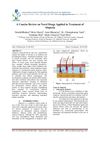
New therapies like JAK inhibitors, PRP, and stem cell treatments show promise for better alopecia management.
 January 2025 in “Вопросы современной педиатрии”
 Janus kinase inhibitors effectively treat alopecia areata but may cause relapses and have long-term safety concerns.
 January 2025 in “Repository of the Academy's Library (Library of the Hungarian Academy of Sciences)”
 Baricitinib is effective and safe for treating severe alopecia areata.
 January 2025 in “Acta Dermatovenerologica Alpina Pannonica et Adriatica”
 Baricitinib is effective and safe for treating severe alopecia areata.
 January 2025 in “International Journal of Dermatology Venereology and Leprosy Sciences”
 Current treatments for alopecia areata can help hair grow but don't cure the disease.
 January 2025 in “American Journal of Translational Research”
 Erianin may effectively treat alopecia areata by targeting the immune system.
 January 2025 in “Universidad de Córdoba Insitutional Repository (Universidad de Córdoba)”
 An imbalanced scalp microbiome may worsen alopecia areata severity and inflammation, but treatment can partially restore balance.
 December 2024 in “Clinical Cosmetic and Investigational Dermatology”
 Alopecia areata might help slow down certain cancers.
 September 2024 in “South Eastern European Journal of Public Health”
 Alopecia areata patients have higher IgE and IL-13 levels, suggesting immune involvement.
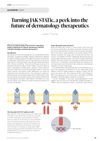 August 2024 in “New Zealand Medical Student Journal”
 JAK inhibitors show promise for treating skin diseases effectively and safely.
 July 2024 in “International Journal of Medical Arts”
 Latanoprost is more effective than minoxidil for treating alopecia areata.
 June 2024 in “Archives of Medical Science”
 Telitacicept effectively improved hair regrowth in a woman with lupus and alopecia.
 May 2024 in “Frontiers in Immunology”
 Type-2 immunity may influence skin diseases and could be targeted for treatment.
 April 2024 in “Frontiers in pharmacology”
 Brepocitinib 30mg is most effective for moderate-to-severe alopecia areata, but ritlecitinib 50mg may offer a better balance of safety and effectiveness.
 March 2024 in “Clinical, cosmetic and investigational dermatology”
 Upadacitinib may effectively treat alopecia areata without side effects.
 January 2024 in “Revista de la Asociación Colombiana de Dermatología y Cirugía Dermatológica/Revista de la Asociacion Colombiana de Dermatologia y Cirugia Dermatologica”
 Baricitinib successfully treated severe hair loss.
 December 2023 in “bioRxiv (Cold Spring Harbor Laboratory)”
 Aged individuals heal wounds less effectively due to specific immune cell issues.
 December 2023 in “International journal of multidisciplinary research and analysis”
 SH-MSCs gel can effectively treat alopecia by increasing IL-10 and decreasing TNF-α gene expression.