 9 citations
,
January 2021 in “RSC Advances”
9 citations
,
January 2021 in “RSC Advances” Non-thermal plasma helps hair grow by improving the area around hair follicles.
3 citations
,
October 2024 in “Animals” An allele of the KRTAP13-2 gene may improve wool quality in sheep.
 January 2026 in “Frontiers in Medicine”
 PP-PTKL may help treat hair greying, but more testing is needed.
1 citations
,
September 2024 in “Animals” Specific gene variants affect wool traits in Chinese Tan sheep.
13 citations
,
July 1994 in “PubMed” Keratins K6 and K16 are expressed more freely in regenerating mouse skin than K1 and K10.
15 citations
,
May 2014 in “Journal of Biological Chemistry” A chimeric keratin partially improved skin structure in mice lacking keratin 5, but didn't fully restore normal skin.
 9 citations
,
February 2005 in “The journal of investigative dermatology/Journal of investigative dermatology”
9 citations
,
February 2005 in “The journal of investigative dermatology/Journal of investigative dermatology” The document concludes that the human keratin gene cluster is complex, with a need for updated naming to reflect over 50 functional genes important for hair and skin biology.
 3 citations
,
August 2020 in “Journal of Cosmetic Dermatology”
3 citations
,
August 2020 in “Journal of Cosmetic Dermatology” Topical nitroglycerin spray effectively prevents scalp necrosis in hair transplant patients.
1 citations
,
October 2023 in “BMC Genomics” miRNAs in the Dlk1-Gtl2 region may improve lamb fur quality.
July 2024 in “Journal of Investigative Dermatology” A new test helps find drugs to treat head and neck cancer by targeting c-Rel.
January 2026 in “ACS Applied Bio Materials” A new treatment using nanoliposomes can improve hair regrowth in androgenetic alopecia.
January 2016 in “Texas ScholarWorks (Texas Digital Library)” DORN1 receptor affects eATP-induced stomatal changes but not eADP in Arabidopsis thaliana.
219 citations
,
July 1995 in “PubMed” Keratinocyte growth factor promotes hair growth and reduces hair loss from chemotherapy.
133 citations
,
June 1993 in “Molecular and Cellular Biology” The human K5 promoter controls specific gene expression in skin cells, with key regulatory elements near the TATA box.
 January 2019 in “Proceedings for Annual Meeting of The Japanese Pharmacological Society”
 Nε-(carboxymethyl) lysine delays hair growth by blocking a key protein.
60 citations
,
September 2023 in “Science” BTNL proteins help control inflammatory bowel disease by maintaining specific immune cells.
March 2022 in “Clinical Cosmetic and Investigational Dermatology” CDKN2AIP gene is less active in nevus sebaceous, affecting related RNA networks.
January 1999 in “Chinses Journal of Hand Surgery” Human hair keratin artificial tendon is a safe and effective tendon substitute.
 18 citations
,
February 2025 in “Drug Delivery and Translational Research”
18 citations
,
February 2025 in “Drug Delivery and Translational Research” The microneedle patches effectively treat allergic conjunctivitis with controlled, sustained release of medication.
33 citations
,
May 2017 in “Journal of Clinical Oncology” ETC-159 was safe up to 30 mg, but no tumor shrinkage was seen.
35 citations
,
September 2009 in “Development” Necl2 affects skin cell behavior and slows wound healing.
 24 citations
,
January 2003 in “Journal of Investigative Dermatology”
24 citations
,
January 2003 in “Journal of Investigative Dermatology” Blocking a specific receptor slows down hair loss in mice.
38 citations
,
January 2014 in “Journal of Dermatological Science” Krtap11-1 is important for hair strength and structure.
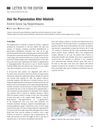 April 2025 in “Turkish Journal of Hematology”
 Nilotinib may cause gray hair to return to its original color.
 February 2025 in “Archives animal breeding/Archiv für Tierzucht”
 Certain gene combinations improve cashmere quality and production in Liaoning goats.
46 citations
,
September 2007 in “Journal of Investigative Dermatology” Light tickling can be unpleasant and may feel worse for individuals with autism.
 December 2025 in “Journal of Nanobiotechnology”
 The new microneedle system promotes hair growth by improving the hair follicle environment.
August 2024 in “American Journal of Medical Genetics Part A” Variants in the CCDC47 gene are linked to trichohepatoneurodevelopmental syndrome.
40 citations
,
September 2012 in “European Journal of Dermatology” Laser hair removal significantly improves acne keloidalis nuchae, especially with early treatment.