Non-immune dermal cells dominate, epidermal cells increase after day 9, and certain immune cells persist beyond inflammation in wound-induced hair follicle regeneration.
 14 citations
,
August 2022 in “Lupus Science & Medicine”
14 citations
,
August 2022 in “Lupus Science & Medicine” SLE patients experience two patterns of non-inflammatory symptoms: intermittent and persistent.
 96 citations
,
January 2013 in “International Journal of Trichology”
96 citations
,
January 2013 in “International Journal of Trichology” Trichoscopy is a useful, non-invasive way to diagnose different types of hair loss.
October 2025 in “Diagnostics” Temporal triangular alopecia is a harmless, non-progressive hair loss condition.
 1 citations
,
May 2017 in “InTech eBooks”
1 citations
,
May 2017 in “InTech eBooks” Telogen Effluvium is a common hair loss condition that can be short-term or long-lasting and is often caused by stress, illness, or nutritional issues.
November 2025 in “Advanced Healthcare Materials” Bioprinting is improving skin models for better testing of skin diseases without using animals.
 October 2024 in “Cochrane library”
 No high-certainty evidence supports any specific acne treatment.
9 citations
,
July 1993 in “Archives of dermatology” Pityriasis amiantacea is a scalp condition with thick, greasy scales and sometimes hair loss.
 2 citations
,
March 2023 in “Skin research and technology”
2 citations
,
March 2023 in “Skin research and technology” Temporal triangular alopecia in infants is mostly seen in males at birth, with unique features that help with diagnosis.
15 citations
,
February 2015 in “Anais brasileiros de dermatologia/Anais Brasileiros de Dermatologia” Dermoscopy helps accurately diagnose temporal triangular alopecia, avoiding unnecessary treatments.
 April 2026 in “Journal of Applied Veterinary Science And Technology”
 Chronic malnutrition can cause ascites in kittens, and improving nutrition can lead to quick recovery.
 November 2023 in “International Journal of Dermatology”
 Trichoscopy helps tell apart other hair loss conditions from common hair loss.
 January 2008 in “Pratique médicale & chirurgicale de l'animal de compagnie”
 Alopecia X in dogs is a cosmetic issue, not a hormonal disorder, and harmful treatments should be avoided.
14 citations
,
August 2004 in “Veterinary Dermatology” The horse had a rare type of hair loss caused by immune cells attacking hair follicles.
14 citations
,
March 2000 in “Journal of Zoo and Wildlife Medicine” A new type of mite caused hair loss in a koala, which was treated successfully with ivermectin.
 9 citations
,
June 2003 in “Veterinary dermatology”
9 citations
,
June 2003 in “Veterinary dermatology” Boxer dogs may have a genetic skin condition that worsens seasonally and can be treated with certain medications.
1 citations
,
November 2022 in “PubVet” Microneedling and orchiectomy helped treat hair loss in a German Spitz dog.
January 2026 in “Journal of Investigative Dermatology” Female-pattern hair loss may involve an autoimmune-like process, suggesting new treatment options.
 January 2025 in “Brazilian Journal of Veterinary Medicine/Revista Brasileira de Medicina Veterinária”
 Deslorelin implant successfully regrew hair in a female Pomeranian with alopecia X.
 18 citations
,
September 2013 in “Technology”
18 citations
,
September 2013 in “Technology” The study introduced a new imaging technology to track skin healing and bone marrow cell activity over time.
 52 citations
,
March 2010 in “British Journal of Dermatology”
52 citations
,
March 2010 in “British Journal of Dermatology” Alopecia areata shows a unique type 1 interferon signature, suggesting potential treatment by targeting this pathway.
 18 citations
,
October 2017 in “PLOS ONE”
18 citations
,
October 2017 in “PLOS ONE” The study concluded that similar pathways regulate hair growth in dogs and mice, and these pathways are disrupted in dogs with Alopecia X, affecting stem cells and hormone metabolism.
 8 citations
,
May 2018 in “Primary Care: Clinics in Office Practice”
8 citations
,
May 2018 in “Primary Care: Clinics in Office Practice” Doctors should use a detailed patient history and physical exam to diagnose joint pain, and consult a rheumatologist early for suspected autoimmune diseases.
 7 citations
,
January 2011 in “Veterinary Pathology”
7 citations
,
January 2011 in “Veterinary Pathology” A horse with severe hair loss was diagnosed with alopecia areata and a yeast infection.
May 2025 in “Lasers in Surgery and Medicine” Nonablative monopolar radiofrequency is a safe and effective long-term treatment for acne.
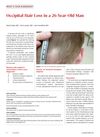 January 2022 in “Consultant”
 The man's occipital hair loss was due to temporal triangular alopecia, not alopecia areata.
 July 2021 in “Journal of emerging technologies and innovative research”
 Ayurvedic methods successfully treated severe acne in a patient.
November 2012 in “Annales de Dermatologie et de Vénéréologie” Frontal fibrosing alopecia can occur in children, not just postmenopausal women.
December 1972 in “Archives of Dermatology” The girl has an inflammatory type of scarring hair loss.
 8 citations
,
February 2022 in “Vascular Health and Risk Management”
8 citations
,
February 2022 in “Vascular Health and Risk Management” Some skin conditions may increase the risk of heart disease, and understanding their connection could lead to better treatments.