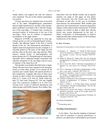
 January 1999 in “Journal of the European Academy of Dermatology and Venereology”
 RAPK is a rare skin disorder with pigmented spots, mainly on hands and feet, starting in youth.
5 citations
,
June 2008 in “British Journal of Dermatology”  1 citations
,
March 2023 in “bioRxiv (Cold Spring Harbor Laboratory)”
1 citations
,
March 2023 in “bioRxiv (Cold Spring Harbor Laboratory)” NAC1 controls certain enzymes that reduce root hair growth in Arabidopsis.
 1 citations
,
September 2020 in “Journal of Dermatological Science”
1 citations
,
September 2020 in “Journal of Dermatological Science” The gene LRRC15 is more active in balding areas of the scalp compared to non-balding areas.
 7 citations
,
January 2015 in “Genetics and molecular research”
7 citations
,
January 2015 in “Genetics and molecular research” The RORα gene is active in different parts of cashmere goat hair follicles and may be influenced by melatonin, especially in December when hair growth changes.
 February 2020 in “Definitions”
 Mutations in the KRT16 gene can cause skin and nail disorders.
91 citations
,
August 2019 in “Frontiers in Microbiology” RpoS helps Borrelia burgdorferi survive in hosts and adapt to different environments.
 28 citations
,
February 2012 in “PLoS ONE”
28 citations
,
February 2012 in “PLoS ONE” A PKP1 gene mutation causes skin fragility and hair loss in Chesapeake Bay retriever puppies.
 September 2024 in “Genes”
 CRABP1 boosts hair cell growth in Hu sheep by affecting key genes.
126 citations
,
October 1998 in “Experimental Dermatology” The hr gene is crucial for skin and hair health, with mutations causing hair disorders.
303 citations
,
October 2000 in “Nature” RXRα is crucial for hair growth and skin cell function.
216 citations
,
June 2015 in “PLANT PHYSIOLOGY” OsPHR3 can help breed rice that efficiently uses phosphate without growth issues.
 4 citations
,
May 2025 in “npj Parkinson s Disease”
4 citations
,
May 2025 in “npj Parkinson s Disease” PINK1 is important for controlling gut immune responses linked to early Parkinson's disease.
7 citations
,
January 2024 in “Cancer Research Communications” TAp63 and NRF2 work together to manage oxidative stress, preventing premature aging and aiding skin functions.
Raptor and Rictor have stable expression in hair cycles, with Raptor marking stem cells and Rictor involved in hair shaft formation.
 April 2024 in “bioRxiv (Cold Spring Harbor Laboratory)”
 A gene network led by RSL4 is crucial for early root hair growth in response to cold in Arabidopsis thaliana.
24 citations
,
July 2014 in “Journal of Investigative Dermatology” Nagashima-type palmoplantar keratosis in Asians is caused by a SERPINB7 gene mutation.
April 2012 in “Development” Rac1 is crucial for normal hair structure and pigmentation.
April 2018 in “DSpace@MIT (Massachusetts Institute of Technology)” Nephronectin is linked to worse outcomes in breast cancer and helps cancer spread.
 25 citations
,
January 2014 in “Annals of Dermatology”
25 citations
,
January 2014 in “Annals of Dermatology” Sfrp2 increases during hair follicle catagen phase and slows keratinocyte growth.
51 citations
,
December 2006 in “Mammalian Genome” 34 citations
,
August 2018 in “Cancer research” Fixing DNA errors is crucial to prevent skin cancer.
 June 2025 in “International Journal of Nephrology and Renovascular Disease”
 PLA2R1 overexpression harms kidney cells by stopping their growth cycle.
March 2022 in “Clinical Cosmetic and Investigational Dermatology” CDKN2AIP gene is less active in nevus sebaceous, affecting related RNA networks.
28 citations
,
February 2010 in “Experimental Dermatology” The frizzy mouse and hairless rat mutations are due to changes in the Prss8 gene.
 1 citations
,
January 1970
1 citations
,
January 1970 Precise objectives can improve student achievement in health education.
 January 2025 in “Nature Communications”
 CPK1 helps root hair growth in Arabidopsis by activating channels for calcium signaling.
 178 citations
,
October 2001 in “Genes & Development”
178 citations
,
October 2001 in “Genes & Development” The mutated hairless gene causes hair loss by acting as a new type of corepressor affecting thyroid hormone receptors.
June 2025 in “Neurology India” Anti-SRP myopathy can be linked to systemic lupus erythematosus and may improve with specific treatment.
 July 2022 in “The journal of investigative dermatology/Journal of investigative dermatology”
 Blocking mTORC1 activity with rapamycin could help increase hair pigmentation and growth, potentially reversing gray hair.