70 citations
,
April 2020 in “Journal of Molecular Cell Biology” Organoid technology helps create mini-organs for studying diseases and testing drugs.
70 citations
,
November 2020 in “The Ocular Surface” Organoids and organ chips can improve eye disease research and treatment.
 36 citations
,
August 2021 in “Nature Cell Biology”
36 citations
,
August 2021 in “Nature Cell Biology” Organoids can help study COVID-19 and develop treatments, but face challenges like instability and limited renewal.
30 citations
,
July 1998 in “British Journal of Dermatology” Fat cells slow hair cell growth but speed up their development.
17 citations
,
May 2025 in “MedComm” Organoid technology is improving personalized medicine by better predicting drug responses and treatments.
 8 citations
,
April 2010 in “JEADV. Journal of the European Academy of Dermatology and Venereology/Journal of the European Academy of Dermatology and Venereology”
8 citations
,
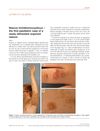
April 2010 in “JEADV. Journal of the European Academy of Dermatology and Venereology/Journal of the European Academy of Dermatology and Venereology” The first pediatric case of naevus trichilemmocysticus was documented.
7 citations
,
January 2024 in “Burns & Trauma” Sebaceous gland organoids could improve skin regeneration and treatment.
5 citations
,
January 2021 in “Frontiers in cell and developmental biology” Skin cysts might help advance stem cell treatments to repair skin.
5 citations
,
October 1988 in “Clinics in Dermatology” A method was developed to grow hair follicles in a lab for research on hair growth and health.
4 citations
,
July 2025 in “Organoids” Organoids can revolutionize medicine by modeling diseases and aiding in personalized treatments.
 2 citations
,
September 2022 in “Organoid”
2 citations
,
September 2022 in “Organoid” A new method was developed to efficiently grow skin hair follicles from stem cells, potentially aiding alopecia treatment.
 2 citations
,
December 2022 in “Journal of Biochemistry and Molecular Biology”
2 citations
,
December 2022 in “Journal of Biochemistry and Molecular Biology” Organoids created from stem cells are used to model diseases, test drugs, and develop personalized and regenerative medicine.
 1 citations
,
July 2021 in “Organoid (Online)”
1 citations
,
July 2021 in “Organoid (Online)” Organoid technology is advancing and entering commercial use, with applications in disease modeling, drug development, and personalized medicine.
 July 2026 in “Organoid Research”
 A unified framework is needed to improve skin organoid construction for research and clinical use.
July 2026 in “Bioactive Materials” A new method using tiny needles can help regrow hair in a controlled way.
 May 2026 in “Organoid Research”
 Hydrogel-based methods improve skin organoid development for medical and research applications.
 May 2026 in “Organoid Research”
 Hydrogel-based hair follicle organoids could help treat hair loss and improve drug testing.
March 2026 in “Materials Today Bio” The new cryo-MAP technique enables rapid and successful hair growth by transplanting hair follicle organoids.
January 2026 in “Wound Repair and Regeneration” Skin organoids are improving research but need better blood supply, nerve function, and immune system integration.
January 2025 in “Health engineering.” Combining stem cells and organoids could improve skin regeneration treatments.
 December 2024 in “Medical Review”
 Organoids help study and treat genetic diseases, offering personalized medicine and therapy testing.
January 2026 in “Lab on a Chip” Organoids and hair-on-chip technologies show promise for hair regeneration but face clinical challenges.
Organoids can sustainably produce advanced materials with superior properties, offering solutions to global challenges.
 November 2024 in “Burns & Trauma”
 Skin organoids help improve wound healing and tissue repair.
169 citations
,
January 2018 in “Cell Reports” Scientists grew hair follicles from mouse stem cells in a lab setting.
67 citations
,
June 2019 in “Proceedings of the National Academy of Sciences” A new 3D culture system helps grow and study mouse skin stem cells for a long time.
 31 citations
,
January 2021 in “Experimental Dermatology”
31 citations
,
January 2021 in “Experimental Dermatology” Skin organoids are a promising new model for studying human skin development and testing treatments.
 26 citations
,
January 2019 in “Experimental Dermatology”
26 citations
,
January 2019 in “Experimental Dermatology” Researchers created early-stage hair-like structures from skin cells, showing how these cells can self-organize, but more is needed for complete hair growth.
25 citations
,
February 2024 in “Biomaterials” Stem cell-derived organoids can improve skin healing.
20 citations
,
November 2021 in “Frontiers in cell and developmental biology” Skin organoids from stem cells could better mimic real skin but face challenges.