15 citations
,
March 2021 in “EMBO Reports” PRSS35 enzyme may help start skin tumors and could be a target for cancer treatment.
 June 2024 in “British Journal of Dermatology”
 A rare case of a transplant patient developing a skin condition linked to HPV-49.
 April 2018 in “Journal of Investigative Dermatology”
 CENPV, a new partner of CYLD, helps regulate ciliary acetylated tubulin and is overexpressed in certain skin tumors.
July 2024 in “Journal of Investigative Dermatology” A new test helps find drugs to treat head and neck cancer by targeting c-Rel.
7 citations
,
April 2019 in “Animal biotechnology” The POMP gene is active in various goat tissues and affects hair growth, with certain treatments influencing its expression.
253 citations
,
April 2009 in “Journal of Biological Chemistry” p2y5, now called LPA6, is a receptor important for human hair growth.
 93 citations
,
June 2011 in “Journal of Neuroscience”
93 citations
,
June 2011 in “Journal of Neuroscience” p63 is essential for activating and differentiating stem cells in the nose's olfactory tissue.
18 citations
,
December 2016 in “European journal of pharmacology” A new compound slows cancer cell growth and causes cell death by blocking cell cycle progression and increasing cell-damaging molecules.
1 citations
,
October 2023 in “PROTOPLASMA”  April 2018 in “Journal of Investigative Dermatology”
 The study found that p63 needs signals from morphogens to help skin cells differentiate properly.
November 2022 in “Journal of Investigative Dermatology” ILC1-like cells can cause alopecia areata by themselves.
7 citations
,
November 2007 in “Differentiation” The NF-κB effector p65/RelA activates hair keratin genes, aiding hair formation.
January 2009 in “OhioLink ETD Center (Ohio Library and Information Network)” p63 and p73 regulate the vitamin D receptor, affecting cancer cell behavior and vitamin D sensitivity.
2 citations
,
October 2023 in “Philosophical Transactions of the Royal Society B Biological Sciences” Different PADI isoforms help cells develop diverse functions.
37 citations
,
February 2007 in “Experimental Dermatology” Increasing PDCD4 protein may help prevent or treat some skin cancers.
 15 citations
,
November 2022 in “Cell Death and Disease”
15 citations
,
November 2022 in “Cell Death and Disease” CEP135 may predict cancer outcomes, and targeting PLK1 could help treat certain sarcomas.
 6 citations
,
November 2011 in “Journal of Dermatological Science”
6 citations
,
November 2011 in “Journal of Dermatological Science” A new gene mutation may allow some piebaldism patients to regain skin color in white patches.
 96 citations
,
October 2000 in “The FASEB Journal”
96 citations
,
October 2000 in “The FASEB Journal” The p75 neurotrophin receptor is important for hair follicle regression by controlling cell death.
 3 citations
,
January 2019 in “Journal of Dermatology”
3 citations
,
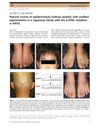
January 2019 in “Journal of Dermatology” The p.P25L mutation in the KRT5 gene causes a rare skin condition that worsens over time and may lead to hair loss starting in young adulthood.
January 2026 in “Biomaterials” 324 citations
,
May 2002 in “Oncogene”  November 2022 in “The journal of investigative dermatology/Journal of investigative dermatology”
 A patient with a new PLEC gene mutation showed symptoms of both muscular dystrophy and myasthenia gravis, which improved with steroid treatment.
7 citations
,
December 1970 in “Biochimica et Biophysica Acta (BBA) - Protein Structure” 48 citations
,
April 2008 in “Human Molecular Genetics” Progerin affects cell shape but not hair or skin in mice.
 4 citations
,
May 2025 in “npj Parkinson s Disease”
4 citations
,
May 2025 in “npj Parkinson s Disease” PINK1 is important for controlling gut immune responses linked to early Parkinson's disease.
166 citations
,
September 2011 in “The Journal of Cell Biology” p63 controls Satb1 to help skin develop properly.
88 citations
,
June 2000 in “Journal of Investigative Dermatology” Keratin 17 is important for hair and nail structure and affects pachyonychia congenita symptoms.
 November 2022 in “Journal of Investigative Dermatology”
 Neutrophils quickly respond to skin injury.
1 citations
,
November 2023 in “Journal of Microbiology and Biotechnology” Immortalized human dermal papilla cells were created that grow better and can still help form hair.
Mdm2 is crucial for controlling p53 to maintain healthy cells and prevent tumors.