 January 2025 in “Letters in Drug Design & Discovery”
 Ozonated olive oil may effectively treat fungal skin infections.
 May 2025 in “Frontiers in Genetics”
 A new genetic variant in the LIPH gene causes hair growth issues in a Chinese patient.
 2 citations
,
January 2020 in “BioMed Research International”
2 citations
,
January 2020 in “BioMed Research International” Phaeodactylum tricornutum extract helps hair follicle cells grow by activating the ERK1/2 pathway.
 5 citations
,
February 2019 in “PloS one”
5 citations
,
February 2019 in “PloS one” Bald thigh syndrome in sighthounds is caused by structural defects in hair shafts due to downregulated genes and proteins.
 19 citations
,
September 1995 in “Food and nutrition bulletin”
19 citations
,
September 1995 in “Food and nutrition bulletin” Leucaena leucocephala is nutritious but needs careful processing to remove toxins.
 January 2026 in “Buletin Veteriner Udayana”
 The dog was successfully treated for tapeworm infection and improved with supportive therapy.
 March 2025 in “Research Square (Research Square)”
 Lactiplantibacillus plantarum lysate from green tea may help treat scalp seborrheic dermatitis.
11 citations
,
April 2012 in “Journal of Investigative Dermatology” A specific mutation in PA-PLA1α causes abnormal hair growth.
264 citations
,
October 1958 in “Archives of Dermatology” A 4-year-old girl has a rare hair condition causing fragile, short hair.
 13 citations
,
June 2013 in “Actas Dermo-Sifiliográficas”
13 citations
,
June 2013 in “Actas Dermo-Sifiliográficas” Syphilitic alopecia, linked to syphilis and high-risk sexual behavior, improves with penicillin treatment.
July 2024 in “Journal Archives of Health” Adults can get scalp fungal infections, needing quick treatment to prevent spread and hair loss.
13 citations
,
January 2019 in “Journal of the American Academy of Dermatology” Pityriasis rubra pilaris significantly worsens quality of life more than many other health conditions.
1 citations
,
January 2008  45 citations
,
January 2015 in “Dermatology”
45 citations
,
January 2015 in “Dermatology” Hair loss in secondary syphilis is more common than thought and can be reversed with antibiotics.
 January 2021 in “Middle East journal of applied sciences”
 Over 30% of livestock in New Valley Governorate, Egypt, had skin diseases, affecting their productivity and income.
7 citations
,
January 2013 in “Indian dermatology online journal” A rare skin condition with dark, thick, warty patches and some hair loss was found in a newborn boy.
61 citations
,
February 1982 in “Cell and Tissue Research” 18 citations
,
June 2004 in “Mycoses” Two patients with a rare scalp fungus in Poland were successfully treated with griseofulvin and ciclopirox.
 19 citations
,
January 2011 in “Annals of Dermatology”
19 citations
,
January 2011 in “Annals of Dermatology” M. restricta may cause Malassezia folliculitis, especially in teens and twenties.
5 citations
,
October 2020 in “Agronomy” Root hairs are crucial for phosphorus uptake in barley under low-phosphorus conditions.
 69 citations
,
January 2020 in “Veterinary World”
69 citations
,
January 2020 in “Veterinary World” Ringworm in pets is influenced by fungi type, immune status, and stress hormones.
 June 2026 in “Lahore Garrison University Journal of Life Sciences”
 The combination showed limited antifungal effects against dandruff-causing fungus.
110 citations
,
September 2017 in “Molecules” Forsythiae Fructus has anti-inflammatory, antibacterial, and antiviral properties, with differences between unripe and ripe forms important for clinical use.
December 2016 in “Experimental and Molecular Pathology” Mus pahari mice have fragile skin due to abnormal collagen and elastin.
April 2026 in “International Journal of Agriculture and Food Science” Early diagnosis and treatment can effectively manage mite infestations in goats.
 42 citations
,
September 2018 in “Journal of Fungi”
42 citations
,
September 2018 in “Journal of Fungi” Terbinafine and itraconazole are more effective against Microsporum canis than fluconazole and griseofulvin.
11 citations
,
January 2016 in “Mycoses” Human black hair is best for distinguishing between T. mentagrophytes and T. verrucosum.
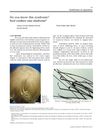
The document concludes that Loose Anagen Hair Syndrome is a benign condition where hair is thin and easily pulled out, often improving with age.
 17 citations
,
January 2014 in “Annals of Dermatology”
17 citations
,
January 2014 in “Annals of Dermatology” Malassezia folliculitis mainly affects the trunk in males and is better detected with d-PAS staining.
 35 citations
,
January 1996 in “Dermatologic clinics”
35 citations
,
January 1996 in “Dermatologic clinics” Tinea capitis is a common scalp infection causing hair loss, mostly in young children.