 1 citations
,
May 2017 in “Journal of The American Academy of Dermatology”
1 citations
,
May 2017 in “Journal of The American Academy of Dermatology” The moisturizer with phytol improved skin texture and reduced fine wrinkles better than the moisturizer without it.
32 citations
,
June 2024 in “Pharmaceutics” Nanoformulations improve drug delivery through the skin, reducing side effects and enhancing effectiveness.
March 2026 in “Journal of Ayurveda and Integrative Medicine” The Sonowal Kachari tribe uses 39 plants for medicine, mainly leaves, showing their valuable herbal knowledge.
1 citations
,
April 2025 in “Phycology” Phlorotannins from brown seaweeds may improve skin and hair health in cosmetics.
21 citations
,
February 2023 in “Pharmaceuticals” Pomegranate leaves can be a cost-effective source of beneficial ingredients for health and skincare products.
4 citations
,
October 2017 in “Indian drugs” Hibiscus rosa-sinensis L. leaves and flowers contain various compounds with potential medicinal uses.
1 citations
,
July 2025 in “Frontiers in Pharmacology” FMH foods may help manage post-acute COVID-19 symptoms safely and easily.

The extract from the plant Adiantum capillus-veneris might be used to treat COVID-19.
 November 2025 in “Frontiers in Oncology”
 Sphaeranthus indicus and silver nanoparticles can help treat liver cancer by killing cancer cells.
 August 2024 in “Asian Journal of Research in Chemistry”
 Repurposing existing drugs can improve cancer treatment but faces challenges.
17 citations
,
October 2023 in “Molecules” Plant-derived PDRN from ginseng roots effectively heals skin and improves its barrier.
7 citations
,
February 2023 in “Exploration of Medicine” Drug repurposing offers promising strategies to improve tuberculosis treatment despite challenges.
May 2025 in “OPAL (Open@LaTrobe) (La Trobe University)” Jamogenin and other compounds may help treat hair loss by inhibiting 5-alpha reductase.
 November 2023 in “Materials Today Bio”
 Light therapy might help treat hereditary hair loss by improving hair follicle growth in lab cultures.
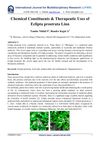 January 2024 in “International Journal For Multidisciplinary Research”
 Eclipta prostrata Linn has many health benefits and is used in traditional medicine.
January 2026 in “Journal of Ethnopharmacology” Cedrol promotes hair growth better than baricitinib by regulating immune cells.
 17 citations
,
August 2007 in “Bioorganic & Medicinal Chemistry Letters”
17 citations
,
August 2007 in “Bioorganic & Medicinal Chemistry Letters” A compound made by Pfizer can potentially stimulate hair growth and reduce oil production, making it a good candidate for topical use.
1 citations
,
January 2022 August 2018 in “Jundishapur journal of natural pharmaceutical products” Transfollicular drug delivery can improve medication absorption through hair follicles.
 December 2021 in “International journal of minor fruits, medicinal and aromatic plants”
 The document concludes that in Sri Lanka, 25 common plants are traditionally used as home remedies for various health issues due to their medicinal properties.
 July 2026 in “International Journal of Biology Pharmacy and Allied Sciences”
 Dermoscopy and natural oil blends help diagnose and treat skin issues effectively.
September 2022 in “The Korean Tea Society” Houttuynia cordata compounds may help with anti-aging and hair loss.
December 2024 in “Jurnal Ilmiah Farmasi (Scientific Journal of Pharmacy)” Nanotechnology could improve lavender oil's effectiveness, but more research is needed.
 February 2022 in “Research Journal of Biotechnology”
 Eclipta alba L. is a medicinal plant with many health benefits, including treating diseases and promoting hair growth.
Developing microRNA-based treatments is hard but has potential.
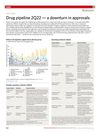 August 2022 in “Nature Biotechnology”
 Drug approvals slowed in 2Q22, but notable drugs like Amvuttra, Camzyos, and Olumiant were approved.
 June 2022 in “Organic communications”
 Natural compounds, especially Withaferin-A, may help treat post-COVID-19 complications, but some may have side effects.
 12 citations
,
April 2016 in “Chinese Medicine”
12 citations
,
April 2016 in “Chinese Medicine” The research identified 12 antioxidant compounds in Polygonum multiflorum roots, suggesting these as quality markers for the plant's processed roots.
 April 2026 in “Zenodo (CERN European Organization for Nuclear Research)”
 Hair follicles can be used to deliver drugs effectively, especially using nanoparticles, for treating skin conditions.
 January 2025 in “International Journal of Zoological Investigations”
 Myristica fragrans shows promise as an anti-inflammatory agent.