 June 2026 in “Zenodo (CERN European Organization for Nuclear Research)”
 Rice and guava leaf extracts can improve hair and scalp health.
36 citations
,
April 2022 in “Nutrients” Langsat fruit has health benefits like fighting malaria, bacteria, and aging, but its peel is toxic.
 2 citations
,
June 2016 in “Journal of Applied Biological Chemistry”
2 citations
,
June 2016 in “Journal of Applied Biological Chemistry” Glycine soja extract stimulates hair growth and could help treat hair loss.
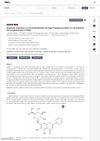
Enzymatic synthesis improved the water solubility of the flavonoid baicalin, which may help treat hair loss conditions.
28 citations
,
June 2010 in “Pediatric dermatology” Short anagen syndrome causes short hair that may grow longer after puberty.
April 2020 in “The FASEB journal” Poncirin is a promising inhibitor of Janus Kinase 3, potentially better than tofacitinib.
 January 2026 in “Frontiers in Natural Products”
 Combining shikimic acid and Prunus mume extract may effectively treat acne naturally.
 December 2024 in “Clinical Cosmetic and Investigational Dermatology”
 Elderly patients with eruptive skin bumps may have clear cell syringoma linked to glucose issues.
6 citations
,
February 2002 Spondias mombin bark may help treat certain cancers but can cause side effects like increased heart rate.
4 citations
,
January 2017 in “The Journal of Korean Medicine Ophthalmology and Otolaryngology and Dermatology” Gagamhwajung-hwan may effectively treat severe alopecia areata.
 January 2025 in “International Journal of Advanced Research in Science Communication and Technology”
 Calotropis gigantea latex is effective for treating skin conditions and other health issues.
June 2024 in “Lasers in Surgery and Medicine” The cooling system effectively and safely treats benign pigmented lesions in Asians.
August 2019 in “Pharmacoscript” The 3:2 combination of pandanus and sansevieria extracts promotes the best hair growth.
 July 2025 in “Bulletin de la Banque Méllié Iran.”
 Spirulina extract helps stem cells become neuron cells safely.
 13 citations
,
October 2012 in “Free Radicals and Antioxidants”
13 citations
,
October 2012 in “Free Radicals and Antioxidants” The red Hibiscus rosa-sinensis flower has the highest antioxidant activity.
 1 citations
,
October 2021 in “Bioactive compounds in health and disease”
1 citations
,
October 2021 in “Bioactive compounds in health and disease” Hibiscus anthocyanins help protect the liver and improve antioxidants in diabetic rats.
7 citations
,
May 2024 in “Molecules” Red rice is a nutritious super-food with potential health benefits.
December 2009 in “한국인체미용예술학회지” The herb extract helped prevent hair loss and promote hair growth.
6 citations
,
February 2019 in “Journal of dermatology” Favus, a rare fungal infection, has reappeared in Japan.
March 2026 in “Acta Histochemica”  October 2025 in “Interdiciplinary Journal and Hummanity (INJURITY)”
 Kalimantan herbal plants have beneficial compounds supporting traditional medicine and potential therapeutic uses.
 September 2011 in “Clinical Biochemistry”
 Sodium metasilicate improved spinal motoneuron recovery after sciatic nerve injury in rats.
 37 citations
,
January 2010 in “Internal Medicine”
37 citations
,
January 2010 in “Internal Medicine” A woman's liver was damaged by taking the herbal supplement Shou-Wu-Pian, but it got better after she stopped using it.
2 citations
,
August 2018 in “Journal of pharmacopolium” The 3:2 combination of pandanus and sansevieria leaf extracts promotes the best hair growth.
 January 2006 in “The Journal of Korean Medicine Ophthalmology and Otolaryngology and Dermatology”
 Rubus coreanum may help hair growth but not through the tested mechanisms, and none of the herbal extracts help with acne.
2 citations
,
June 2017 in “ScienceRise” A mask-cream with herbal extracts was successfully developed for treating hair loss.
 January 2020 in “bioRxiv (Cold Spring Harbor Laboratory)”
 Semecarpus anacardium leaf extracts may offer safe, effective cancer treatment alternatives.
1 citations
,
March 2023 in “Medicine” Satoyoshi syndrome can cause eye problems like uveitis and retinal vein issues.
 March 2026 in “Journal of Zhejiang University (Medical Sciences)”
 Angelica sinensis helps repair and regenerate the thymus in mice.