 2 citations
,
January 2012 in “Journal of metabolic syndrome”
2 citations
,
January 2012 in “Journal of metabolic syndrome” The document concludes that hirsutism can be managed with various treatments tailored to the individual, potentially improving quality of life.
 2 citations
,
November 2011 in “InTech eBooks”
2 citations
,
November 2011 in “InTech eBooks” Most adrenal cortex tumors are benign and non-secreting, but proper diagnosis and treatment are important due to the rare possibility of cancer.
 2 citations
,
February 2004 in “Biopolymers”
2 citations
,
February 2004 in “Biopolymers” 4-(4-Phenoxybenzoyl)benzoic acid derivatives can both increase and decrease certain types of reactive oxygen species, and may be relevant to hair loss.
 1 citations
,
July 2025 in “Frontiers in Endocrinology”
1 citations
,
July 2025 in “Frontiers in Endocrinology” ApoBDs, once seen as waste, are now viewed as potential tools for disease treatment and tissue repair.
 1 citations
,
June 2025 in “International Journal of Plant and Environment”
1 citations
,
June 2025 in “International Journal of Plant and Environment” Nickel oxide nanoparticles made with plant extract can kill bacteria and fungi and break down dyes.
 1 citations
,
January 2024 in “Acta Bioclínica”
1 citations
,
January 2024 in “Acta Bioclínica” Hair and scalp health needs more attention in medical training.
 1 citations
,
October 2023 in “Life science alliance”
1 citations
,
October 2023 in “Life science alliance” Pantethine may boost the immune system's ability to fight sarcoma.
 1 citations
,
June 2023 in “Curēus”
1 citations
,
June 2023 in “Curēus” PCOS affects nearly 25% of female medical and dental students, impacting their academic and social lives.
 1 citations
,
October 2022
1 citations
,
October 2022 OTEC power output is higher in summer due to greater temperature differences.
 1 citations
,
December 2020 in “Journal of Experimental Biology and Agricultural Sciences”
1 citations
,
December 2020 in “Journal of Experimental Biology and Agricultural Sciences” COVID-19 is caused by a virus from bats, and efforts focus on prevention and treatment research.
 1 citations
,
September 2020 in “Journal of the Endocrine Society”
1 citations
,
September 2020 in “Journal of the Endocrine Society” Men have worse COVID-19 outcomes than women due to genetic and hormonal differences.
 1 citations
,
August 2020 in “Food Research”
1 citations
,
August 2020 in “Food Research” Plant extracts like Avicennia marina, Boehmeria nipononivea, and Camellia sinensis could potentially treat hair loss with fewer side effects than synthetic drugs.
 1 citations
,
January 2019 in “International Journal of ChemTech Research”
1 citations
,
January 2019 in “International Journal of ChemTech Research” Eclipta prostrata has many medicinal benefits, but more research is needed to understand how it works.
 1 citations
,
May 2013 in “Journal of the Egyptian Women's Dermatologic Society (Print)”
1 citations
,
May 2013 in “Journal of the Egyptian Women's Dermatologic Society (Print)” Women with idiopathic hirsutism and PCOS have higher RBP4 levels, and PCOS is linked to greater insulin resistance; weight management may help both conditions.
 1 citations
,
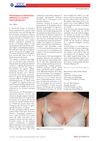
August 2012 in “Journal der Deutschen Dermatologischen Gesellschaft”
1 citations
,
August 2012 in “Journal der Deutschen Dermatologischen Gesellschaft” A woman's hyperandrogenism was caused by a genetic mutation leading to non-classic adrenogenital syndrome.
 1 citations
,
January 2012 in “Journal of The Society of Japanese Women Scientists”
1 citations
,
January 2012 in “Journal of The Society of Japanese Women Scientists” Murine hair has specific types of ceramides and glucosylceramides but lacks acylceramides.
 1 citations
,
January 2011 in “Springer eBooks”
1 citations
,
January 2011 in “Springer eBooks” Histone demethylases play a key role in the development of many diseases and may be targets for treatment.
 1 citations
,
October 2010 in “Cambridge University Press eBooks”
1 citations
,
October 2010 in “Cambridge University Press eBooks” The document suggests new ways to assess and diagnose hyperandrogenism to improve accuracy.
 1 citations
,
November 2002 in “Endocrine practice”
1 citations
,
November 2002 in “Endocrine practice” The patient's high testosterone was reduced by a medication that suppresses gonadotropin.
 1 citations
,
January 1989 in “Journal of dermatological treatment”
1 citations
,
January 1989 in “Journal of dermatological treatment” Azelaic acid may help treat acne by killing bacteria, reducing inflammation, and preventing clogged pores.
 July 2026 in “Organoid Research”
 A unified framework is needed to improve skin organoid construction for research and clinical use.
 July 2026 in “Clinical Cosmetic and Investigational Dermatology”
 Sesbania grandiflora improves hair growth and health.
 June 2026 in “International Journal of Innovative Technologies in Social Science”
 Clascoterone cream is a safer, effective acne treatment with fewer side effects.
 June 2026 in “The Journal of the Kyushu Dental Society”
 A new mouse model using pyroxylin can promote hair growth and may help develop human hair growth treatments.
 June 2026 in “EXPERIMENTAL & CLINICAL MEDICINE GEORGIA”
 Trichoscopy is useful for assessing androgenetic alopecia severity but can't determine hair loss stage alone.

Mechanical surface cues can control macrophage behavior for better immunotherapy and tissue healing.
 April 2026 in “Nowotwory Journal of Oncology”
 Aesthetic treatments can safely improve cancer patients' quality of life with oncologist approval.
 April 2026 in “International Journal of Drug Delivery Technology”
 Trichoscopy is a reliable, non-invasive tool for diagnosing scalp alopecias.
 April 2026 in “International Journal of Research and Review”
 Gout should be managed by lowering uric acid levels, not just treating pain.
 April 2026 in “International Journal of Clinical Oncology”
 Combining immune checkpoint inhibitors with other cancer therapies increases skin side effects in Asian patients.