 178 citations
,
August 2016 in “Advances in wound care”
178 citations
,
August 2016 in “Advances in wound care” New effective scar treatments are urgently needed due to the current options' limited success.
July 2026 in “Frontiers in Immunology” New hair follicles can form in wounds through immune and skin cell interactions, offering potential treatments for hair loss and scarless healing.
 61 citations
,
September 2020 in “Bioactive Materials”
61 citations
,
September 2020 in “Bioactive Materials” A special dressing called FEA-PCEI can speed up wound healing, reduce scars, and help grow new hair follicles, but only at the right dosage.
18 citations
,
January 2022 in “Oxidative Medicine and Cellular Longevity” Fibroblasts are crucial in scar formation and wound healing, with potential therapies aiming for scarless healing.
June 2025 in “Materials Today Bio” A silk fibroin hydrogel boosts wound healing and hair growth by increasing collagen and hair follicles.
 84 citations
,
January 2018 in “Biomaterials Science”
84 citations
,
January 2018 in “Biomaterials Science” Sericin hydrogels heal skin wounds well, regrowing hair and glands with less scarring.

The new biomimetic skin heals wounds faster and better than traditional treatments, without scarring.
October 2025 in “Cell Proliferation” IL10_ApoEVs improve skin healing and reduce scarring.
 April 2025 in “bioRxiv (Cold Spring Harbor Laboratory)”
 Older mice heal wounds without scars due to special fibroblasts.
May 2026 in “Cell Reports Medicine” FR-1 reduces skin scarring and promotes healing without harmful effects.
 February 2024 in “Frontiers in physiology”
 Modifying certain signals in the body can help wounds heal without scars and regrow hair.
 January 2007 in “The Year book of surgery”
 Mast cells and VEGF contribute to post-surgery adhesions, and blocking VEGF can reduce these adhesions; also, certain factors affect wound healing and fetal skin heals differently with age.
23 citations
,
January 2017 in “Journal of Functional Biomaterials” Biomaterials can help reduce skin scarring and improve wound healing.
4 citations
,
November 2024 in “International Journal of Biological Macromolecules” Zinc sulfide cellulose scaffolds can reduce scarring and promote hair growth.
 64 citations
,
August 2013 in “Mayo Clinic Proceedings”
64 citations
,
August 2013 in “Mayo Clinic Proceedings” Wound healing insights can improve regenerative medicine.
 March 2021 in “Institutional Repositories DataBase (IRDB)”
 Heparin-functionalized nanofabrics help heal wounds effectively and safely without scars in 14 days.
November 2025 in “Bioactive Materials” The cryogel effectively heals infected wounds and promotes tissue regeneration without scarring.
 11 citations
,
June 2016 in “npj Regenerative Medicine”
11 citations
,
June 2016 in “npj Regenerative Medicine” The symposium concluded that understanding how different species repair tissue and how this changes with age can help advance regenerative medicine.
47 citations
,
August 2024 in “Science Advances” The new sprayable wound mask helps heal wounds without scars.
1 citations
,
January 2014 in “Ghent University Academic Bibliography (Ghent University)” New treatments show promise for better wound healing, but more research is needed.
19 citations
,
January 2023 in “Frontiers in Bioengineering and Biotechnology” MSC-sEVs may effectively treat chronic non-healing wounds.
139 citations
,
May 2020 in “Stem Cell Research & Therapy” Exosomes from stem cells help wounds heal faster by affecting specific cell signals.
October 2025 in “Preprints.org” Adipose mesenchymal stem cells are best for skincare because they reduce inflammation and are safe and effective.
 April 2021 in “Journal of Investigative Dermatology”
 Bacteria can help skin regenerate through a process called IL-1β signaling.
 168 citations
,
August 2000 in “American Journal of Pathology”
168 citations
,
August 2000 in “American Journal of Pathology” Fibromodulin might help reduce scarring if increased in adult wounds like in fetal skin that heals without scars.
 202 citations
,
August 2007 in “Biomaterials”
202 citations
,
August 2007 in “Biomaterials” Artificial skin development has challenges, but new materials and understanding cell behavior could improve tissue repair. Also, certain growth factors and hydrogel technology show promise for advanced skin replacement therapies.
 9 citations
,
November 2018 in “Drug Discovery Today”
9 citations
,
November 2018 in “Drug Discovery Today” Using skin stem cells and certain molecules might lead to scar-free skin healing.
 January 2016 in “Springer eBooks”
 New materials and methods could improve skin healing and reduce scarring.
 418 citations
,
September 2012 in “Nature”
418 citations
,
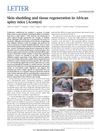
September 2012 in “Nature” African spiny mice can regenerate skin, hair, and cartilage, but not muscle, and their unique abilities could be useful for regenerative medicine.
 31 citations
,
July 2017 in “Clinical Science”
31 citations
,
July 2017 in “Clinical Science” MicroRNAs are important for skin health and could be targets for new skin disorder treatments.