April 2024 in “Biomolecules” Exosomal miRNAs from stem cells can help improve skin health and delay aging.
 March 2024 in “Indian Journal of Dermatology/Indian journal of dermatology”
 Exosomes could be key in treating skin conditions and healing wounds.
 August 2023 in “International Journal of Molecular Sciences”
 Human skin xenografting could improve our understanding of skin development, renewal, and healing.
2 citations
,
May 2025 in “Pharmaceutics” Exosomes could improve skin health and treat skin diseases, but more research is needed.
 April 2018 in “Journal of Investigative Dermatology”
 Fetuin A may increase collagen production and promote scarring.
 4 citations
,
December 2022 in “Frontiers in Bioengineering and Biotechnology”
4 citations
,
December 2022 in “Frontiers in Bioengineering and Biotechnology” Exosomes show promise for improving wound healing, reducing aging signs, preventing hair loss, and lightening skin but require more research and better production methods.
 July 2024 in “Gene & Protein in Disease”
 Exosome therapy shows promise for treating skin conditions and improving wound healing.
 1 citations
,
January 2014 in “Archives of Aesthetic Plastic Surgery”
1 citations
,
January 2014 in “Archives of Aesthetic Plastic Surgery” The FUE technique is effective for Asian female hairline restoration with benefits like no scar and short recovery time.

Regenerative cosmetics can improve skin and hair by reducing wrinkles, healing wounds, and promoting hair growth.
 232 citations
,
June 2012 in “Cold Spring Harbor Perspectives in Biology”
232 citations
,
June 2012 in “Cold Spring Harbor Perspectives in Biology” Wnt signaling helps heal injuries and could lead to new treatments.
 86 citations
,
April 2016 in “Nature Communications”
86 citations
,
April 2016 in “Nature Communications” Notch1 helps skin heal by attracting specific immune cells.
 16 citations
,
January 2011 in “Archives of Dermatological Research”
16 citations
,
January 2011 in “Archives of Dermatological Research” The study found that expanded skin regenerates similarly to normal skin, with 77 genes playing a role in the process.
 1 citations
,
April 2022 in “Regenerative Therapy”
1 citations
,
April 2022 in “Regenerative Therapy” Activating the GDNF-GFRα1-RET signaling pathway could potentially promote skin and limb regeneration in humans and could be used to treat hair loss and promote wound healing.
 1 citations
,
November 2014 in “Elsevier eBooks”
1 citations
,
November 2014 in “Elsevier eBooks” Future research should focus on making bioengineered skin that completely restores all skin functions.
 418 citations
,
September 2012 in “Nature”
418 citations
,
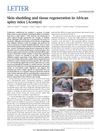
September 2012 in “Nature” African spiny mice can regenerate skin, hair, and cartilage, but not muscle, and their unique abilities could be useful for regenerative medicine.
 January 2026 in “Food and Feed Research”
 Bananas have many health benefits, including treating diarrhea, diabetes, and colds.
 December 2025 in “MEDFARM Jurnal Farmasi dan Kesehatan”
 Topical metformin shows promise for treating skin conditions like acne and psoriasis.
 December 2023 in “Ophtha Therapy”
 Eyebrow lifts are effective for facial rejuvenation but may leave visible scars.
 October 2025 in “International Wound Journal”
 Gamma-irradiated amniotic fluid improves healing and reduces thickness of hypertrophic scars.
Stem cell therapy shows promise for better burn healing but needs more research and standardization.
January 2017 in “PRISM (University of Calgary)” Unique genes in hair follicle cells help tissue regeneration.
 September 2016 in “Journal of Dermatological Science”
 Protein extract from embryonic skin can create new hair follicles in adult life, primarily through effects on fibroblasts.

Reprogramming adult fibroblasts may enable scar-free healing.
2 citations
,
November 2023 in “Biomolecules” WNT signaling is crucial for skin development and healing.
44 citations
,
April 2021 in “Frontiers in Cell and Developmental Biology” MSC-derived exosomes may help in skin repair and regeneration.
35 citations
,
December 2020 in “International Journal of Molecular Sciences” Mast cells likely promote skin scarring and fibrosis, but their exact role is still unclear.
33 citations
,
February 2024 in “International Journal of Molecular Sciences” Understanding fibroblast issues in diabetic foot ulcers is key to creating better treatments.
12 citations
,
June 2021 in “Stem Cell Investigation” Aloe vera heals deep second-degree burns faster and better than mesenchymal stem cells.
 May 2026 in “Medical Sciences”
 Vesicle-based therapies from stem cells and plants improve burn healing and could be safe, scalable alternatives to cell transplants.

Polydopamine is promising for personalized medicine and biomedical technology due to its strong adhesion and biocompatibility.