 June 2026 in “Frontiers in Immunology”
 Understanding tissue remodeling can help create precise treatments for various organ issues.
 June 2026 in “Dermatology and Therapy”
 Combining multiple ingredients is the most effective treatment for hyperpigmentation.
 June 2026 in “Frontiers in Cell and Developmental Biology”
 Smaller needles help protect stem cells during injections.
 May 2026 in “Organoid Research”
 Hydrogel-based methods improve skin organoid development for medical and research applications.
 May 2026 in “The EMBO Journal”
 Skin aging can be slowed by targeting cells, hormones, and the microbiome.
 May 2026 in “Commagene Journal of Biology”
 Anti-aging peptides can improve skin appearance but need better delivery methods and more research.
 March 2026 in “bioRxiv (Cold Spring Harbor Laboratory)”
 The Enriched-GF method efficiently produces high-yield growth factors for tissue repair.
 March 2026 in “Frontiers in Immunology”
 Regulatory T cells help heal skin wounds by reducing inflammation and promoting tissue repair.
 March 2026 in “Folia Histochemica et Cytobiologica”
 LTBP1 is a key regulator in diseases and a potential target for new treatments.
 February 2026 in “Scientific Reports”
 The gel is safe and effective for treating oral mucositis from chemotherapy and radiation.
 February 2026 in “Frontiers in Medical Technology”
 Keratinocyte stem cells are crucial for skin renewal and have potential in wound healing and tissue regeneration.
 February 2026 in “Plastic and Aesthetic Research”
 Regenerative aesthetic medicine aims to restore tissue function, but needs more consistent evidence and standardized practices.
 February 2026 in “Chinese Medicine”
 Natural products might help treat hair greying.
 December 2025 in “Italian Journal of Anatomy and Embryology”
 Understanding embryologic layers improves skin disorder diagnosis and supports developing targeted therapies.
 December 2025 in “EMBO Reports”
 Cells communicate with neighbors to coordinate their development.
 November 2025 in “Frontiers in Immunology”
 Immune cells are crucial for normal skin development and their dysfunction can cause skin disorders.
 March 2025 in “International Journal of Pharmaceutical Research and Applications”
 A multidisciplinary approach is key to delaying aging and preventing age-related diseases.
 January 2025 in “il Diabete”
 Targeted drug delivery to pancreatic beta-cells can improve type 2 diabetes treatment.
Certain plasma proteins are linked to prostate cancer risk and could help in early detection and treatment.
 January 2024 in “Theranostics”
 Exosomes from special stem cells help treat ulcerative colitis by reducing inflammation and stress.
 September 2023 in “bioRxiv (Cold Spring Harbor Laboratory)”
 Freezing gamma-irradiated amniotic fluid may help hair growth and speed up the growth phase.
 April 2020 in “Research Square (Research Square)”
 Exosomes from stem cells help wounds heal faster by affecting specific cell signals.
 January 2020 in “Der Pharmacia Lettre”
 Nanoparticle-based herbal remedies could be promising for treating hair loss with fewer side effects and lower cost, but more research is needed.
 April 2019 in “Journal of Investigative Dermatology”
 Differences in growth factors in platelet-rich plasma therapy for hair loss can vary between patients and can be influenced by the devices used, possibly leading to inconsistent results.
 January 2019 in “ARC journal of pharmaceutical sciences”
 Acne can be managed with various treatments and requires psychological support due to its emotional impact.
 January 2018 in “Elsevier eBooks”
 The document explains how male reproductive hormones work and affect the body.
 October 2017 in “Springer eBooks”
 A thorough initial check-up is essential before sperm banking to ensure the best chance of preserving good quality sperm.
 January 2017 in “Springer eBooks”
 The document explains various skin conditions and their treatments.
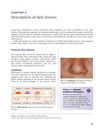
The document explains different types of skin lesions and their characteristics, causes, and related conditions.
 December 2015 in “University of Birmingham Institutional Research Archive (University of Birmingham)”
 AKR1C3 could be a treatment target for metabolic issues in PCOS.