 14 citations
,
November 2020 in “International Journal of Biological Macromolecules”
14 citations
,
November 2020 in “International Journal of Biological Macromolecules” Mushroom-based scaffolds help heal skin wounds and regrow hair.
 13 citations
,
January 2016 in “Burns & Trauma”
13 citations
,
January 2016 in “Burns & Trauma” Vacuum massage may improve skin elasticity and induce changes in skin cells, but evidence for treating burn scars is insufficient and more research is needed.
 10 citations
,
January 1985 in “Elsevier eBooks”
10 citations
,
January 1985 in “Elsevier eBooks” Active oxygen species might be involved in skin tumor growth, but their exact role is unclear.
 9 citations
,
July 2018 in “European journal of dermatology/EJD. European journal of dermatology”
9 citations
,
July 2018 in “European journal of dermatology/EJD. European journal of dermatology” Disrupted sleep patterns can harm skin and hair cell renewal, but melatonin might help.
 3 citations
,
October 2023 in “Frontiers in physiology”
3 citations
,
October 2023 in “Frontiers in physiology” ceRNA networks offer potential treatments for skin aging and wound healing.
 3 citations
,
January 2019 in “Jikken doubutsu ihou/Jikken doubutsu/Experimental animals/Jikken Dobutsu”
3 citations
,
January 2019 in “Jikken doubutsu ihou/Jikken doubutsu/Experimental animals/Jikken Dobutsu” Pigs without the Hairless gene showed skin and thymus changes, useful for studying human hair disorders.
 1 citations
,
September 2025 in “EMJ Dermatology”
1 citations
,
September 2025 in “EMJ Dermatology” Menopause affects skin and hair, and more research is needed for effective treatments.
 June 2026 in “Frontiers in Aging”
 Homeodynamic Rejuvenation aims to improve skin's stress management and recovery to combat aging.
 April 2026 in “Inflammopharmacology”
 Punica granatum leaf extract may help treat skin fibrosis by reducing inflammation and oxidative stress.
 March 2026 in “Frontiers in Oncology”
 Dermatologists should focus on restoring skin health and well-being in cancer survivors.
 February 2026 in “Cureus”
 Recognizing and managing skin side effects from chemotherapy improves patient quality of life and treatment success.
 December 2025 in “Nature Communications”
 Skin organoids can model tuberculosis infection and help test treatments.
 May 2023 in “Current Applied Science and Technology”
 Higher power CO2 laser causes more severe skin burns and damage.
 April 2017 in “Journal of Investigative Dermatology”
 The protein CTCF is essential for skin development, maintaining hair follicles, and preventing inflammation.
 April 2017 in “Journal of Investigative Dermatology”
 HPH-15, a new compound, effectively reduces skin fibrosis in experiments without causing harm.
 34 citations
,
October 1994 in “Journal of Pharmaceutical Sciences”
34 citations
,
October 1994 in “Journal of Pharmaceutical Sciences” Ethanol over 50% helps minoxidil absorb better into skin.
 24 citations
,
September 2018 in “Journal of Materials Science: Materials in Medicine”
24 citations
,
September 2018 in “Journal of Materials Science: Materials in Medicine” Hyaluronic acid-based HA2 hydrogel helps heal skin wounds better with less scarring.
 4 citations
,
May 2008 in “Clinics in Dermatology”
4 citations
,
May 2008 in “Clinics in Dermatology” Skin problems can indicate different diseases inside the body.
 June 2012 in “Springer eBooks”
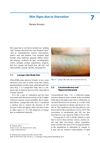
 Skin changes can indicate starvation and nutritional deficiencies in anorexia nervosa.
 June 2010 in “Melanoma research”
 LDE225 is a promising skin-applied treatment for basal cell carcinoma with good skin penetration and effectiveness.
 July 2000 in “Dermatologic Surgery”
 Many skin products get contaminated with bacteria, especially if they're in jars or previously opened.
 67 citations
,
August 2007 in “American Journal of Pathology”
67 citations
,
August 2007 in “American Journal of Pathology” Overexpressing the mineralocorticoid receptor in mouse skin causes skin thinning, early skin barrier development, eye issues, and hair loss.
 40 citations
,
November 2009 in “Experimental Dermatology”
40 citations
,
November 2009 in “Experimental Dermatology” The mineralocorticoid receptor may play a role in skin and hair health and could be a new target for treating related disorders.
 22 citations
,
February 2008 in “Journal of Dermatological Science”
22 citations
,
February 2008 in “Journal of Dermatological Science” EPR spectroscopy showed that spontaneous hair growth results in thicker skin and less pigmented hair than depilation-induced growth.
 8 citations
,
September 2016 in “Reviews in Endocrine and Metabolic Disorders”
8 citations
,
September 2016 in “Reviews in Endocrine and Metabolic Disorders” Skin health and diseases are closely linked to metabolic processes.
 September 2025 in “Drug Design Development and Therapy”
 Combining platelet-rich products, biomaterials, and bioactive substances may improve skin treatment, but more research is needed.
 276 citations
,
December 2017 in “Journal of Dermatological Science”
276 citations
,
December 2017 in “Journal of Dermatological Science” The document concludes that mouse models are helpful but have limitations for skin wound healing research, and suggests using larger animals and genetically modified mice for better human application.
 156 citations
,
August 2016 in “Journal of controlled release”
156 citations
,
August 2016 in “Journal of controlled release” Tight junctions are key for skin protection and controlling what gets absorbed or passes through the skin.
 6 citations
,
July 2015 in “Journal of Investigative Dermatology”
6 citations
,
July 2015 in “Journal of Investigative Dermatology” Chicken feather gene mutation helps understand human hair disorders.
 May 2026 in “The EMBO Journal”
 Skin aging can be slowed by targeting cells, hormones, and the microbiome.