21 citations
,
November 2023 in “International Journal of Molecular Sciences” Melatonin helps reduce aging signs in human eyelid skin.
9 citations
,
July 2024 in “JAAD reviews.” Extracellular vesicles show potential in dermatology, but more research is needed for validation.
3 citations
,
February 2023 in “Journal of Investigative Dermatology” Ch55 may help reduce skin scarring and fibrosis.
2 citations
,
July 2024 in “Pilot and Feasibility Studies” The online low-carb program was feasible and acceptable for young women with obesity.
1 citations
,
September 2025 in “Molecules” The conventional extraction method with 50% ethanol was the most effective for antioxidant activity.
research Hair
January 2026 in “AAPS introductions in the pharmaceutical sciences” September 2025 in “Animals” Key circRNAs play a role in wool follicle development, aiding in breeding better quality wool sheep.
 February 2024 in “BMC genomics”
 The TRPV3 gene variant may cause the long-haired suri alpaca coat.
 March 2023 in “Scientific Reports”
 Using focused ultrasound on the brain can help epilepsy medicine work better in rats.
17 citations
,
December 2021 in “Reproductive Biology and Endocrinology” Statins can reduce androgen levels and improve symptoms in women with PCOS.
 11 citations
,
July 2020 in “Scientific Reports”
11 citations
,
July 2020 in “Scientific Reports” Statins may be linked to reproductive organ conditions, and their risks should be monitored.
January 2026 in “Zenodo (CERN European Organization for Nuclear Research)” Statins do not help improve alopecia areata.
January 2026 in “Zenodo (CERN European Organization for Nuclear Research)” Statins do not help improve alopecia areata.
January 2024 in “Medicina” Statins may help treat PCOS by lowering androgen levels and improving cholesterol.
 June 2021 in “Research Square (Research Square)”
 Statins significantly reduce testosterone and improve skin symptoms in women with PCOS.
2 citations
,
July 2023 in “Cochrane Database of Systematic Reviews” The effectiveness of statins for women with PCOS is unclear.
November 2022 in “Journal of Investigative Dermatology” Statins may help treat alopecia areata by reducing harmful immune interactions.
September 2010 in “European Urology Supplements” Statins do not impact BPH and LUTS progression when combined with finasteride.
 January 1963 in “Stain technology”
 Ziehl-Neelsen's stain helps identify different parts of hair in sheep and goats.
 June 2017 in “Journal of The European Academy of Dermatology and Venereology”
 Alopecia patients have higher heart disease risk; statins and finasteride may help.
 489 citations
,
November 2021 in “Signal Transduction and Targeted Therapy”
489 citations
,
November 2021 in “Signal Transduction and Targeted Therapy” The JAK/STAT pathway is important in cell processes and disease, and JAK inhibitors are promising for treating related conditions.
 159 citations
,
October 2015 in “Science Advances”
159 citations
,
October 2015 in “Science Advances” Blocking JAK-STAT signaling can lead to hair growth.
 55 citations
,
October 2019 in “Dermatology and therapy”
55 citations
,
October 2019 in “Dermatology and therapy” Drugs targeting the JAK/STAT pathway can improve atopic dermatitis but vary in effectiveness for vitiligo and alopecia areata, with generally mild safety concerns.
 17 citations
,
August 1979 in “Journal of The American Academy of Dermatology”
17 citations
,
August 1979 in “Journal of The American Academy of Dermatology” A new staining method helps tell growing from resting hairs to diagnose hair loss.
 February 2019 in “PubMed”
 The research found that twisting hair fibers can show changes in stiffness and damage, and help tell apart different hair treatments.
9 citations
,
August 1980 in “Journal of Cutaneous Pathology” Rhodamin B stain is inconsistent for keratin in skin samples.
 5 citations
,
September 2017 in “Colloids and surfaces. B, Biointerfaces”
5 citations
,
September 2017 in “Colloids and surfaces. B, Biointerfaces” Tying a knot can measure hair friction, useful for medical applications.
 August 2024 in “New Zealand Medical Student Journal”
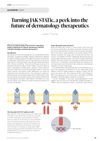
 JAK inhibitors show promise for treating skin diseases effectively and safely.
Treating hair with 1M sodium hydroxide increases its friction, making it better for small medical knots.
March 2026 in “Bioconjugate Chemistry” Peptide-based PROTACs show promise in targeting hard-to-treat proteins, especially for cancer therapy.