 October 2024 in “INTERNATIONAL JOURNAL OF SCIENTIFIC RESEARCH”
 Trichoscopy can help diagnose Vitamin B12, Vitamin D3, and ferritin deficiencies without blood tests.
Trichoscopy is a valuable tool for diagnosing hair loss accurately and non-invasively.
September 1998 in “Journal of the European Academy of Dermatology and Venereology” 26 citations
,
November 2005 in “Journal of Investigative Dermatology Symposium Proceedings” TrichoScan effectively measures hair growth improvements in people using minoxidil.
January 2015 in “프로그램북(구 초록집)” Trichoscopy effectively diagnoses and assesses hair loss severity in androgenetic alopecia and alopecia areata.
4 citations
,
January 2018 in “Indian dermatology online journal” Trichoscopy helped diagnose and cure a child's hair loss caused by a fungal infection.
 5 citations
,
January 2018 in “Skin Research and Technology”
5 citations
,
January 2018 in “Skin Research and Technology” TrichoScan needs optimization as it underestimated hair density by 38.9% compared to manual counting.
December 2025 in “Al-Azhar International Medical Journal /Al-Azhar International Medical Journal” Using both trichoscopy and folliscopy together improves hair loss diagnosis in men.
Cross-section trichometry is an accurate method to measure hair loss and growth.
Trichotillometry can measure hair plucking force, aiding alopecia treatment evaluation.
January 2020 in “Revista Dermatológica Centro Uraga” Recognizing trichoscopic features is crucial for diagnosing various hair loss conditions.
 4 citations
,
February 2020 in “Journal of Cosmetic Dermatology”
4 citations
,
February 2020 in “Journal of Cosmetic Dermatology” Trichoscopy helps diagnose hairline recession causes in Egyptian women, with androgenetic alopecia being the most common.
15 citations
,
January 2012 in “International journal of trichology” The HairCheck® device is effective for measuring hair loss and growth in people with alopecia.
 2 citations
,
January 2014 in “Turkish Journal of Medical Sciences”
2 citations
,
January 2014 in “Turkish Journal of Medical Sciences” TrichoScan effectively diagnoses different types of hair loss and is linked to low iron stores in patients.
May 2005 in “Hair transplant forum international” Trichotemnomania causes hair loss due to compulsive hair cutting or shaving.
 1 citations
,
April 2020 in “International Journal of Research in Dermatology”
1 citations
,
April 2020 in “International Journal of Research in Dermatology” Trichoscopy is a reliable method for diagnosing different types of hair loss.
 May 2026 in “Journal of Cutaneous and Aesthetic Surgery”
 Trichoscopy helps monitor changes and detect issues after hair transplants.
12 citations
,
January 2019 in “International Journal of Trichology” Trichoscopy is useful for detecting and monitoring androgenetic alopecia.
February 2023 in “International Journal of Advanced Research” Trichoscopy is a cost-effective and non-invasive tool for diagnosing alopecia areata.
November 2021 in “Skin appendage disorders” Self-induced hair loss should be considered in patients with androgenetic alopecia.
 March 2021 in “CRC Press eBooks”
 Physical exams are important in hair loss diagnosis, considering cosmetic history, systemic diseases, and classifying alopecia types.
63 citations
,
February 2003 in “Australasian Journal of Dermatology” Global photography and phototrichogram techniques are the best current methods for measuring hair growth.
July 2026 in “Cosmoderma” Trichoscopy can identify specific hair patterns in tinea capitis before and after treatment.
1 citations
,
January 2025 in “JAAD reviews.” Hypertrichosis involves excessive hair growth and needs careful diagnosis and treatment, considering its psychological effects.
January 2026 in “Updates in clinical dermatology” 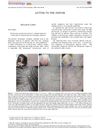 July 2021 in “Australasian Journal of Dermatology”
 The trichoscopy-assisted hair pull test is useful for diagnosing different types of hair loss.
 March 2026 in “Saudi Journal of Pathology and Microbiology”
 Personalized genomic interventions can effectively manage chronic hair loss.
March 2026 in “Pakistan Armed Forces Medical Journal” Trichoscopy is useful for diagnosing and assessing androgenetic alopecia severity.
 September 2023 in “Skin appendage disorders”
 Trichoscopy, a method of examining hair, can objectively measure how well botulinum toxin works for hair loss treatment.
 March 2023 in “Journal of skin and stem cell”
 Trichoscopy is a good, quick, non-invasive way to diagnose different types of hair loss.