 June 2026 in “Institutional Repositories DataBase (IRDB)”
 Crickets have genetically controlled hair plates that help them sense and move their antennae.
 June 2026 in “WORLD JOURNAL OF PLASTIC SURGERY”
 Injectable methods like botulinum toxin and fillers effectively rejuvenate the face with less invasive procedures.
 June 2026 in “International Journal on Science and Technology”
 Focus on improving healthspan with safe, evidence-based interventions, not just anti-aging claims.
 June 2026 in “Lasers in Medical Science”
 Diode laser is more effective but more painful than intense pulsed light for hair removal.
 May 2026 in “Frontiers in Medicine”
 The Shumin device with doxycycline is more effective for rosacea than red light therapy.
A rare genetic mutation causes Woodhouse-Sakati syndrome symptoms.
 April 2026 in “Journal of Education Health and Sport”
 Anabolic-androgenic steroid use in active men can cause serious health issues, especially affecting the heart, hormones, and mental health.
 April 2026 in “Frontiers in Cell and Developmental Biology”
 Hair cell loss usually happens after hearing loss starts.
 March 2026 in “Tissue Engineering and Regenerative Medicine”
 Dopamine-modified adhesives are improving for sticking tissues underwater.
 March 2026 in “Dermatology Reports”
 FFA has higher long-term remission rates than LPP.
 February 2026 in “International Research Journal of Modernization in Engineering Technology and Science”
 Protect lips from aging with sunscreen, repair barriers, and boost collagen.
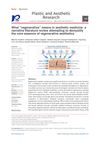 February 2026 in “Plastic and Aesthetic Research”
 Regenerative aesthetic medicine aims to restore tissue function, but needs more consistent evidence and standardized practices.
 January 2026 in “Drug Delivery and Translational Research”
 Multicomponent crystals in microneedles improve drug delivery for hair loss treatment.
 January 2026 in “Inflammation and Regeneration”
 Two-photon microscopy improves skin imaging but faces safety and cost challenges for clinical use.
 January 2026 in “Immune Network”
 Regulatory T cells adapt to different environments to control inflammation and support tissue repair.
 December 2025 in “International Research Journal on Advanced Engineering and Management (IRJAEM)”
 AI improves cosmetic surgery but requires ethical and legal oversight to ensure safe use.
 December 2025 in “International Journal For Multidisciplinary Research”
 Microscopic hair analysis is important in forensics but has limitations; new technologies are improving its accuracy.
 December 2025 in “Journal of Education Health and Sport”
 LED therapy is safe and effective for improving skin health and appearance.
 December 2025 in “International journal of research and scientific innovation”
 Women with PCOS in Nigeria have higher heart risk markers, needing early heart health checks.
 December 2025 in “npj Systems Biology and Applications”
 Cold temperatures can stop human cell circadian rhythms, but warming restores them.
 November 2025 in “Frontiers in Nutrition”
 Olive leaf extract may help reduce aging signs in postmenopausal women.
 November 2025 in “Journal of Ayurveda and Integrated Medical Sciences”
 Herbal hair dyes are safe, effective, and beneficial for hair health.
 October 2025 in “International Journal of Innovative Research in Technology”
 Personalized supplements are important for women's health, but hormone therapy can increase cancer and heart risks.
 September 2025 in “Cureus”
 Personalized anti-aging treatments improve youthfulness and quality of life.
Yul Brynner's unique physical presence and gestures defined his star image.
 January 2025 in “Directory of Open access Books (OAPEN Foundation)”
 PCOS affects women's hormones and metabolism, but can be managed with lifestyle changes and treatments.

Polarized microscopy helps identify hair irregularities in genetic disorders.
 January 2025 in “Bright Sky Publications eBooks”
 Aesthetic medicine is rapidly advancing with new technologies for safer, personalized, and less invasive treatments.
 January 2025 in “Journal of Veterinary Medical Science”
 Environmental conditions can affect toxic mineral levels and gut bacteria in working dogs.
 January 2025 in “ARC Journal of Dermatology”
 Vaping may harm skin health by causing inflammation.