 February 2026 in “International Journal of Science and Research (IJSR)”
 Ayurvedic treatment with Prachana and external applications effectively promoted hair regrowth in alopecia areata.
 February 2026 in “Zenodo (CERN European Organization for Nuclear Research)”
 Spironolactone effectively treats female pattern hair loss but requires ongoing use to maintain results.
 February 2026 in “Zenodo (CERN European Organization for Nuclear Research)”
 Spironolactone effectively treats female pattern hair loss but requires ongoing use to maintain results.
 February 2026 in “Editora Pasteur eBooks”
 An integrative approach combining medical, nutritional, and lifestyle changes effectively manages female pattern hair loss.
Menopause causes skin issues like dryness and wrinkles, which can be managed with lifestyle changes and treatments.
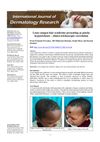 January 2026 in “International Journal of Dermatology Research”
 Early recognition of loose anagen hair syndrome is important to prevent misdiagnosis and unnecessary treatments.
 December 2025 in “Cureus”
 Localized dystrophic epidermolysis bullosa (DEB) can lead to scarring alopecia, highlighting the need to recognize and address this complication.
November 2025 in “Revista Políticas Públicas & Cidades” Microagulhamento e intradermoterapia juntos melhoram o crescimento capilar em mulheres menopausadas.
 October 2025 in “Dermatology and Therapy”
 Nutrafol® nutraceuticals improve hair thickness and strength.
 July 2025 in “Journal of Drug Delivery and Therapeutics”
 Herbal remedies like ginseng and green tea may help regenerate hair follicles damaged by pesticides.

Neelibhringadi Hair Oil may help with hair issues, but more research is needed.
 July 2025 in “Current Issues in Molecular Biology”
 Bio-Pulsed sEVs improve hair growth and skin rejuvenation.
June 2025 in “Journal of Ultrasound in Medicine” High-frequency ultrasound effectively evaluates and diagnoses frontal fibrosing alopecia.
 March 2025 in “Forum Dermatologicum”
 Trichoscopy is crucial for accurately diagnosing fibrosing alopecia in pattern distribution.
 March 2025 in “International Journal of Trichology”
 FAPD in children may not depend on androgens and should be treated with anti-inflammatory measures and minoxidil.
 January 2025 in “Medicina”
 25% of women in North Sudan have traction alopecia, linked to family history and hair treatments, highlighting the need for better hair care awareness.
 January 2025 in “Majmaah Journal of Health Sciences”
 Nearly 70% of postmenopausal women in Saudi Arabia experience hair loss, often linked to early menopause, chronic diseases, family history, and stress.
 December 2024 in “Indian Journal of Dermatology Venereology and Leprology”
 Atypical male hair loss may not respond to usual treatments.
November 2024 in “International Journal Of Ayurvedic And Herbal Medicine” Ayurvedic treatment effectively improved patchy hair loss in a 25-year-old male.
 November 2024 in “Cureus”
 Scalp edema may be a new variant of conditions reacting to scarring alopecia like LPP.
 November 2024 in “PubMed”
 The supplement improved hair density and was safe to use.
 October 2024 in “Benha Journal of Applied Sciences”
 Androgenetic alopecia is linked to aging due to inflammation, oxidative stress, and hormonal changes.
 September 2024 in “Health Sciences”
 Androgenic alopecia can be treated with minoxidil, finasteride, and hormonal therapy.
 June 2024 in “jurnal ABDIMAS Indonesia”
 Vitamin D education and supplementation improve hair health in the elderly.
 April 2024 in “Vestnik oftalʹmologii”
 Stopping minoxidil and using prostaglandin analogues improved the man's eye condition.
 January 2024 in “Pan African Medical Journal”
 Non-scarring hair loss is common in lupus patients and can be diagnosed with specific hair and tissue tests.
 November 2023 in “International Journal of Women's Dermatology”
 Hormone replacement therapy may improve hair growth in the frontal hairline of postmenopausal women with hair loss.
 June 2023 in “Aesthetic Plastic Surgery”
 The PRECISE scale helps estimate how many grafts are needed for hair transplant based on the severity of hair loss.
Non-ablative Er:YAG-laser treatment helps improve life quality for menopausal women with hair loss.
 May 2022 in “Journal of the Egyptian Women's Dermatologic Society (Print)”
 Women's hair loss can be due to hormonal changes and various conditions, with treatments focusing on stopping progression and managing symptoms.