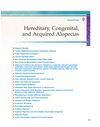
 1 citations
,
January 2006 in “Elsevier eBooks”
1 citations
,
January 2006 in “Elsevier eBooks” The conclusion is that different types of hair loss in dogs and cats can be cosmetic or serious, and affected animals should not be bred.
 June 2026 in “Reports of Morphology”
 A nutrient-rich diet improved skin and hair health in stressed rats.
 June 2026 in “Research Square”
 Vitamin D may help with certain types of hair loss in women.
 May 2026 in “Research Square”
 Children with alopecia areata often face more stress and depression, especially related to separation, which can affect their condition.
Men with androgenetic alopecia may have higher triglycerides, suggesting a link to lipid metabolism.
 March 2026 in “Brazilian Journal of Microbiology”
 Restoring skin bacteria may help reduce hair loss.
 March 2026 in “Dermatology and Therapy”
 More severe alopecia areata can lower quality of life.
 March 2026 in “European journal of ecology, biology and agriculture.”
 Patients with alopecia areata have higher levels of certain immune markers, suggesting new treatment targets.
 March 2026 in “International Journal of Homoeopathic Sciences”
 Homeopathic and biochemic treatments led to hair regrowth and improved confidence in a man with hair loss.
 January 2026 in “Dermatology and Therapy”
 Patients with alopecia areata on ritlecitinib responded well to tetanus and meningococcal vaccines.
 January 2026 in “Forum Dermatologicum”
 JAK inhibitors and combination therapies show promise for treating severe alopecia areata.
 January 2026 in “Frontiers in Medicine”
 FFA and FAPD might be related or stages of the same disease.
 December 2025 in “Cureus”
 Using 5α-reductase inhibitors for hair loss may increase the risk of dry eye disease.
 November 2025 in “Turkish Journal of Dermatology”
 Both baricitinib and tofacitinib effectively reduce alopecia areata severity, with tofacitinib showing more improvement over longer use.
 October 2025 in “International Journal of Cell and Biomedical Science”
 hUC-MSC secretome can help regrow hair in cases of hair loss.
 September 2025 in “Journal of Skin and Stem Cell”
 The combination of calcipotriol and PRP is the most effective treatment for alopecia areata.
 August 2025 in “Frontiers in Immunology”
 People with alopecia areata have a higher risk of heart disease.
 July 2025 in “Current Treatment Options in Oncology”
 Scalp cooling helps prevent hair loss during chemotherapy, and minoxidil aids regrowth.
 June 2025 in “International Journal of Science and Research (IJSR)”
 Tofacitinib effectively promotes hair regrowth in alopecia areata with minimal side effects.
 June 2025 in “Clinical Cosmetic and Investigational Dermatology”
 There's an urgent need for better treatments for hair loss caused by radiation therapy.
 May 2025 in “Journal of Food and Nutrition Research”
 Black wolfberry ferment may help regrow hair in cases of androgenetic alopecia.
 March 2025 in “International Journal of AYUSH Case Reports”
 Individualized homeopathy may help treat alopecia areata.
 February 2025 in “Clinical Cosmetic and Investigational Dermatology”
 Higher fasting insulin levels increase the risk of androgenetic alopecia.
New therapies like JAK inhibitors, PRP, and stem cell treatments show promise for better alopecia management.
 January 2025 in “Advances in Dermatology and Allergology”
 The Polish version of the Alopecia Areata Quality of Life Index is a reliable tool for assessing quality of life in Polish-speaking patients with alopecia areata.
 December 2024 in “Cureus”
 Baricitinib treatment for alopecia universalis can cause hair regrowth with unexpected whitening.
Drinking sweetened tea and late bedtimes increase the risk of hair loss in women.
Drinking sweetened tea and poor sleep habits increase the risk of hair loss in women.
Drinking sweetened tea and poor sleep habits may increase the risk of hair loss in women.
Drinking sweetened tea and late bedtimes increase the risk of hair loss in women.