 16 citations
,
January 2001 in “Clinical and Experimental Dermatology”
16 citations
,
January 2001 in “Clinical and Experimental Dermatology” Photodynamic therapy was effective in treating multiple scalp basal cell carcinomas with minimal side effects and good cosmetic results.
7 citations
,
March 2020 in “Journal of the American Academy of Dermatology” EGFR inhibitors often cause dry, brittle hair and eyebrow/eyelash changes.
 7 citations
,
January 2013 in “Dermatology Research and Practice”
7 citations
,
January 2013 in “Dermatology Research and Practice” Trichoscopy is a valuable tool for diagnosing and managing hair and scalp disorders.
4 citations
,
April 2024 in “Clinical Cosmetic and Investigational Dermatology” Trichoscopy helps distinguish between scalp Discoid Lupus Erythematosus and Lichen Planopilaris for accurate diagnosis and treatment.
 January 2011 in “Journal of The American Academy of Dermatology”
 Two patients had a rare combination of red skin spots and white scaly skin lesions not on the genitals.
January 2025 in “Indian Journal of Dermatopathology and Diagnostic Dermatology” Nevus sebaceous is identified by unique skin changes, including thickened skin, fewer hair follicles, and many sebaceous glands.
8 citations
,
February 2023 in “Actas Dermo-Sifiliográficas” Dermatologists should learn trichoscopy to better diagnose hair loss conditions.
 96 citations
,
January 2013 in “International Journal of Trichology”
96 citations
,
January 2013 in “International Journal of Trichology” Trichoscopy is a useful, non-invasive way to diagnose different types of hair loss.
18 citations
,
January 2015 in “Experimental Dermatology” New mutations in KRT83 and KRT86 are linked to the hair disorder monilethrix.
October 1991 in “Archives of Dermatology” The woman has a skin condition involving nodules, scars, and hair loss.
144 citations
,
May 1990 in “Journal of the American Academy of Dermatology” 39 citations
,
March 2009 in “Dermatology Online Journal” Erlotinib can cause persistent excessive hair growth.
 74 citations
,
July 2008 in “Journal of Dermatological Case Reports”
74 citations
,
July 2008 in “Journal of Dermatological Case Reports” Trichoscopy is a quick and easy way to diagnose most genetic hair problems without invasive methods.
3 citations
,
June 2023 in “Plastic & Reconstructive Surgery” The 2-step surgery effectively treats stable follicular vitiligo with high patient satisfaction and no major complications.
11 citations
,
August 2016 in “Journal of the European Academy of Dermatology and Venereology” Serial trichoscopy is more reliable than the modified hair pull test for tracking alopecia areata.
 53 citations
,
September 2011
53 citations
,
September 2011 Other common signs, not just the well-known immune cells around hair bulbs, are important for diagnosing hair loss from alopecia areata.
May 2019 in “CINECA IRIS Institutial Research Information System (University of Genoa)” MITF+ melanoma patients are more likely to have multiple melanomas and unique skin patterns.
1 citations
,
January 2025 in “JAAD reviews.” Hypertrichosis involves excessive hair growth and needs careful diagnosis and treatment, considering its psychological effects.
 6 citations
,
October 2014 in “PubMed”
6 citations
,
October 2014 in “PubMed” Autoimmune diseases like lupus, dermatomyositis, and scleroderma can cause hair loss and other hair problems, and treatments for these diseases might also affect hair.
 24 citations
,
March 1998 in “Mycoses”
24 citations
,
March 1998 in “Mycoses” Early diagnosis and effective treatment of kerion Celsi prevent scarring and permanent hair loss.
37 citations
,
November 2017 in “Medical Sciences” Melanoma's complexity requires personalized treatments due to key genetic mutations and tumor-initiating cells.
June 2011 in “European Journal of Pediatric Dermatology” An 11-year-old girl with hair thinning was diagnosed with monilethrix and early androgenetic alopecia.
32 citations
,
January 2000 in “Human Heredity” Monilethrix severity varies and may be influenced by other genetic or environmental factors.
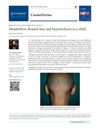 January 2026 in “Cosmoderma”
 A 9-year-old girl has a rare hair disorder causing beaded, sparse hair.
245 citations
,
October 2015 in “Nature medicine” Hair follicle-derived IL-7 and IL-15 are crucial for maintaining skin-resident memory T cells and could be targeted for treating skin diseases and lymphoma.
 January 2025 in “Surgical & Cosmetic Dermatology”
 Histopathological confirmation is crucial to accurately diagnose alopecia triangular temporal and avoid unnecessary treatments.
October 2024 in “Dermatology Practical & Conceptual” Trichoscopy effectively diagnoses eyebrow hair loss in certain conditions.
June 2022 in “Our Dermatology Online” Trichoscopy is essential for early detection and monitoring of female-pattern hair loss.
August 2023 in “Journal of Investigative Dermatology” January 2020 in “Revista Dermatológica Centro Uraga” Recognizing trichoscopic features is crucial for diagnosing various hair loss conditions.