 4 citations
,
April 2023 in “Cutis”
4 citations
,
April 2023 in “Cutis” COVID-19 can cause or worsen skin issues.
 4 citations
,
January 2012 in “Chemical Immunology”
4 citations
,
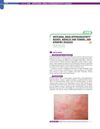
January 2012 in “Chemical Immunology” Some drugs, especially biologics, can cause skin reactions that look like other skin diseases, and stopping the drug usually helps clear up these reactions.
 4 citations
,
January 2012 in “Elsevier eBooks”
4 citations
,
January 2012 in “Elsevier eBooks” The document concludes that various skin conditions have specific treatments, ranging from antihistamines for urticaria to surgery and medication for tumors and chronic skin diseases.
 4 citations
,
August 2010 in “Journal of the American Academy of Dermatology”
4 citations
,
August 2010 in “Journal of the American Academy of Dermatology” Cicatricial alopecia involves scarring hair loss and can be treated with various medications.
 4 citations
,
July 1996 in “Annals of Internal Medicine”
4 citations
,
July 1996 in “Annals of Internal Medicine” High doses of fluconazole can cause reversible hair loss.
 4 citations
,
January 1974 in “The BMJ”
4 citations
,
January 1974 in “The BMJ” All medications can cause skin rashes, often without a clear cause, and better tests are needed to identify these drug-related skin issues.
 3 citations
,
October 2024 in “World Journal of Advanced Research and Reviews”
3 citations
,
October 2024 in “World Journal of Advanced Research and Reviews” Silver nanoparticles are useful in medicine and technology for their antibacterial properties and potential in drug delivery and dentistry.
 3 citations
,
May 2021 in “Dermatologic Clinics”
3 citations
,
May 2021 in “Dermatologic Clinics” COVID-19 changed dermatology by increasing telemedicine and highlighting healthcare disparities.
 3 citations
,
July 2017 in “Elsevier eBooks”
3 citations
,
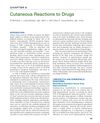
July 2017 in “Elsevier eBooks” Skin reactions are a common reason for emergency visits due to drug allergies, with some severe cases needing intensive care.
 2 citations
,
August 2016 in “Lasers in Surgery and Medicine”
2 citations
,
August 2016 in “Lasers in Surgery and Medicine” Photodynamic therapy can remove nonpigmented hair in mice and might work for humans.
 1 citations
,
October 2025 in “Iranian journal of pharmaceutical research”
1 citations
,
October 2025 in “Iranian journal of pharmaceutical research” Geranyl acetate can protect skin cells from damage and inflammation caused by para-phenylenediamine.
 1 citations
,
September 2025 in “Dermatology and Therapy”
1 citations
,
September 2025 in “Dermatology and Therapy” GLP-1 RAs help with diabetes and skin issues but can cause skin reactions and surgery challenges.
 1 citations
,
September 2023 in “Journal of Education Health and Sport”
1 citations
,
September 2023 in “Journal of Education Health and Sport” Anabolic-androgenic steroids are dangerous and educating people about their risks is essential.
 1 citations
,
January 2019 in “Advances in Medical Sciences”
1 citations
,
January 2019 in “Advances in Medical Sciences” The combination of azelaic acid, minoxidil, and caffeine significantly increased the survival of skin flaps by affecting certain body channels and nitric oxide levels.
 1 citations
,
May 2017 in “Asian journal of medical sciences”
1 citations
,
May 2017 in “Asian journal of medical sciences” The dietary supplement significantly improved skin, nails, and hair in older adults.
 1 citations
,
January 2015
1 citations
,
January 2015 Personality traits significantly affect the onset, progression, and psychological impact of alopecia areata.
 1 citations
,
January 2013 in “Springer eBooks”
1 citations
,
January 2013 in “Springer eBooks” Cosmeceuticals may benefit skin health but need more research for efficacy and safety confirmation.
 1 citations
,
May 1965 in “Medical Clinics of North America”
1 citations
,
May 1965 in “Medical Clinics of North America” Hair growth dysfunction involves various conditions with limited treatment options.
 1 citations
,
November 1953 in “Archives of Dermatology”
1 citations
,
November 1953 in “Archives of Dermatology” The document discusses various challenging skin conditions and their treatments.
 1 citations
,
August 1946 in “Archives of dermatology”
1 citations
,
August 1946 in “Archives of dermatology” The meeting highlighted the complexity and variability of skin conditions and differing opinions on their diagnoses and treatments.
 July 2026 in “Organoid Research”
 A unified framework is needed to improve skin organoid construction for research and clinical use.
 July 2026 in “Frontiers in Immunology”
 Targeting protein lactylation may improve skin disease treatments.
 April 2026 in “Frontiers in Cell and Developmental Biology”
 GPCRs are vital for wound healing by affecting cell growth and immune response.
 February 2026 in “Frontiers in Bioengineering and Biotechnology”
 Liposome-based systems improve skin wound healing effectively.

Autologous platelet concentrates help heal and regenerate dental tissues.
 November 2025 in “Open Repository of the University of Porto (University of Porto)”
 Minoxidil and spironolactone can improve hair growth, but responses vary and side effects are common.

A runner developed tangled armpit hairs from shirt friction, preventable by shaving or wearing smooth shirts.
 February 2025 in “Physician s Journal of Medicine”
 Recognizing skin symptoms can help diagnose and manage COVID-19.
 October 2024 in “Irish Journal of Medical Science (1971 -)”
 Continuous glucose monitoring and GLP-1 receptor agonists improve diabetes management, but personalized care and education are crucial.
 December 2023 in “Juan Cuevas eBooks”
 Advanced reconstructive plastic surgery techniques improve outcomes with personalized care and innovative treatments.