 June 2026 in “International Journal of Bioprinting”
 3D bioprinting shows promise for skin regeneration but needs more development to fully replicate natural skin.
 June 2026 in “Revista Brasileira de Saúde”
 Exosomes could help treat hair loss, but more research and standardization are needed.
VitaDetect uses AI to find vitamin deficiencies by analyzing images of nails, tongue, and skin.
 April 2026 in “Biomolecules”
 New treatments for PCOS using smart drug delivery, metabolic changes, and AI show promise but need more research.
 April 2026 in “Cosmetics”
 Robotic systems in cosmetic surgery show promise but face challenges like high costs and need more research and training.
 March 2026 in “Zenodo (CERN European Organization for Nuclear Research)”
 The "Danti Original Source" method can reverse androgenetic alopecia.
 March 2026 in “Preprints.org”
 Robotic systems in cosmetic surgery are promising but need more development and research.
March 2026 in “Pediatric Dermatology” Generative AI tools can accurately score alopecia areata, reducing subjectivity in evaluations.
 March 2026 in “SHILAP Revista de lepidopterología”
 Cosmeceuticals effectively treat skin issues but need better regulation and safety measures.
 February 2026 in “Dermatology and Therapy”
 AI can improve hair disorder diagnosis and treatment but can't replace doctors yet.
February 2026 in “Expert Review of Endocrinology & Metabolism” Early identification and personalized treatment of skin issues in PCOS are crucial for better outcomes.
January 2026 in “Journal of Hair Restoration and Regenerative Medicine” Hair transplantation is unsafe for diffuse unpatterned alopecia; focus on medical treatment and reassessment.
 January 2026 in “International Journal of Science and Research (IJSR)”
 AI is now essential in Indian aesthetic medicine.
January 2026 in “Wound Repair and Regeneration” Skin organoids are improving research but need better blood supply, nerve function, and immune system integration.
January 2026 in “Open Science Framework” AI in alopecia research needs better tools for predicting treatment outcomes and ensuring fairness.
 December 2025 in “ADMET & DMPK”
 Personalized treatments for hair loss focus on specific genetic and biological pathways.
November 2025 in “Indian Journal of Dermatology” Home-based dermatology devices offer convenient and affordable skincare but require careful use due to potential risks.
November 2025 in “Journal of Clinical Medicine” Advancements in regenerative science and longevity research can improve healthspans, but must be balanced with ethics and safety.
 November 2025 in “Kufa Journal of Engineering”
 AI can effectively detect hair and scalp disorders from images.
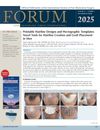 September 2025 in “International Society of Hair Restoration Surgery”
 Printable templates improve hair transplant accuracy and efficiency.

Exosome therapies improve skin, hair, and healing but face challenges like cost and regulation.
 January 2025 in “Bright Sky Publications eBooks”
 Aesthetic medicine is rapidly advancing with new technologies for safer, personalized, and less invasive treatments.
 January 2025 in “Advances in Clinical Medicine”
 Fractional CO2 laser therapy effectively improves skin conditions and recovery when combined with other treatments.
 June 2024 in “Nature Cell and Science”
 The Scalp Coverage Scoring method reliably measures hair density from images.

AI can predict hair loss patterns to improve care and treatment.
 October 2023 in “Biomedical science and engineering”
 Innovative methods are reducing animal testing and improving biomedical research.
 August 2023 in “Clinical, Cosmetic and Investigational Dermatology”
 Research on the human skin microbiome has grown, focusing on skin health and diseases, with more studies needed on antibiotic resistance and AI applications.
 June 2023 in “Journal of Cosmetic Dermatology”
 AI and AR are improving cosmetic dermatology but face challenges like data quality and ethical concerns.
 September 2022 in “Research Square (Research Square)”
 The AI model DIET-AI effectively diagnoses skin diseases as well as doctors.
 July 2022 in “Bőrgyógyászati és Venerológiai Szemle”
 Technology, like mobile apps and AI, is improving skin condition diagnosis and treatment.