 2 citations
,
September 2022 in “Advances in Environmental Biology”
2 citations
,
September 2022 in “Advances in Environmental Biology” Avicennia marina leaf extract can fight Vancomycin-resistant bacteria.
 4 citations
,
April 2025 in “Scientific Reports”
4 citations
,
April 2025 in “Scientific Reports” Platelet-rich plasma can temporarily inhibit some drug-resistant bacteria in diabetic foot infections.
January 2024 in “Scripta Medica” Nanoparticle delivery can reduce side effects of the cancer drug doxorubicin.
7 citations
,
May 2021 in “Clinical Case Reports” Alopecic and aseptic nodules of the scalp are rare, treatable, and often resolve with doxycycline or on their own.
August 2025 in “OPAL (Open@LaTrobe) (La Trobe University)” Certain hydroxycinnamate derivatives may effectively inhibit enzymes linked to hair loss with low toxicity.
 March 1987 in “Journal of The American Academy of Dermatology”
 Oral spironolactone and isotretinoin are effective for treating acne.
July 2026 in “The scientific and practical journal Dermatology and infectious diseases” Systemic isotretinoin is very effective for treating dissecting cellulitis of the scalp.
November 2020 in “bioRxiv (Cold Spring Harbor Laboratory)” Five FDA-approved drugs may help block COVID-19 virus entry.
February 2026 in “Health Science Reports” Understanding acne medication chemistry helps doctors treat acne better.
 3 citations
,
June 2021 in “Iraqi Journal of Pharmaceutical Sciences ( P-ISSN 1683 - 3597 E-ISSN 2521 - 3512)”
3 citations
,
June 2021 in “Iraqi Journal of Pharmaceutical Sciences ( P-ISSN 1683 - 3597 E-ISSN 2521 - 3512)” Natural products like flavonoids and phenolics may help treat or prevent COVID-19.
May 2010 in “Europe PMC (PubMed Central)” Near-infrared probes can safely and effectively image cysteine protease activity for disease diagnosis.
August 2025 in “International Journal of Biological Macromolecules” A new hydrogel can kill resistant bacteria and help heal infected burn wounds.
 September 2019 in “University of Huddersfield Repository (University of Huddersfield)”
 Nanoemulsions can effectively deliver antiseptic agents deep into the skin.
1 citations
,
January 2023 in “Chemical Engineering Journal” November 2025 in “Biomedicines” Hypochlorous acid is a safe, effective antimicrobial with potential in various medical fields, but more research is needed to improve its stability and use.
 65 citations
,
February 2009 in “The journal of investigative dermatology/Journal of investigative dermatology”
65 citations
,
February 2009 in “The journal of investigative dermatology/Journal of investigative dermatology” Anti-acne medications may work by reducing the activity of a protein involved in acne development.
 37 citations
,
September 2003 in “Journal of Medicinal Chemistry”
37 citations
,
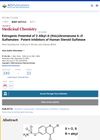
September 2003 in “Journal of Medicinal Chemistry” A substance called Compound 2g can strongly block STS (a hormone-related enzyme) without affecting estrogen levels, making it potentially good for treating breast cancer.
5 citations
,
February 2025 in “Drug Development Research” Repurposed drugs offer a promising, safe, and effective acne treatment.
 April 2026 in “Journal of Microbiology Biotechnology and Food Sciences”
 Carthamus caeruleus leaves are a good source of natural antioxidants and antibacterial agents.
 January 1987 in “Side effects of drugs annual”
 Some cosmetics and dermatological drugs can cause allergic reactions and side effects, like skin irritation and systemic issues.
 May 2019 in “Journal of the Dermatology Nurses’ Association”
 Folliculitis decalvans mainly affects middle-aged African American men and is treated with antibiotics.
59 citations
,
May 1995 in “Journal of the American Academy of Dermatology” 60 citations
,
August 1969 in “British Journal of Dermatology” Germicides mostly stay on the skin's surface, but some penetrate deeper depending on the product used.
 April 2021 in “Research Square (Research Square)”
 The new cocrystal KET-PABA is a more effective and safe anti-inflammatory treatment for skin conditions in mice.
New treatments for skin diseases in 1979 showed promising results with fewer side effects.
8 citations
,
April 2012 in “Laser Physics Letters” Antiseptic particles penetrate deeper into hair follicles than non-antiseptic ones.
 August 2026 in “Cosmetics”
 Biotics can help reduce acne and scalp issues, but more research is needed.
 34 citations
,
October 2024 in “Clinical Cosmetic and Investigational Dermatology”
34 citations
,
October 2024 in “Clinical Cosmetic and Investigational Dermatology” Azelaic acid is effective for treating rosacea, acne, and melasma.
 April 2024 in “Chemical engineering journal”
 The new hydrogel made from thymol and glycyrrhizin helps heal MRSA-infected wounds in rats effectively.
2 citations
,
April 2022 in “Nusantara Bioscience” The method accurately measures vancomycin using silver nanoparticles.