 2 citations
,
November 2024 in “Clinical Cosmetic and Investigational Dermatology”
2 citations
,
November 2024 in “Clinical Cosmetic and Investigational Dermatology” Higher BMI may increase the risk of psoriasis and some other skin diseases.
2 citations
,
July 2024 in “International Journal of Transgender Health” Transgender individuals may face specific skin issues during gender-affirming treatments, needing personalized care.
2 citations
,
May 2024 in “Technology and Health Care” The ginseng cicada decoction effectively reduces atopic dermatitis symptoms and improves quality of life safely.
2 citations
,
April 2024 in “Anais Brasileiros de Dermatologia” Pre-existing skin conditions and drug reactions are the main causes of exfoliative erythroderma.
2 citations
,
December 2023 in “JEADV Clinical Practice” Skin diseases are common in Greece and significantly affect people's lives and well-being.
 2 citations
,
October 2023 in “Philosophical transactions - Royal Society. Biological sciences”
2 citations
,
October 2023 in “Philosophical transactions - Royal Society. Biological sciences” Enzymes that change arginine to citrulline are important for skin barrier and hair formation, and their malfunction can lead to skin conditions and hair disorders.
2 citations
,
September 2023 in “Cosmetics” Cannabinoids may help some skin conditions but more research is needed.
2 citations
,
August 2023 in “Molecules” SH-340 may improve skin barrier and help treat atopic dermatitis.
 2 citations
,
January 2023 in “BioMed Research International”
2 citations
,
January 2023 in “BioMed Research International” The secretome from mesenchymal stromal cells shows promise for improving facial nerve injury treatment.
 2 citations
,
December 2022 in “Journal of the American Academy of Dermatology”
2 citations
,
December 2022 in “Journal of the American Academy of Dermatology” Hispanic/Latinx patients with alopecia areata often have it before age 40, with females and certain health conditions like rheumatoid arthritis more commonly affected.
 2 citations
,
September 2022 in “Cytotherapy”
2 citations
,
September 2022 in “Cytotherapy” Fat-derived stem cells show promise for treating skin issues and improving wound healing, but more research is needed to confirm the best way to use them.
 2 citations
,
April 2022 in “International Journal of Research in Dermatology”
2 citations
,
April 2022 in “International Journal of Research in Dermatology” Pregnant women often experience skin changes, so proper care is needed.
 2 citations
,
March 2022 in “Journal of Personalized Medicine”
2 citations
,
March 2022 in “Journal of Personalized Medicine” Personalized medicine is important for treating skin disorders, with new treatments and connections to hormones and genetics being explored.
 2 citations
,
September 2021
2 citations
,
September 2021 The COVID-19 pandemic increased the use of teledermatology to treat skin conditions in low-income areas, despite challenges like poor photo quality.
 2 citations
,
August 2021 in “Canadian Family Physician”
2 citations
,
August 2021 in “Canadian Family Physician” COVID-19 can cause rashes and worsen existing skin conditions, and behaviors like frequent hand-washing can lead to hand dermatitis.
 2 citations
,
April 2021 in “bioRxiv (Cold Spring Harbor Laboratory)”
2 citations
,
April 2021 in “bioRxiv (Cold Spring Harbor Laboratory)” The conclusion is that analyzing RNA from skin oils is a promising way to understand skin diseases.
 2 citations
,
May 2020 in “Anais brasileiros de dermatologia/Anais Brasileiros de Dermatologia”
2 citations
,
May 2020 in “Anais brasileiros de dermatologia/Anais Brasileiros de Dermatologia” Primary health care in Florianópolis mostly treated simple skin conditions, while secondary care handled more complex skin diseases.
 2 citations
,
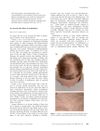
March 2016 in “Obstetrics and Gynecology Clinics of North America”
2 citations
,
March 2016 in “Obstetrics and Gynecology Clinics of North America” The document says that common skin conditions in adult women can be treated effectively, with acne being the most common and early-detected melanoma having a high survival rate.
 2 citations
,
March 2015 in “Clinical and Experimental Dermatology”
2 citations
,
March 2015 in “Clinical and Experimental Dermatology” Azathioprine can cause unusual hair loss, which may reverse after stopping the drug.
 2 citations
,
January 2005 in “Elsevier eBooks”
2 citations
,
January 2005 in “Elsevier eBooks” The document describes skin diseases affecting the outer ear in dogs and cats, their spread to other body parts, and treatment options.
2 citations
,
October 1974 in “Archives of Dermatology” The woman's skin condition persisted for 20 years despite treatments.
2 citations
,
April 1970 in “Archives of Dermatology” Ichthyosis serpentina may be a variant linked to bamboo hair, with a possible genetic component.
 1 citations
,
November 2025 in “Clinical and Experimental Medicine”
1 citations
,
November 2025 in “Clinical and Experimental Medicine” lncRNAs are important for understanding and treating skin diseases.
1 citations
,
August 2025 in “Acta Dermato Venereologica” Alopecia areata is decreasing globally, affects more females, and is linked to anxiety and atopic dermatitis, especially in children.
1 citations
,
July 2025 in “Diagnostics” Dupilumab users have a higher risk of developing alopecia areata.
1 citations
,
July 2025 in “Frontiers in Genetics” FilaggrinHigh melanomas have active FGFR signaling and weak GNA14 and Th1 signatures.
1 citations
,
June 2025 in “Journal of Patient Experience” Alopecia areata greatly affects quality of life, with many experiencing mental health issues and lacking professional support.
1 citations
,
April 2025 in “Skin Health and Disease” Combining delgocitinib ointment with excimer laser can effectively treat severe alopecia areata.
1 citations
,
March 2025 in “JAAD reviews.” Significant progress has been made in treating skin, hair, and nail disorders in people with skin of color, but disparities still exist.
1 citations
,
January 2025 in “International Journal of Dermatology” Dupilumab can both improve and worsen alopecia areata, with higher IgE levels linked to better outcomes.