April 2025 in “International Journal of Dermatology” Renaming frontal fibrosing alopecia to a syndrome could improve diagnosis and treatment.
 January 2024 in “Skin appendage disorders”
 Using growth factors and microneedling shows promise for hair regrowth in Alopecia Areata, but more research is needed.
 June 2023 in “Dermatology reports”
 The link between pemphigus and the patient's scarring hair loss is still unclear.
 June 2023 in “British journal of dermatology/British journal of dermatology, Supplement”
 Congenital alopecia areata may have genetic links and topical corticosteroids are an effective treatment.
March 2026 in “Skin Appendage Disorders” Belatacept may be a promising treatment for alopecia areata.
 144 citations
,
July 2015 in “Clinical, Cosmetic and Investigational Dermatology”
144 citations
,
July 2015 in “Clinical, Cosmetic and Investigational Dermatology” Alopecia areata is a common autoimmune disease affecting about 2% of people, causing significant disability and often associated with mental health issues and other autoimmune conditions.
61 citations
,
June 2010 in “Journal of the European Academy of Dermatology and Venereology” Anti-TNF-α therapy may increase the risk of developing alopecia areata, especially in those with a history of autoimmune disease.
 41 citations
,
July 2017 in “Journal of The American Academy of Dermatology”
41 citations
,
July 2017 in “Journal of The American Academy of Dermatology” Men with Frontal fibrosing alopecia typically lose hair on the front scalp and sometimes on sideburns and upper lip, with treatments showing varied success.
 32 citations
,
March 2021 in “Journal of cosmetic dermatology (Print)”
32 citations
,
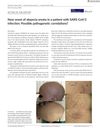
March 2021 in “Journal of cosmetic dermatology (Print)” COVID-19 infection may trigger alopecia areata in some patients.
19 citations
,
August 2023 in “Journal of Dermatological Treatment” Abrocitinib may effectively treat stubborn alopecia universalis.
 3 citations
,
June 2023 in “Journal of cosmetic dermatology”
3 citations
,
June 2023 in “Journal of cosmetic dermatology” A new drug, abrocitinib, helped a child with severe hair loss regrow hair.
 June 2026 in “Dermatology and Therapy”
 Ritlecitinib provides new treatment options for diverse alopecia areata patients.
 June 2026 in “Saudi Medical Horizons Journal”
 JAK inhibitors show promise in treating skin conditions like eczema, hair loss, and vitiligo but need more safety research.
 October 2025 in “Scientia Generalis”
 Balancing gut bacteria may help prevent and treat certain types of hair loss.
October 2024 in “Heliyon” Consider systemic lupus erythematosus in patients with unexplained intracranial hypertension.
December 2023 in “JAAD Case Reports” Intralesional corticosteroids effectively treat localized alopecia areata, often sparing white hairs.
No cure exists for alopecia areata; treatments aim to manage symptoms.
 8 citations
,
July 2022 in “Biomedicines”
8 citations
,
July 2022 in “Biomedicines” Autophagy helps keep skin healthy and may improve treatments for skin diseases.
 13 citations
,
November 2017 in “Journal of Cellular and Molecular Medicine”
13 citations
,
November 2017 in “Journal of Cellular and Molecular Medicine” The workshop discussed the role of a protein called calreticulin in health and disease, its potential as a treatment target, and its possible use as a disease marker.
3 citations
,
June 2023 in “Molecules/Molecules online/Molecules annual” Cepharanthine has many medicinal uses but needs improvement for better effectiveness.
Alopecia areata is reversible because hair follicles can regenerate due to stem cells.

Nail involvement is common in children with long-term alopecia areata, regardless of scalp severity.
 November 2012 in “South African Family Practice”
 The article concludes that early treatment of alopecia is crucial to prevent permanent hair loss.
 5 citations
,
January 2021 in “Inflammatory Bowel Diseases”
5 citations
,
January 2021 in “Inflammatory Bowel Diseases” Tofacitinib improved ulcerative colitis, skin ulcers, and hair loss in a patient who didn't respond well to other treatments.
2 citations
,
January 2014 in “Case Reports in Clinical Medicine” Cronkhite-Canada syndrome is a rare condition causing gut polyps, hair loss, skin changes, and nail issues, often with a poor outlook.
 18 citations
,
December 1996 in “Seminars in Cutaneous Medicine and Surgery”
18 citations
,
December 1996 in “Seminars in Cutaneous Medicine and Surgery” Chemotherapy and cytokine therapy can cause various skin reactions, including hair loss and hypersensitivity.
17 citations
,
January 2015 in “JOURNAL OF CLINICAL AND DIAGNOSTIC RESEARCH” Cronkhite-Canada syndrome is a rare, non-inherited condition causing various symptoms like polyps, hair loss, and weight loss.
September 2025 in “DiRROS repository (University of Maribor)” JAK inhibitors can effectively regrow hair in alopecia areata.
6 citations
,
July 2023 in “Journal of Drugs in Dermatology” Cryotherapy may help hair regrowth in alopecia areata with possibly lower relapse rates than steroids.
July 2026 in “The Journal of Immunology” Tacrolimus effectively promotes hair regrowth in an alopecia areata mouse model.