1 citations
,
October 2020 in “Cermin Dunia Kedokteran” A boy's scalp rash and baldness were cured using oral medication and medicated shampoo.
1 citations
,
August 2019 in “Journal of Dentistry Indonesia” A 645-nm diode laser effectively penetrates swine soft tissues, suggesting predictable therapeutic effects.
1 citations
,
March 2019 in “Dermatology Reports” Dermoscopy can help diagnose tinea capitis but should be used with other tests.
 1 citations
,
March 2019 in “Hair transplant forum international”
1 citations
,
March 2019 in “Hair transplant forum international” Both hair transplant methods, FUE and FUT, show similar stress responses and growth abilities in hair cells.
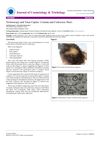 1 citations
,
January 2016 in “Journal of cosmetology & trichology”
1 citations
,
January 2016 in “Journal of cosmetology & trichology” Trichoscopy helped diagnose and treat a child's fungal scalp infection by spotting specific hair shapes.
1 citations
,
March 2013 in “Clinical, cosmetic and investigational dermatology” The boy's hair loss was due to a hair-pulling disorder, not just a fungal infection.
1 citations
,
November 2009 in “Nurse prescribing” Oral griseofulvin for 6-12 weeks cures most scalp fungal infections in children.
1 citations
,
November 2005 in “PubMed” Itraconazole effectively treats scalp fungus, with continuous use more effective than pulse therapy.
1 citations
,
May 2002 in “AAP Grand Rounds” Tinea capitis, though rare in infants, should be considered for hair loss or scalp issues, with oral griseofulvin as the recommended treatment.
April 2026 in “The Breast” Both scalp cooling and chemical cooling caps effectively prevent hair loss in breast cancer patients undergoing chemotherapy.
 January 2026 in “International Journal of Current Research and Review”
 Maidenhair fern may help with health issues but should not be used during pregnancy.
 October 2022 in “Gadua Journal of Pure and Allied Science”
 Terbinafine is the most effective treatment for tinea capitis, a scalp infection often confused with other conditions.
 January 2021 in “Mastology”
 Scalp cooling therapy helped over 80% of women keep at least half their hair during chemotherapy.
September 2020 in “PubMed” The specialized protective cap improved recovery and satisfaction after hair transplant.
July 2026 in “Journal of Investigative Dermatology” Tanshinone Capsule may help regrow hair by boosting specific cell signals.
July 2026 in “Cosmoderma” Trichoscopy can identify specific hair patterns in tinea capitis before and after treatment.
 July 2026 in “Más dermatología”
 Dietary supplements with new ingredients can effectively manage hair loss by addressing multiple causes.
June 2026 in “International Journal of Advanced Multidisciplinary Research and Studies” Ketoconazole hair spray is an effective and easy treatment for scalp fungal infections.
June 2026 in “Frontiers in Medicine” The serum improved hair growth and condition after hair transplant.
 June 2026 in “Applied Biological Chemistry”
 The M5 method is best for isolating cells that help hair growth.

The serum improved hair growth and comfort after hair transplant.
 April 2026 in “Microorganisms”
 SCFF may help promote hair growth and scalp health.
April 2026 in “Indian Journal of Paediatric Dermatology” Trichoscopy is vital for diagnosing tinea capitis in adolescents with lupus.
 March 2026 in “South Asian Research Journal of Medical Sciences”
 Removing keratin plugs and ingrown hairs improved scalp inflammation.
 March 2026 in “Open MIND”
 PRP and microneedling improve hair growth in early-stage alopecia, but effects reverse if treatment stops.
 March 2026 in “Pharmaceuticals”
 Xiaoban Kangfu capsules contain compounds that may help with antioxidants, reducing inflammation, and promoting hair growth.
 March 2026 in “Editora Pasteur eBooks”
 Hair health is affected by various conditions and requires personalized treatment.
 February 2026 in “International Journal of Research in Dermatology”
 Two adults with unusual scalp fungus symptoms were successfully treated.
January 2026 in “EJC Skin Cancer” The serum effectively improves hair growth and is well-tolerated for post-cancer hair loss.
 January 2026 in “Pediatria Polska”
 Early diagnosis and treatment of tinea capitis in children is crucial to prevent permanent hair loss and scarring.