 1 citations
,
March 2023 in “bioRxiv (Cold Spring Harbor Laboratory)”
1 citations
,
March 2023 in “bioRxiv (Cold Spring Harbor Laboratory)” NAC1 controls certain enzymes that reduce root hair growth in Arabidopsis.
 1 citations
,
December 2022 in “Parasitologists United Journal”
1 citations
,
December 2022 in “Parasitologists United Journal” House fly larvae substances improve wound healing and skin regeneration, especially in immunosuppressed mice.
 1 citations
,
September 2022 in “International Journal of Research Publication and Reviews”
1 citations
,
September 2022 in “International Journal of Research Publication and Reviews” Nanotechnology in hair care improves results but has risks.
 1 citations
,
October 2021 in “Indian Journal of Plastic Surgery/Indian journal of plastic surgery”
1 citations
,
October 2021 in “Indian Journal of Plastic Surgery/Indian journal of plastic surgery” Proper hair care and safe use of hair products are crucial for those with hair loss.
![Integrating Multi-Omics Analyses of Nonomuraea Dietziae to Reveal the Role of Soybean Oil in [(4′-OH)MeLeu]4-CsA Overproduction](/images/assets/0eba9759-3aa4-4a06-a70a-2d9c46be53f3/small/23018.jpg) 1 citations
,
July 2017 in “Microbial Cell Factories”
1 citations
,
July 2017 in “Microbial Cell Factories” Adding soybean oil to Nonomuraea dietziae increases production of a beneficial compound by improving metabolism and enzyme systems.
 1 citations
,
January 2017 in “Springer eBooks”
1 citations
,
January 2017 in “Springer eBooks” Flavonoids and Nod factors are key for legume plant growth and could help in sustainable farming.
 1 citations
,
November 2015 in “Indian Journal of Clinical Biochemistry”
1 citations
,
November 2015 in “Indian Journal of Clinical Biochemistry” The conference presented findings on how vitamin D levels, genetic factors, and lifestyle choices like smoking and yoga affect various health conditions and diseases.
 1 citations
,
January 2009 in “Elsevier eBooks”
1 citations
,
January 2009 in “Elsevier eBooks” The document concludes that a deeper understanding of skin aging and photodamage is needed to create better skin treatments.
 June 2026 in “Discover Immunity.”
 Mesenchymal stem cells help improve skin healing and rejuvenation.
 June 2026 in “Frontiers in Marine Science”
 Codium sp. seaweed fractions can enhance skincare and be used for biochar, promoting sustainability.
 June 2026 in “International Journal of Drug Delivery Technology”
 Herbal remedies show promise for managing premature hair greying but need more research.
 June 2026 in “Dermatology and Therapy”
 Combining multiple ingredients is the most effective treatment for hyperpigmentation.
 April 2026 in “bioRxiv (Cold Spring Harbor Laboratory)”
 Red light exposure can slow aging in mice by improving fat metabolism.
 March 2026 in “Tissue Engineering and Regenerative Medicine”
 Dopamine-modified adhesives are improving for sticking tissues underwater.
 March 2026 in “Frontiers in Immunology”
 Regulatory T cells help heal skin wounds by reducing inflammation and promoting tissue repair.
 February 2026 in “Frontiers in Medical Technology”
 Keratinocyte stem cells are crucial for skin renewal and have potential in wound healing and tissue regeneration.
 January 2026 in “Frontiers in Pharmacology”
 Wedelolactone may help treat inflammation, infections, cancer, bone loss, and organ damage.
 January 2026 in “RSC Advances”
 Epristeride's metabolism in zebrafish helps improve doping detection methods.
 December 2025 in “Frontiers in Nutrition”
 Collagen supplements may improve skin, joints, and recovery, especially with added nutrients.
 December 2025 in “Clinical Cosmetic and Investigational Dermatology”
 ZDHHC17 methylation may help treat or identify facial skin aging.
 November 2025 in “Frontiers in Immunology”
 SQSTM1 gene issues may increase the risk of alopecia areata.
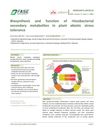 November 2025 in “Frontiers of Agricultural Science and Engineering”
 Rhizobacterial strain RT3 helps lettuce survive drought by producing protective substances like proline.
 October 2025 in “Frontiers in Veterinary Science”
 Quercetin boosts hair follicle stem cell growth and survival in cashmere goats.

Certain plasma proteins and genes are linked to obstructive sleep apnea, suggesting potential new treatments.
 June 2025 in “Animal Bioscience”
 miRNA-24 affects goat coat color by controlling proteins involved in pigment production.
 March 2025 in “HAL (Le Centre pour la Communication Scientifique Directe)”
 De nouvelles thérapies promettent de mieux traiter la perte de cheveux due à l'alopécie androgénétique.
 February 2025 in “Journal of Nutrients”
 Bone broth may improve health and prevent diseases.
 January 2025 in “Drug repurposing”
 New drug uses show promise but need more research.
 January 2025 in “Bright Sky Publications eBooks”
 Balanced diets and informed food choices are crucial for better health.
 December 2024 in “Deleted Journal”
 New therapies show promise for wound healing, but more research is needed for safe, affordable options.