7 citations
,
March 2020 in “Journal of the American Academy of Dermatology” EGFR inhibitors often cause dry, brittle hair and eyebrow/eyelash changes.
 1 citations
,
May 2024 in “Cureus”
1 citations
,
May 2024 in “Cureus” Lichen planopilaris can unusually affect only the face, causing pigmentation and scarring.
1 citations
,
January 2024 in “Dermatologic Therapy” Combining tacrolimus with excimer light is more effective for treating alopecia areata than using excimer light alone.
1 citations
,
July 2023 in “Clinical Cosmetic and Investigational Dermatology” Familial dyskeratotic comedones are a rare, benign skin disorder that is hard to treat.
 1 citations
,
January 2013 in “International Journal of Trichology”
1 citations
,
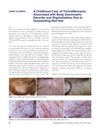
January 2013 in “International Journal of Trichology” A girl with red hair developed hair-pulling and body image disorders after being bullied for her hair color.
December 2025 in “JEADV Clinical Practice” A woman with hair loss condition experienced rare hair color return, suggesting it might help diagnose the condition.
 January 2025 in “Clinical Cosmetic and Investigational Dermatology”
 Genetic testing is crucial for diagnosing rare hair loss disorders.
 November 2023 in “Research Square (Research Square)”
 Combining calcipotriol and PRP is most effective for treating Alopecia Areata.
 August 2022 in “Our Dermatology Online”
 The conclusion is that examining the scalp closely and checking for iron levels and thyroid issues is key to understanding chronic hair loss in women.
March 2020 in “QJM: An International Journal of Medicine” Standard intralesional corticosteroids are the best treatment for patchy alopecia areata.
January 1982 in “Clinical Cosmetic and Investigational Dermatology” Familial dyskeratotic comedones are a rare, inherited skin condition that is hard to treat but may improve slightly with topical retinoids and urea cream.
 May 2015 in “Journal of The American Academy of Dermatology”
 Both azathioprine and betamethasone treatments help with hair regrowth in alopecia areata, but azathioprine may have fewer side effects.
December 2023 in “JEADV Clinical Practice” Brownish halos around axillary hair can help diagnose frontal fibrosing alopecia.

Clinical signs don't match inflammation levels in lichen planopilaris and frontal fibrosing alopecia.
 November 2020 in “Journal of The American Academy of Dermatology”
 Certain immune markers may predict chemotherapy response in mesothelioma, and nivolumab is a tolerable and effective treatment for advanced non-small cell lung cancer.
 64 citations
,
June 2014 in “Journal of The American Academy of Dermatology”
64 citations
,
June 2014 in “Journal of The American Academy of Dermatology” Researchers found a white halo around hair in most patients with a specific type of hair loss, which helps in early diagnosis and treatment.
 October 2025 in “Dermatology Practical & Conceptual”
 Dermatoscopy helps track scar changes and guide treatment.
 April 2025 in “Clinical Dermatology Review”
 Trichoscopy is effective for diagnosing hair and scalp disorders without invasive biopsies.
 41 citations
,
January 2014 in “Annals of Dermatology”
41 citations
,
January 2014 in “Annals of Dermatology” Dermoscopic examination helps diagnose different types of hair loss conditions by showing specific patterns.
 3 citations
,
July 2017 in “International journal of medicine”
3 citations
,
July 2017 in “International journal of medicine” Intralesional triamcinolone acetonide effectively treats alopecia areata, as shown by significant improvements in hair regrowth and dermoscopic indicators.
1 citations
,
January 2024 in “Journal of the Egyptian Womenʼs Dermatologic Society” Routine eye exams may be needed for alopecia areata patients due to common eye issues.
August 2024 in “Indian Dermatology Online Journal” DCPA commonly affects males' lower legs, showing follicular pustules and white areas.
 April 2023 in “International journal of dermatology and venereology”
 Dermoscopic features can help identify and differentiate types of pityriasis versicolor.
Low serum ferritin levels are linked to specific types of hair loss in women.
34 citations
,
February 2012 in “International Journal of Dermatology” Dermatoscopy can help identify hydroquinone-induced skin issues, avoiding invasive biopsies.
January 2020 in “International journal of scientific research” Dermoscopy shows that varying hair shaft thickness and single hair follicles are main signs of male pattern baldness, especially in the fronto-temporal region.
September 2025 in “Journal of Clinical Medicine” Elevated granulysin levels may indicate disease activity in vitiligo and alopecia areata.
 March 2023 in “PARIPEX INDIAN JOURNAL OF RESEARCH”
 Dermoscopy helps diagnose different types of hair loss and may reduce the need for biopsies.
 73 citations
,
April 2010 in “Anais Brasileiros de Dermatologia”
73 citations
,
April 2010 in “Anais Brasileiros de Dermatologia” Dermoscopy helps diagnose and monitor treatment for hair loss from scarring conditions like discoid lupus and lichen planopilaris.
 25 citations
,
December 2008 in “Journal of Dermatological Case Reports”
25 citations
,
December 2008 in “Journal of Dermatological Case Reports” Skin color may change how alopecia areata looks under a dermoscope.