 3 citations
,
May 2020 in “Actas Dermo-Sifiliográficas”
3 citations
,
May 2020 in “Actas Dermo-Sifiliográficas” PRP injections increased hair density in men with hair loss but didn't work for everyone and more research is needed.
 September 2025 in “Tạp chí Da liễu học Việt Nam”
 Combining oral methylprednisolone with microneedle radiofrequency improves hair growth in alopecia areata but may cause pain and side effects.
 August 2009 in “Expert Review of Dermatology”
 Pregnancy can cause skin changes and conditions that need correct diagnosis and treatment for the health of the mother and baby.
 August 2024 in “Turkish Journal of Pediatric Disease”
 Zinc spray and cream effectively treated a baby's zinc deficiency disorder.
Combining systemic steroids and dithranol can effectively regrow hair in severe alopecia areata.
 July 2022 in “Media Dermato Venereologica Indonesiana”
 The combination of PRP and triamcinolone injections improved hair growth in a man with alopecia areata.
 April 2023 in “Tikrit journal of pharmaceutical sciences”
 Ginger extract helps hair growth and reduces the need for prednisolone in alopecia areata patients.
6 citations
,
December 2015 in “Journal of Dermatological Case Reports” Intradermal testing can better detect corticosteroid allergies than patch testing.
1 citations
,
December 2023 in “Life” PRP helps skin heal, possibly through special cells called telocytes.
December 2022 in “Experimental and Clinical Physiology and Biochemistry” A lotion with 5% minoxidil boosts the immune response in guinea pigs.
November 2025 in “Journal of Investigative Dermatology” Combining MMP-9 and JAK inhibitors can effectively prevent skin depigmentation in vitiligo.
1 citations
,
August 2024 in “Journal of Pharmacy & Pharmaceutical Sciences” The DPCP/HPβCD complex improves solubility and anti-inflammatory effects for alopecia areata treatment.
 2 citations
,
November 2017 in “PloS one”
2 citations
,
November 2017 in “PloS one” Some vitamin D analogs can thicken skin and reduce pore size like a common acne treatment, with one analog also affecting skin growth factors.
October 2022 in “Dermatology practical & conceptual” Both treatments help hair regrowth, with PRP being slightly better.
 February 2024 in “Experimental Dermatology”
 IGFBP-rP1 could be a new treatment for a common type of hair loss.
 May 2013 in “Reactions Weekly”
 Using minoxidil can cause severe skin reactions in some people.
6 citations
,
December 1987 in “Mayo Clinic proceedings” Retinoids are effective for severe acne and psoriasis but can cause serious side effects and birth defects.
 April 2017 in “Journal of Investigative Dermatology”
 Sirolimus and propranolol may reduce abnormal cell growth and improve lymphatic malformations in children.
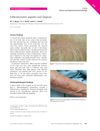 May 2014 in “Clinical and Experimental Dermatology”
 A 70-year-old woman with a rare skin condition improved after treatment with topical steroids and acitretin.
 September 1998 in “Journal of The European Academy of Dermatology and Venereology”
 Phototrichogram helps assess hair loss severity.
21 citations
,
October 2007 in “Australasian Journal of Dermatology” A woman with hair loss regrew white hair after taking prednisolone.
April 2025 in “Health Science Reports” PRP treatment improved skin pigmentation and appearance in facial lichen planus pigmentosus.
 15 citations
,
December 2016 in “Advanced Pharmaceutical Bulletin”
15 citations
,
December 2016 in “Advanced Pharmaceutical Bulletin” The new cream with N-acetyl glucosamine didn't change skin color after 8 weeks.
37 citations
,
December 2001 in “Journal of the American Academy of Dermatology” Thalidomide significantly improved hair regrowth in a woman with lichen planopilaris.
9 citations
,
December 1958 in “Journal of Investigative Dermatology” A new acne cream effectively reduced acne in trials and awaits FDA approval.
 136 citations
,
April 2016 in “Dermatologic Surgery”
136 citations
,
April 2016 in “Dermatologic Surgery” PRP treatment helps hair growth and density in androgenetic alopecia patients.
10 citations
,
August 2019 in “European Journal of Dermatology” The document did not conclude on apremilast's effectiveness for severe alopecia areata.
January 2025 in “SiSli Etfal Hastanesi Tip Bulteni / The Medical Bulletin of Sisli Hospital” PRP injections are safe and effective for alopecia areata, but steroids are still the preferred treatment.
 28 citations
,
October 1992 in “JEADV. Journal of the European Academy of Dermatology and Venereology/Journal of the European Academy of Dermatology and Venereology”
28 citations
,
October 1992 in “JEADV. Journal of the European Academy of Dermatology and Venereology/Journal of the European Academy of Dermatology and Venereology” SIP is a better method for measuring hair growth accurately.