July 2025 in “Clinical Medicine” Oral betamethasone works faster than oral tofacitinib for hair regrowth in alopecia areata.
2 citations
,
August 2024 in “Preprints.org” Fluocinolone may help treat scalp symptoms in ichthyosis patients.

Hair regrowth improved, but quality of life did not.
July 2026 in “Journal of the American Academy of Dermatology” The lotion helps manage mild to moderate hair loss.
 April 2023 in “Journal of Investigative Dermatology”
 Long-term Imiquimod treatment causes initial skin inflammation that lessens over time, and topical corticosteroids reduce this inflammation and cytokines in a mouse model of psoriasis.
 59 citations
,
October 2012 in “Pharmaceutical Research”
59 citations
,
October 2012 in “Pharmaceutical Research” Squalene-based carriers improve delivery of a treatment to hair follicles for alopecia areata.
39 citations
,
March 1976 in “British Journal of Dermatology” Intralesional steroid therapy is useful for treating various skin conditions.
COCs often cause nausea, vomiting, and hair loss, while Depo-Provera is linked to weight gain.
1 citations
,
April 2021 in “Journal of Cosmetic Dermatology” The cream effectively reduced hair growth on forearms.
 July 2021 in “Clinical case reports and studies”
 Topical diphencyprone effectively treated a 9-year-old boy's alopecia areata with fewer side effects.
 66 citations
,
January 2000 in “Dermatology”
66 citations
,
January 2000 in “Dermatology” Dandruff is a common, winter-worsened scalp condition linked to inflammation and microorganisms, treatable with products like ketoconazole, and may affect hair loss.
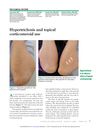 February 2022 in “Cleveland Clinic Journal of Medicine”
 Prolonged use of topical corticosteroids can cause excessive hair growth.
54 citations
,
December 2004 in “PubMed” Cyclosporin A vesicles effectively regrow hair and reduce inflammation in alopecia areata.
9 citations
,
March 1991 in “American Journal of Contact Dermatitis” Minoxidil can cause allergic skin reactions, especially in long-term users.
January 2022 in “Springer eBooks”  February 2013 in “Journal of The American Academy of Dermatology”
 Hair loss is a common but often unreported side effect of cancer treatments, especially for breast and prostate cancers.
 January 2025 in “International Journal of Pharmaceutical Research and Development”
 Vitex negundo oil promotes hair growth and may treat alopecia safely.
 51 citations
,
May 2010 in “Journal of Drug Targeting”
51 citations
,
May 2010 in “Journal of Drug Targeting” Transcutol-containing vesicles improve minoxidil's skin penetration and hair growth promotion.
May 2024 in “Indian Journal of Pharmacology” Tofacitinib effectively regrew scalp hair in an 11-year-old girl with alopecia areata.

The 0.05% dutasteride topical solution effectively promotes hair growth with fewer side effects than oral treatments.
 January 2025 in “Biomedical Engineering Letters”
 MXD@CP could be a promising new topical treatment for hair loss.
 December 2025 in “PubMed”
 The minoxidil and finasteride foam remains stable and effective for 180 days at room temperature.
 13 citations
,
July 2011 in “Journal of Dermatological Treatment”
13 citations
,
July 2011 in “Journal of Dermatological Treatment” Clobetasol and pimecrolimus are similarly effective for alopecia areata, but pimecrolimus has fewer side effects and is preferred for long-term use.
3 citations
,
June 2019 in “Veterinary record case reports” A dog developed a skin condition called pemphigus foliaceus after taking NexGard, but got better with treatment.
 September 2025 in “Intisari Sains Medis”
 The combination therapy improved severe alopecia areata in a patient after 14 days.
January 1954 in “DMW - Deutsche Medizinische Wochenschrift” 1 citations
,
June 2022 in “International Journal of Infectious Diseases” A fungal infection was successfully treated with oral and topical antifungals after being misdiagnosed and worsened by corticosteroids.
5 citations
,
November 1979 in “Archives of dermatology” Tretinoin cream successfully treated a woman's skin condition called Fox-Fordyce disease.
 February 2025 in “Revista Eletrônica Acervo Saúde”
 Triamcinolone hexacetonide is effective but has side effects, while PRP and minoxidil are safer alternatives for treating alopecia areata.
22 citations
,
November 1979 in “Archives of dermatology” A woman with Fox-Fordyce disease had symptom relief using tretinoin cream.