 January 2026 in “RSC Advances”
 The hydrogel speeds up diabetic wound healing and reduces scarring.
 December 2025 in “Frontiers in Veterinary Science”
 Key genes like KRT27 and IGF-2 are crucial for hair follicle development in Qianhua Mutton Merino sheep.
 November 2025 in “Frontiers in Cell and Developmental Biology”
 The study maps goat hair follicle cells, revealing key genes and pathways involved in hair growth and cell death.
 October 2025 in “Frontiers in Veterinary Science”
 Quercetin boosts hair follicle stem cell growth and survival in cashmere goats.
 September 2025 in “Clinical Cosmetic and Investigational Dermatology”
 Moderate exercise improves skin health, but intense exercise without protection can harm it.
 December 2024 in “Deleted Journal”
 New therapies show promise for wound healing, but more research is needed for safe, affordable options.

The mesenchymal stem cell secretome may effectively treat various diseases as an alternative to traditional stem cell therapies.
 November 2023 in “Linköping University medical dissertations”
 Keratinocytes and adipose-derived stem cells can effectively heal difficult skin wounds.
 August 2023 in “International journal of medical science and clinical research studies”
 PRP therapy helps heal pediatric surgical wounds faster and with fewer scars but needs more research for safety and cost.
 January 2023 in “Discovery immunology”
 T cells and bacteria in the gut and skin help maintain health and protect against disease.
 December 2022 in “bioRxiv (Cold Spring Harbor Laboratory)”
 MicroRNA-205 helps hair grow by changing the stiffness and contraction of hair follicle cells.
 September 2022 in “Research Square (Research Square)”
 Macrophages help maintain mammary stem cells and balance through specific signaling.
 February 2022 in “Research Square (Research Square)”
 Key genes influencing sheep hair follicle development were identified, aiding wool breeding and understanding human hair conditions.
 June 2021 in “Research Square (Research Square)”
 Melatonin can increase cashmere yield by altering gene expression and restarting the growth cycle early.
 January 2021 in “Research Square (Research Square)”
 Rabbits with high wool production have more hair follicles, influenced by specific long noncoding RNAs.
 September 2020 in “Research Square (Research Square)”
 Long noncoding RNAs help regulate hair follicle density in rabbits.

Type II spiral ganglion neurites avoid high concentrations of laminin and fibronectin.

Ovol2 is crucial for hair growth and skin healing by controlling cell movement and growth.
 June 2026 in “Frontiers in Immunology”
 EMT plays a key role in skin fibrosis and offers new therapy targets.
 44 citations
,
September 2019 in “The EMBO Journal”
44 citations
,
September 2019 in “The EMBO Journal” Lymphatic vessels are essential for hair follicle growth and skin regeneration.
 November 2025 in “IECCMEXICO”
 3D bioprinting advancements are improving skin regeneration for wound healing and personalized reconstruction.
 22 citations
,
May 2021 in “Nature Communications”
22 citations
,
May 2021 in “Nature Communications” Tissue stiffness affects hair follicle regeneration, and Twist1 is a key regulator.
 July 2026 in “npj Regenerative Medicine”
 Gli2 and Serpinh1 are key for skin wound healing by helping fibroblasts close wounds.
 February 2026 in “Frontiers in Immunology”
 Human amniotic stem cells can safely treat psoriasis-like skin in mice.
 September 2023 in “Nature communications”
 Alk1 in specific cells is crucial for proper nerve branching and hair function.
 788 citations
,
February 2007 in “Nature”
788 citations
,
February 2007 in “Nature” The document concludes that skin stem cells are important for hair growth and wound healing, and could be used in regenerative medicine.
 421 citations
,
January 2015 in “Chemical Society Reviews”
421 citations
,
January 2015 in “Chemical Society Reviews” Improving artificial vascular grafts requires better materials and surface designs to reduce blood clotting and support blood vessel cell growth.
 418 citations
,
September 2012 in “Nature”
418 citations
,
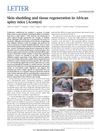
September 2012 in “Nature” African spiny mice can regenerate skin, hair, and cartilage, but not muscle, and their unique abilities could be useful for regenerative medicine.
 191 citations
,
September 2011 in “Cell stem cell”
191 citations
,
September 2011 in “Cell stem cell” Hair follicle stem cells use specific chromatin changes to control their growth and differentiation.
 174 citations
,
November 2016 in “Cell stem cell”
174 citations
,
November 2016 in “Cell stem cell” Different types of skin cells have unique genetic markers that affect how likely they are to spread cancer.