 2 citations
,
January 2017 in “Folia biologica”
2 citations
,
January 2017 in “Folia biologica” The KRTAP7-1 gene is very similar across different cattle and yak breeds and likely plays a role in hair strength and shape.
 2 citations
,
September 1980 in “Experientia”
2 citations
,
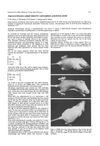
September 1980 in “Experientia” Polyethylene alanine caused hair loss in young lab animals but not in adults, with hair regrowth occurring within 20 days.
 2 citations
,
March 1977 in “Journal of animal science/Journal of animal science ... and ASAS reference compendium”
2 citations
,
March 1977 in “Journal of animal science/Journal of animal science ... and ASAS reference compendium” Defective mink guard hairs have split tips and missing cuticle cells, causing a metallic sheen.
 1 citations
,
May 2023 in “Acta Scientific Veterinary Sciences”
1 citations
,
May 2023 in “Acta Scientific Veterinary Sciences” Dairy cows in Nyala, Sudan, need better care and veterinary services.
 1 citations
,
October 2017 in “Animal science journal”
1 citations
,
October 2017 in “Animal science journal” Cyclophosphamide effectively induces cashmere shedding in goats without affecting their overall health.
 1 citations
,
December 2007 in “Drug and therapeutics bulletin”
1 citations
,
December 2007 in “Drug and therapeutics bulletin” New treatments for children's scalp ringworm are recommended based on recent data.
 May 2026 in “Research Square”
 Children with alopecia areata often face more stress and depression, especially related to separation, which can affect their condition.
 March 2026 in “The Indian Journal of Animal Sciences”
 All Indian dromedary camel breeds have the same KRTAP7 gene affecting hair quality.
 January 2026 in “Animal Advances”
 Genes linked to coat color and fiber length in Chinese goats were identified.
 December 2025 in “Frontiers in Veterinary Science”
 Key genes like KRT27 and IGF-2 are crucial for hair follicle development in Qianhua Mutton Merino sheep.
 December 2025 in “Yemeni Journal of Agriculture & Veterinary Sciences”
 Many sheep and goats in Sana’a, Yemen, lack essential minerals and need supplements for better health.
 October 2025 in “Animal Bioscience”
 Key genes linked to important traits in Chinese sheep and goats have been identified, but challenges remain in breeding improvements.
 July 2025 in “International Journal of Pharmaceutical Sciences Review and Research”
 Balanced selenium intake from wheat is crucial for preventing hair loss.
 April 2025 in “Ukrainian Journal of Veterinary and Agricultural Sciences”
 Adding a water-soluble fatty acid complex to sheep diets improves wool growth by increasing primary hair follicle size and density.
 January 2025 in “Epsilon Archive for Student Projects (University of Southampton)”
 Mange and orf are present in some goat herds in Zambia, but more research is needed.
 December 2024 in “Frontiers in Veterinary Science”
 Dorper sheep's wool shedding is linked to specific genes and pathways, which may help understand human hair growth.
 April 2024 in “Journal of wildlife diseases”
 Muskox hair growth rates vary widely, so a single growth rate can't be used for all populations.
 March 2024 in “Frontiers in genetics”
 Xiangdong black goats have moderate genetic diversity, minimal inbreeding, and important genes for reproduction, immunity, and other traits.
 January 2023 in “Kafkas üniversitesi veteriner fakültesi dergisi/Kafkas üniversitesi veteriner fakültesi dergisi”
 Seasonal changes affect gene activity linked to hair growth in Angora goats.
 November 2022 in “Research Square (Research Square)”
 Seasonal changes affect hair growth genes in Angora goats, possibly influencing mohair quality.
 October 2021 in “Research Square (Research Square)”
 Melatonin affects certain genes and pathways involved in cashmere goat hair growth.
 June 2021 in “Research Square (Research Square)”
 Melatonin can increase cashmere yield by altering gene expression and restarting the growth cycle early.
 January 2021 in “Research Square (Research Square)”
 Rabbits with high wool production have more hair follicles, influenced by specific long noncoding RNAs.
 September 2020 in “Research Square (Research Square)”
 Researchers found that certain RNA sequences play a role in yak hair growth and these sequences are somewhat similar to those in cashmere goats.
 September 2020 in “Research Square (Research Square)”
 Long noncoding RNAs help regulate hair follicle density in rabbits.
 October 2017 in “The Indian Journal of Animal Sciences”
 The prolactin gene polymorphism doesn't affect cashmere quality in these goats.

Acidic sandy clay damages archaeological hair the most, while dry conditions preserve but make it brittle; silicone oil can help keep the hair flexible.
 April 2003 in “Experimental Dermatology”
 The workshop highlighted the genetic links and psychological impacts of hair loss and skin disorders.
 March 2026 in “International Journal of Science and Research (IJSR)”
 Eclipta prostrata is beneficial for hair growth and liver health, and can be reliably identified by its structure and compounds.
April 2014 in “The FASEB journal” The extract helps prevent hair loss and promotes hair growth in stressed mice.