 1 citations
,
July 2019 in “The journal of applied laboratory medicine”
1 citations
,
July 2019 in “The journal of applied laboratory medicine” Venous catheterization may help diagnose the cause of female hyperandrogenism when imaging is unclear.
 1 citations
,
February 2016 in “European Journal of Obstetrics & Gynecology and Reproductive Biology”
1 citations
,
February 2016 in “European Journal of Obstetrics & Gynecology and Reproductive Biology” An 84-year-old woman's hair loss was due to a rare condition called Leydig cell hyperplasia, which was treated with surgery.
 1 citations
,
July 2015 in “AACE clinical case reports”
1 citations
,
July 2015 in “AACE clinical case reports” Removing both ovaries treated the woman's excess male hormone symptoms.
1 citations
,
January 2015 Hyperandrogenism in women often causes acne and excess hair, treatable with lifestyle changes and medications.
 1 citations
,
May 2013 in “Journal of the Egyptian Women's Dermatologic Society (Print)”
1 citations
,
May 2013 in “Journal of the Egyptian Women's Dermatologic Society (Print)” PSA could be a marker for hyperandrogenism in women, but more research is needed.
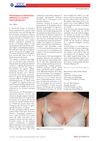 1 citations
,
August 2012 in “Journal der Deutschen Dermatologischen Gesellschaft”
1 citations
,
August 2012 in “Journal der Deutschen Dermatologischen Gesellschaft” A woman's hyperandrogenism was caused by a genetic mutation leading to non-classic adrenogenital syndrome.
 1 citations
,
October 2010 in “Cambridge University Press eBooks”
1 citations
,
October 2010 in “Cambridge University Press eBooks” Hormonal therapies are effective for managing hair and skin symptoms in women with PCOS.
 1 citations
,
October 2010 in “Cambridge University Press eBooks”
1 citations
,
October 2010 in “Cambridge University Press eBooks” The document suggests new ways to assess and diagnose hyperandrogenism to improve accuracy.
 1 citations
,
January 1996 in “Gynecological endocrinology”
1 citations
,
January 1996 in “Gynecological endocrinology” Non-invasive imaging helped diagnose a woman's severe hormone imbalance and diabetes, and medication successfully treated her condition.
1 citations
,
April 1993 in “Problemy e̊ndokrinologii” Spironolactone effectively reduces symptoms of hyperandrogenism like hirsutism and acne.
 May 2026 in “Research Square”
 Clinical hirsutism can help predict high androgen levels in women.

Targeting androgen receptors in the skin is the most effective treatment for hyperandrogenism-related skin issues.
 April 2026 in “Russian Journal of Skin and Venereal Diseases”
 Hyperandrogenism in women affects skin and quality of life, but treatment is complex due to lack of guidelines.
April 2026 in “BMJ Case Reports” Leydig cell tumors can cause high testosterone in women and are treated by removing the ovaries.
March 2026 in “JCEM Case Reports” Surgery removed ovarian tumors, normalizing testosterone and improving symptoms.
 February 2026 in “World Journal of Interdisciplinary Innovation Sciences”
 Cinnamon may help improve insulin sensitivity in women with PCOS.
 January 2026 in “Frontiers in Oncology”
 Thorough evaluation and surgery are crucial for managing rare ovarian tumors in postmenopausal women with high androgen levels.
January 2026 in “Brazilian Journal of Development” Early diagnosis and surgery can improve symptoms of ovarian hyperthecosis in postmenopausal women.
 November 2025 in “Cureus”
 PCOS-related acne can be managed by targeting hormones and insulin resistance.
 October 2025 in “Indian Journal of Physiology and Pharmacology”
 Early diagnosis and treatment of endocrine disorders like HAIR-AN syndrome can improve outcomes in adolescents.
October 2025 in “Journal of the Endocrine Society” A rare pituitary tumor in an 18-year-old male caused hormonal issues and vision loss, requiring surgery and further treatment.
October 2025 in “Journal of the Endocrine Society” Leydig cell tumors in the ovary can cause high testosterone and male traits in postmenopausal women but are treatable with surgery.
October 2025 in “Journal of the Endocrine Society” Goserelin injections can effectively manage hyperandrogenism symptoms in postmenopausal women who can't have surgery.
October 2025 in “Journal of the Endocrine Society” Anastrozole can cause increased testosterone, leading to symptoms like hair growth and thinning.
 September 2025 in “Reproductive health of woman”
 Metformin reduces high male hormone levels in women with PCOS.
 May 2025 in “International Journal of Nursing Education and Research”
 Hyperandrogenism causes significant physical and emotional challenges, needing better understanding and support.
January 2025 in “Case Reports in Endocrinology” Accurate diagnosis of rare hyperandrogenism conditions requires detailed testing and sometimes invasive procedures.
 October 2024 in “Journal of the Endocrine Society”
 Ovarian stromal hyperplasia can cause high testosterone in postmenopausal women and is treated by removing the ovaries.
 October 2024 in “Journal of the Endocrine Society”
 Surgical removal of a rare ovarian tumor improved symptoms and hormone levels in a postmenopausal woman.
 October 2024 in “Journal of the Endocrine Society”
 The case highlights the complexity of diagnosing high testosterone in older women and the need for thorough testing.