24 citations
,
December 2023 in “Gels” 3D-printed hydrogels show promise in medicine but face challenges in resolution, cell viability, cost, and regulations.
 January 2025 in “Open Medicine”
 High-concentration cell-free adipose extract reduces scar formation and improves scar appearance.
 11 citations
,
January 2022 in “Theranostics”
11 citations
,
January 2022 in “Theranostics” Wnt4 is essential for heart repair and could be a target for heart disease treatment.
 5 citations
,
March 2023 in “Archives of dermatological research”
5 citations
,
March 2023 in “Archives of dermatological research” Increased HIF-1α is linked to the inflammation and severity of hidradenitis suppurativa, suggesting treatments that lower HIF-1α could help.
 11 citations
,
March 2021 in “Journal of Bioscience and Bioengineering”
11 citations
,
March 2021 in “Journal of Bioscience and Bioengineering” Adding human fat-derived stem cells to hair follicle grafts greatly increases hair growth.
 December 2024 in “Highlights in Science Engineering and Technology”
 Stem cells show promise for hair regrowth, but challenges remain.

Human hair follicle stem cells improved memory and brain health in rats.
13 citations
,
March 2024 in “Cell Transplantation” Engineered skin tissue is a promising tool for safer cosmetic testing.
 July 2024 in “Scholars Journal of Medical Case Reports”
 Combining low-level laser therapy and exosome therapy promotes hair growth.
27 citations
,
February 2023 in “Frontiers in Cell and Developmental Biology” WNT10B is important for body functions and linked to diseases like osteoporosis, obesity, and cancer.
 8 citations
,
January 2022 in “Burns and trauma”
8 citations
,
January 2022 in “Burns and trauma” Skin cell-derived vesicles can help heal skin injuries effectively.
 November 2025 in “Frontiers in Pharmacology”
 Gentamicin-loaded exosomes improve healing of infected diabetic wounds in mice.
 19 citations
,
December 2016 in “PLOS ONE”
19 citations
,
December 2016 in “PLOS ONE” Early-stage skin cells help regenerate hair follicles, with proteins SDF1, MMP3, biglycan, and LTBP1 playing key roles.
January 2026 in “Regenerative Therapy” Low-frequency electromagnetic fields may help treat hair loss by promoting hair regrowth.

γδ T cells help control tissue scarring and blood vessel growth in response to foreign objects.
9 citations
,
August 2025 in “Current Issues in Molecular Biology” Extracellular vesicles can help regenerate bones but need more research for safe clinical use.
 February 2026 in “International Journal of Molecular Sciences”
 3-Hydroxypropionic acid may help treat hair loss by promoting hair growth in cells.
7 citations
,
August 2023 in “Frontiers in Immunology” Targeting TRP channels may help reduce excessive scarring.
 July 2026 in “Pharmaceuticals”
 Aging and chronic diseases impair muscle repair, but integrated therapies like exercise and gene editing may help.
 April 2026 in “Biomedicines”
 Wound healing is not fully understood, requiring more research and collaboration to improve treatments.
January 2026 in “Pharmaceutics” Extracellular vesicles can worsen Alzheimer's but also offer potential for diagnosis and treatment.
5 citations
,
November 2025 in “Cells” Advancements in wound healing aim to improve personalized treatments and enhance healing outcomes.
January 2026 in “Pharmaceutics” New drug delivery systems show promise in effectively treating pathological scars.
 8 citations
,
May 2023 in “Gels”
8 citations
,
May 2023 in “Gels” Chitosan hydrogels are promising for repairing blood vessels but need improvements in strength and compatibility.
26 citations
,
January 2025 in “iScience” PRP helps tissue repair but lacks standard preparation methods.
 April 2024 in “Frontiers in physiology”
 Immune cells are crucial for hair growth and preventing hair loss.
 192 citations
,
April 2019 in “ACS nano”
192 citations
,
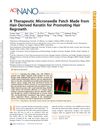
April 2019 in “ACS nano” A new microneedle patch made from hair proteins helps regrow hair faster and better than current treatments.
 March 2026 in “Frontiers in Immunology”
 Regulatory T cells help heal skin wounds by reducing inflammation and promoting tissue repair.
 January 2026 in “Communications Biology”
 Yak hair follicles adapt to cold through specific gene regulation, enhancing cell growth.
 10 citations
,
May 2018 in “Cell death discovery”
10 citations
,
May 2018 in “Cell death discovery” HSP90 and lamin A/C are crucial for hair growth and could be targets for treating hair loss.