July 2026 in “Veterinary Medicine and Science” Nigella sativa oil with quercetin reduces testosterone-induced testicular damage and stress in rats.
 June 2026 in “Preprints.org”
 Oral minoxidil can harm arteries at higher doses, while dutasteride may be safer.
Rice bran polysaccharides have potential uses in food, health, and cosmetics due to their beneficial bioactive properties.
A reliable method was developed to measure gemcitabine and olaparib in pancreatic tissue, aiding pancreatic cancer treatment.
April 2026 in “Clinical and Experimental Dermatology” Dupilumab effectively reduces symptoms of prurigo nodularis and is safe for long-term use.
March 2026 in “Journal of the mechanical behavior of biomedical materials/Journal of mechanical behavior of biomedical materials” Hair cuticles remain stable and resilient under stress due to strong protein content and crosslinking.
March 2026 in “European Urology Focus” Finasteride improves prostate cancer prediction by adjusting kallikrein marker levels.
January 2026 in “International Journal of Molecular Sciences” Eyebrow follicles are best for accurate genetic testing after stem cell transplants.
November 2025 in “Journal of Clinical Medicine” Advancements in regenerative science and longevity research can improve healthspans, but must be balanced with ethics and safety.
October 2025 in “International Journal of Dermatology” Baricitinib is a safe and effective treatment for alopecia areata, with better results in patients with lower initial severity, shorter disease duration, and longer treatment.
October 2025 in “International Journal of Molecular Sciences” Stem cells have great potential for treating various medical conditions.

Amino acid storage proteins are essential for maintaining stem cells in female fruit flies.
 February 2025 in “The Indian Journal of Animal Sciences”
 Sarcoptes scabiei caused mange in Goa goats, but they fully recovered with treatment.
December 2024 in “Journal of Investigative Dermatology” The conference highlighted new treatments and research in pediatric skin conditions, emphasizing collaboration and innovation.
December 2024 in “European Journal of Dermatology” Transgender acne treatment requires a tailored approach with ongoing topical treatments and ceramide-rich moisturizers.
September 2024 in “Toxicology Letters” Cortisone and cortisol levels in pregnant women’s hair increase as labor approaches, indicating higher stress.
 August 2024 in “Cosmetics”
 Caffeine is beneficial for skin and hair treatments but needs better delivery methods to penetrate deeper skin layers.

Stiffness gradients in alginate gels can guide cancer cell invasion and study cellular behaviors.
 January 2024 in “Endocrine and metabolic science”
 Different types of PCOS need specific diagnosis methods and treatments.

Nanocarriers with plant extracts show promise for safe and effective hair growth treatment.
 August 2023 in “Medicina-lithuania”
 Abusing steroids can damage your heart, muscles, reproductive system, liver, skin, and brain, and may increase the risk of Alzheimer's disease.
 July 2023 in “Journal of Clinical Medicine”
 Tirzepatide might help manage PCOS in obese patients but needs more research to confirm safety and effectiveness.

Thermal spring waters and their microbes could be good for skin health and treating some skin conditions in skincare products.
June 2023 in “Journal of Biological Chemistry” Get3d protein helps maintain photosynthesis in plants and photosynthetic bacteria.
 April 2023 in “Journal of Investigative Dermatology”
 Radiation treatment causes skin fibrosis by increasing certain fibroblast subpopulations, but using a c-Jun inhibitor or fat grafting can reduce this effect.
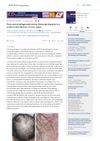 March 2023 in “Journal of Cosmetic Dermatology”
 A woman's progressive hair loss was correctly diagnosed as a rare condition called fibrosing alopecia in a pattern distribution after initially being mistaken for a more common type.
 February 2022 in “International journal of KIU”
 Certain genes and nutrients like vitamin D, zinc, and omega fatty acids affect COVID-19 severity and infection risk.
Spironolactone is a promising alternative to antibiotics for treating acne in adult females.

Spironolactone may be a better acne treatment for adult women than antibiotics.
 January 2019 in “Applied Organometallic Chemistry”
 The compound (NH4)2Mn0.17Cu0.83Cl4.2H₂O has a specific structure, shows weak magnetism at low temperatures, and undergoes phase changes at high temperatures.